



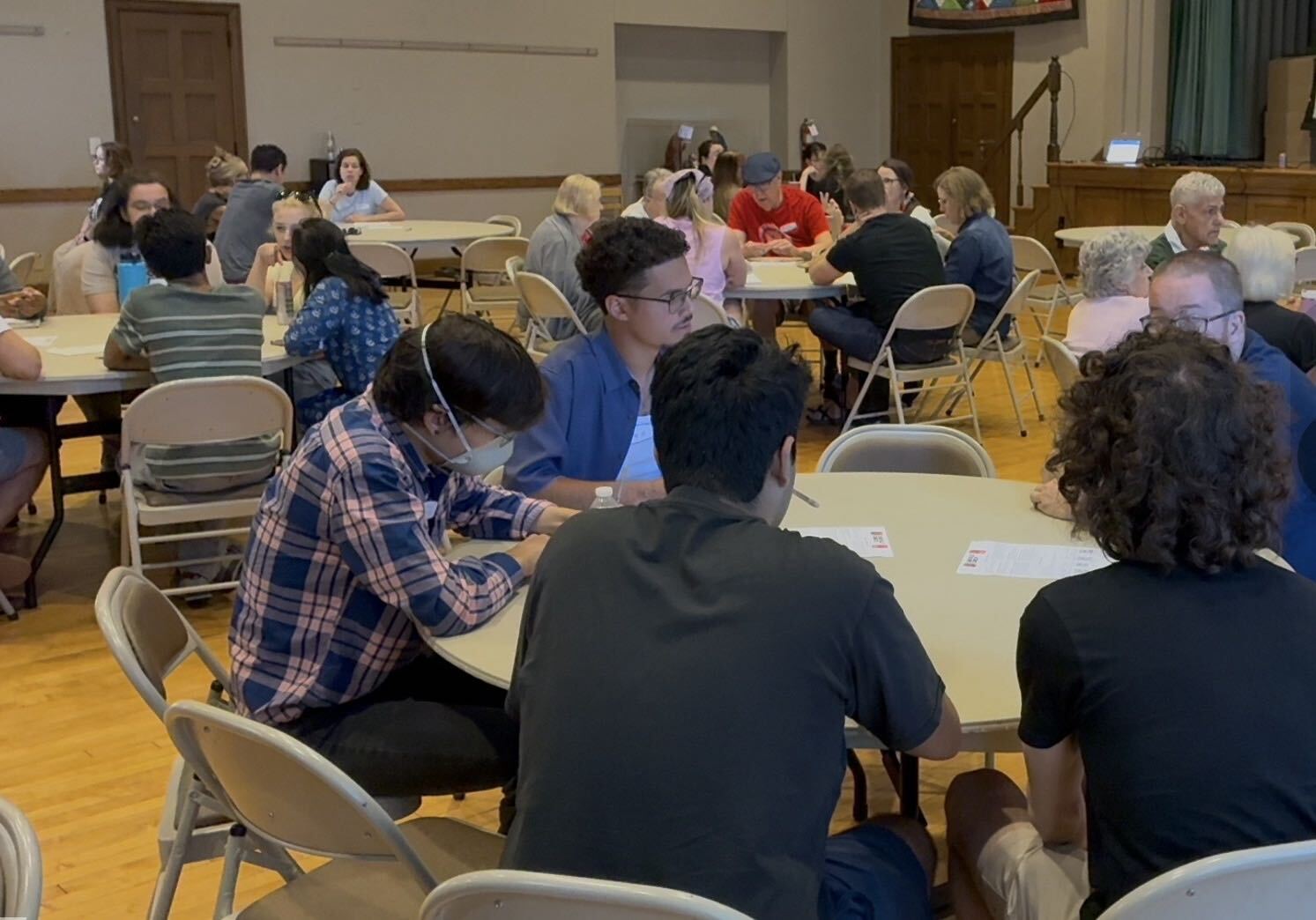
On Saturday Lehigh Valley Stands Up (LVSU) and the Lehigh Valley Democratic Socialists of America (LVDSA) hosted a community conversation about AI data centers and their effects on the Lehigh Valley.
The conversations were focused around proposals and attempts to build hyperscale AI data centers across the valley. There are currently eight project proposals for data centers across Lehigh and Northampton counties in Allentown, South Whitehall, Allen Township, Upper and Lower Mount Bethel and Bethlehem as of Friday.
Data centers aren’t entirely new and have previously existed to store data for things such as social media, search engines, entertainment media and other digital items.
Corporations are now building data centers at an increasing scale. Hyperscale data centers can store at least 5,000 servers and can cover millions of square feet. According to IBM, they can require up to 100 Megawatts of electricity, equivalent to the energy used to power roughly 80,000 homes.
Community members expressed concerns over potential infrastructure waste and irreversible environmental damage. One attendee — who didn’t disclose their name — said if AI doesn’t work out, it’ll be community members who suffer rather than developers.
“It’s really confusing to be in a university environment that pushes AI so much, and where it feels almost like you have to use it to get ahead,” Jolene Frey, ‘29, said. “But also I have those feelings where I know about how unethical it is.”
John Favini, political education coordinator at the LVDSA said members are particularly concerned about who benefits from the development of AI infrastructure.
“The things that principally upset members of the DSA … is that it’s another very obvious instance of something going on in our society where it is absolutely for the benefit of a couple billionaires, and the vast majority of people have no interest in this,” Favini said.
Gillian Wenhold, a local organizer with LVSU, said data centers are another extractive industry in the Lehigh Valley driven by profit at the expense of working-class communities.
Pennsylvania has seen a wide number of data center projects due to ample natural gas reserves and abandoned industrial infrastructure.
On a local level, Wenhold said initial project proposals were made public after they were presented to decision-making bodies. Now, she said, they’ve had more communication and cooperation with city councils in passing ordinances and considering community input.
“They (local officials) really emphasize tax revenue, or just offer cash payments to every resident,”Favini said. “But they’re not seeing the extent to which people recognize this as a technology that’s trying to get rid of their job.”
Local organizing efforts across the Lehigh Valley have been successful in blocking the proposed data center in Upper Macungie Township.
Wenhold said local fights against data centers have created extra costs on data center developments, pushing for stronger legislation and ordinances, and they’re currently working on passing 180 day municipal curative amendments.
“The goal is to make it so unattractive and difficult for a developer to build that they move on from your municipality,” Wenhold said.
Wenhold said organizers are interested in developing community development benefits, which are legally binding agreements that ensure community representation in decision-making, inclusive and transparent development processes and clear, concrete benefits for the community from these projects.
Event organizers introduced next steps, including newer and stronger ordinances through co-governance with local officials, and working with them before and after campaign season to collaborate on common goals.
“People in the Lehigh Valley have as much power as they are willing to seize in relation to data centers,” Favini said. “Claiming that power is a matter of building organizations that can push back.”
With the current eight proposals across the Valley, LVSU and LVDSA have organized groups in the hundreds to fight against these projects, particularly focusing on the Allentown projects and lending support to South Whitehall as well.
LVSU and LVDSA have delayed several of these projects and gathered hundreds of community members to voice their opinions at public city council hearings.
With more hearings about these eight proposals happening in the coming month, LVSU and LVDSA said their primary goal is to organize enough people to fight back against all eight.
“The everyday working class person has the power to show up, demand that their voices are heard and they can be in the spaces where decisions are made to make sure they’re not taken advantage of,” Wenhold said.
Comment Policy
Comments posted to The Brown and White website are reviewed by a moderator before being approved. Incendiary speech or harassing language, including comments targeted at individuals, may be deemed unacceptable and not published. Spam and other soliciting will also be declined.
The Brown and White also reserves the right to refuse the publication of entirely anonymous comments.