



What does it mean to be American?
For students, faculty, staff and local residents, the answer wasn’t found in a definition, but in an art gallery.
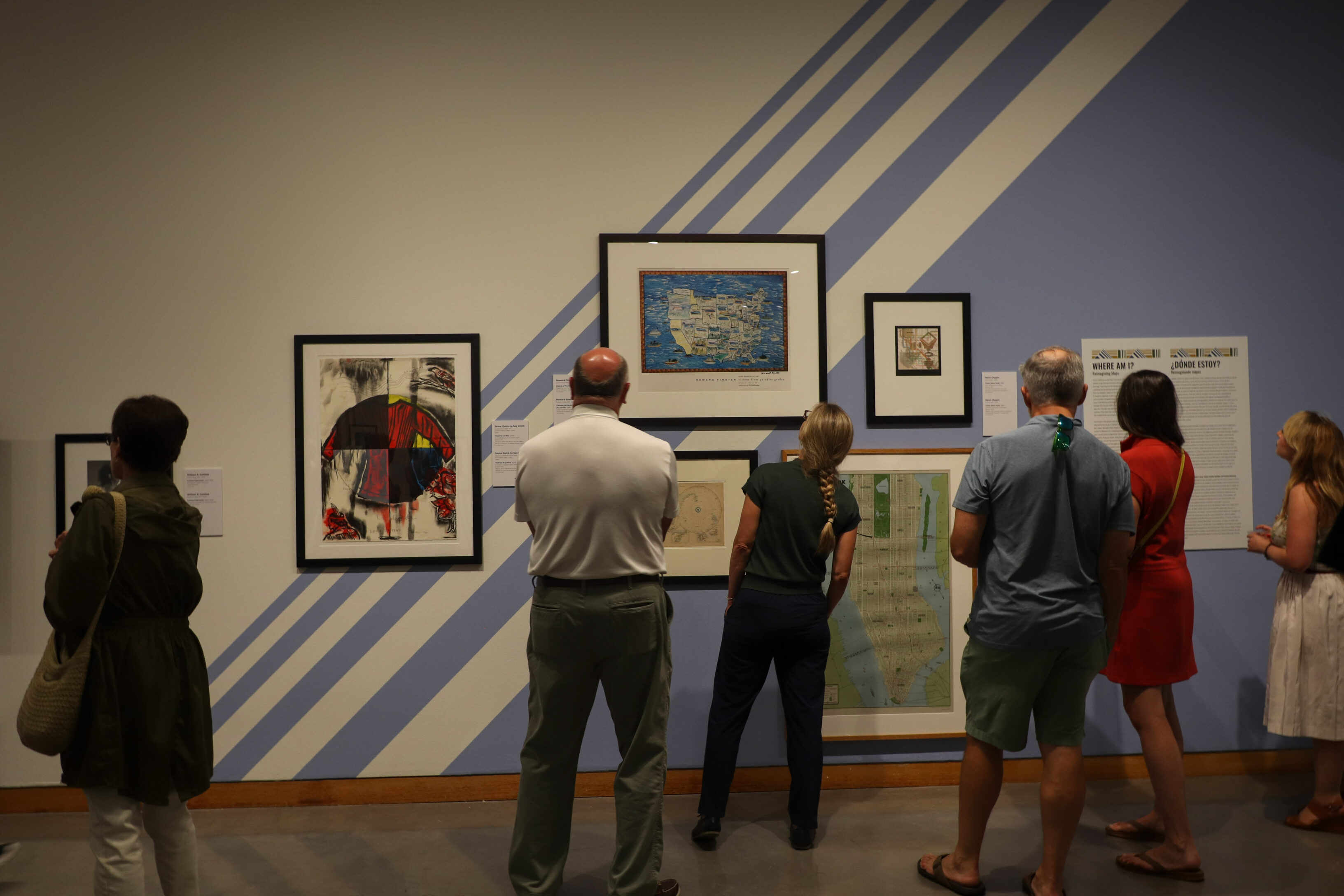
Lehigh University Art Gallery (LUAG) held an opening reception for its new exhibition, “This Land,” inviting visitors to reflect on identity, belonging and the complicated idea of what it means to be American.
The exhibition, which will run through Dec. 4, celebrates America’s 250th anniversary, offering an opportunity to consider the country’s origins, who it belongs to and where it’s headed.
The exhibit takes its name from Woody Guthrie’s iconic 1944 folk anthem “This Land Is Your Land,” in which Guthrie envisioned an America whose bountiful landscapes belong to everyone.
In that spirit, “This Land” avoids prescribing a singular definition of “America” or “Americans,” instead encouraging visitors to reflect on their relationships with the country and how that identity can be formed through art.
Mark Wonsidler, Curator of Exhibitions and Collections at LUAG, collaborated with Art, Architecture and Design Professor Florencia San Martín to select the works for the exhibition, and said the process began two years in advance.
This semester’s selection included works such as Keith Haring’s “City Kids Speak on Liberty” (1986), Claire Leighton’s “Ploughing” (1933), Faith Ringgold’s “You Put the Devil in Me” (2004) and George Inness Sr.’s “The Tenafly Oaks, Autumn” (1892).
The installation was partnered with Nazareth-based guitar company Martin & Co. Guitars, drawing from both LUAG’s permanent collection of over 20,000 pieces and the C.F. Martin & Co Archives.
“We tried to choose things that were provocative, would raise a lot of questions and bring people into a conversation, which is what we’re always doing,” Wonsidler said.
He also said the partnership with Martin Guitar formed from the realization of Guthrie’s central role in the exhibit, as he famously played a Martin acoustic guitar alongside other prominent figures such as Bob Dylan and Joan Baez.
Following the reception, executive chairman of C.F. Martin & Co Archives Chris Martin, shared stories from over 35 years of leading the iconic company known for their exceptional tone, design and craftsmanship, with musical accompaniment by local guitarist Craig Thatchers.
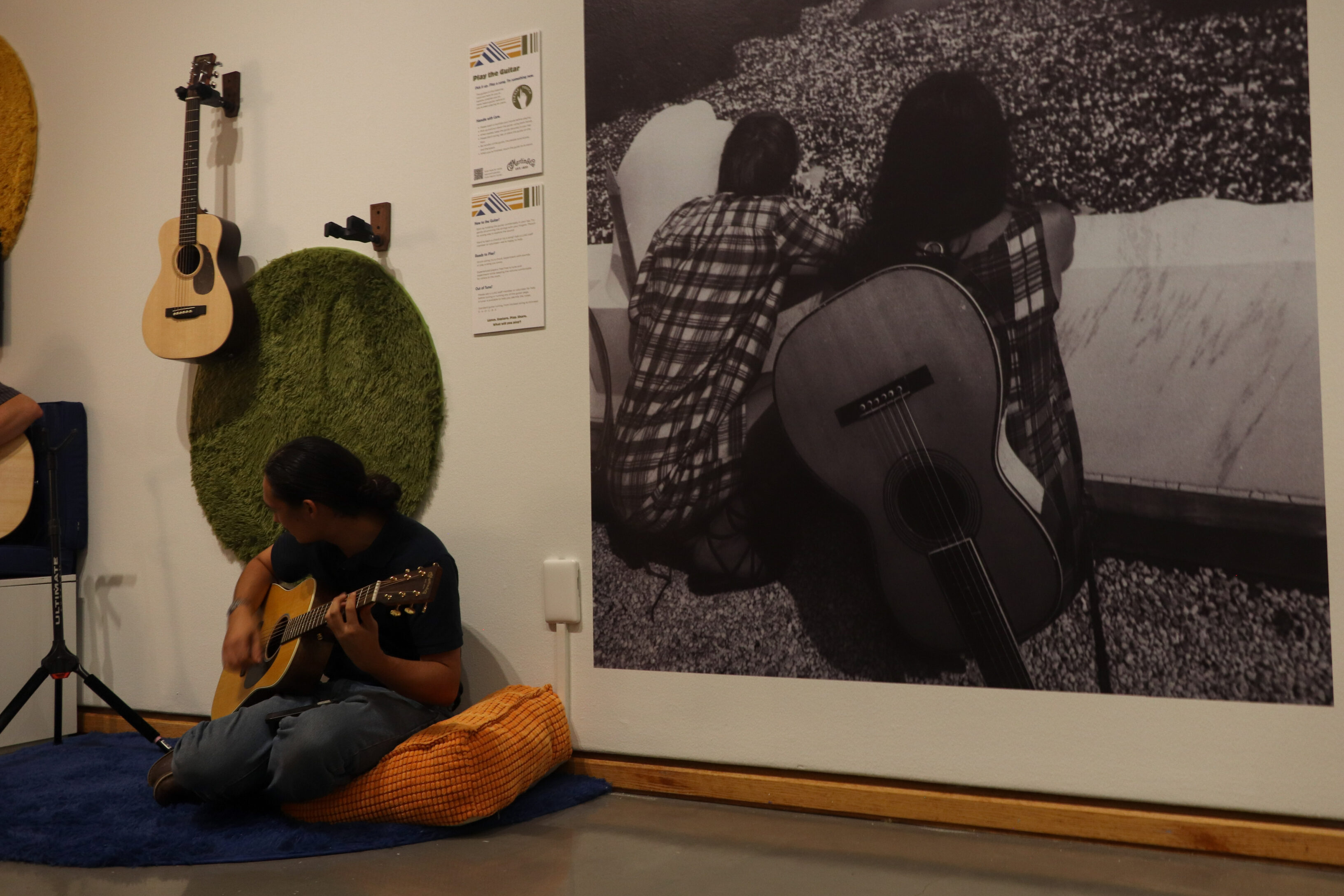
The exhibit features six sections, with immersive experiences including a vintage vinyl and a record player, a digital playlist with community input and a creative lyric-writing station.
Melina Sawyers, ‘28, one of LUAG’s museum education and access interns, said the installation features a diverse range of pieces.
“It’s a conglomeration of all sorts of artists throughout American history and different work mediums,” Sawyers said. “Many different things you wouldn’t normally see together, but that all fits the theme.”
The exhibit’s vibrancy extended beyond its sculptures, photographs, paintings and acoustic guitars, drawing a diverse crowd that included local residents.
Donna Mugavero is a graphic designer and the owner of Sheer Brick Studio on the Southside. She has lived in Bethlehem since 1981 and has befriended members of LUAG.
Anytime there is a LUAG opening, Donna said she is eager to go, calling it a “diamond of a gallery.”
“I’m always blown away when I see pieces from the permanent collection,” Donna said. “It’s astounding to me what Lehigh University has.”
She said that this collection helps connect Bethlehem to the larger national conversation.
Connie Miller has lived in Allentown since 1971 and has been to LUAG for various events.
Miller said that during the COVID-19 pandemic she taught herself to paint. But only recently did she start to become more aware of the local art community in the Lehigh Valley.
She said she believes art is highly important in a time when society faces new challenges, and people struggle to put their feelings into words.
“We’re speaking a language nobody knows, we’re coming together and I think that’s what art is,” Miller said. “I think it brings people together, because it touches a place where words can’t go.”
While locals meandered through the exhibits, trained students were stationed to answer questions and enhance attendee experience.
Avery Diaz, ‘28, who has worked at LUAG for three years, was helping with museum education and visitor services.
To Diaz, the theme was a contextualization of America’s 250th anniversary based on how one defines culture and where these ideas originate.
“Whether that’s through maps or music, it’s embracing the things that have made us,” Diaz said. “The things that have formed how we can adapt going forward, whether it’s equalities, inequalities or what we choose to celebrate knowing these distinctions.”
Throughout her time at LUAG, Diaz said both the art and guests have greatly expanded her perspective. She said something as simple as doing a deeper analysis of an abstract piece allowed her to see it in a whole new light.
“You can find a lot of parts of yourself in the art around us and learn more about other people,” Diaz said. “I think it expands your understanding of what it means to be human, to just be here and present.”
Diaz encourages students who have never heard of or been to LUAG before to stop by, and said that this semester more departments will be coming in to integrate the galleries into their instruction.
“There’s a place here for everyone,” Diaz said. “You can always find something to relate to or something you might be interested in, whether it’s reading the work itself or attending an event.”
Comment Policy
Comments posted to The Brown and White website are reviewed by a moderator before being approved. Incendiary speech or harassing language, including comments targeted at individuals, may be deemed unacceptable and not published. Spam and other soliciting will also be declined.
The Brown and White also reserves the right to refuse the publication of entirely anonymous comments.