



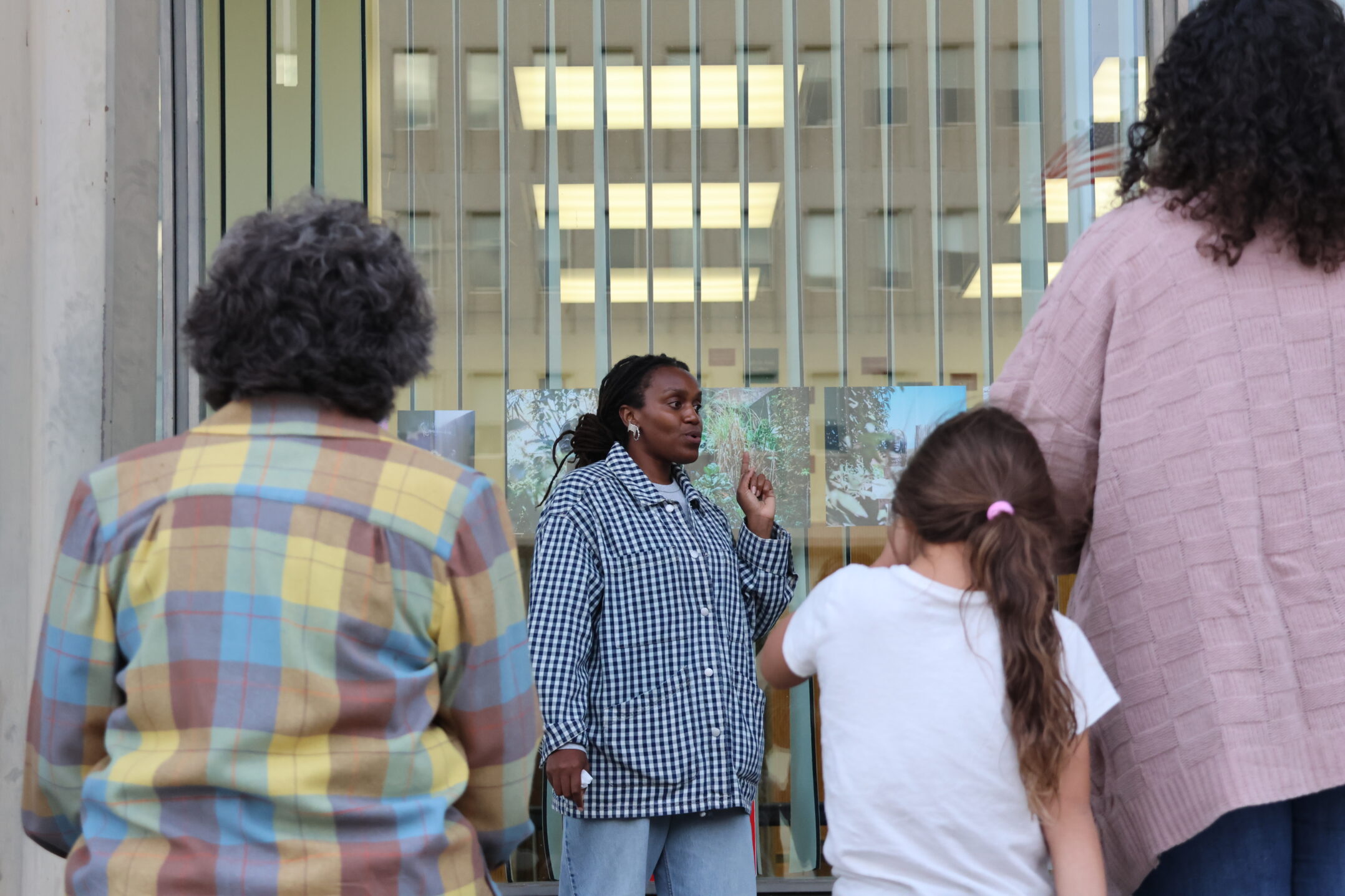
Photographer and Bethlehem local Sasha Phyars-Burgess’ installation, “Everything Nice,” is now the exhibit featured at the Bethlehem Public Library. First cultivated in early 15th century history, Phyars-Burgess’ “Everything Nice” focuses on sugar cane’s role in the history of enslavement and the practices still prevalent in modern society.
She showed attendees around the installation Tuesday night, featuring photos on the outer glass wall, while narrating her thought process and artistic journey.
Phyars Burgess began the presentation by introducing the question that inspired her installation — where her ancestors were during the era of the trans-Atlantic slave trade.
She said that after learning about the concept of slavery as a child, Phyars-Burgess was shocked and confused by the concept of owning other people.
“That feeling never truly went away,” Phyars-Burgess said.
She grew up in Bethlehem and spent much of her childhood in the very same library her work premieres in. Bethlehem Public Library was also where she found the answer to her question: sugarcane. Phyars-Burgess and her family are from Trinidad.
She said her ancestors were enslaved and forced to cultivate sugarcane.
Balancing themes of labor, culture and intrusion, Phyars-Burgess told the story of the trans -Atlantic slave trade and the lives of enslaved laborers through remnants of history.
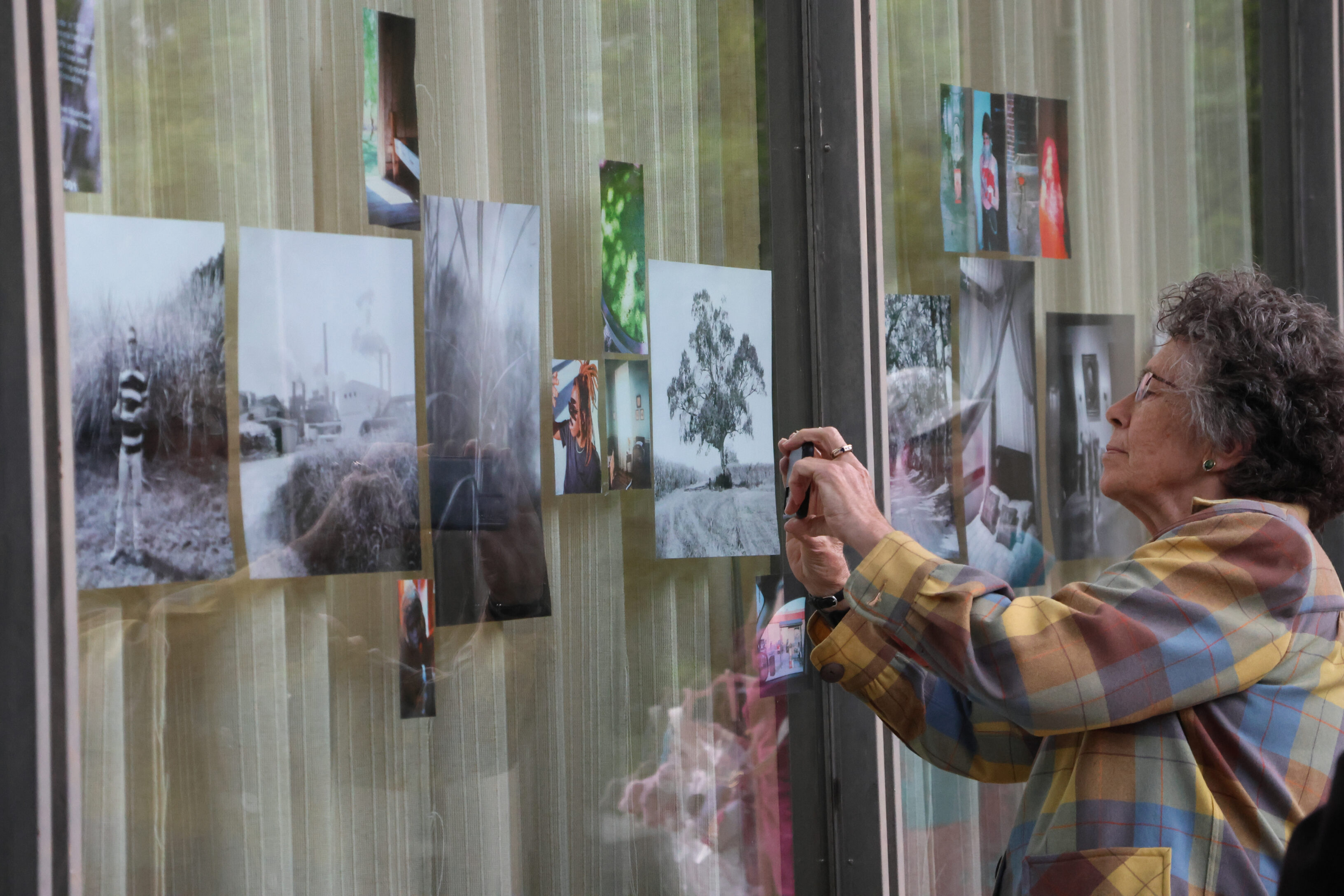
The installation explores the history of enslavement, labor, and sugarcane across continents through photographs taken in Louisiana, Florida, the Dominican Republic and Portugal.
“The pictures aren’t direct representations,” Phyars-Burgess said. “You’re not gonna necessarily see people toiling in the fields. What you are gonna see is representations of land. You’re not necessarily going to see piles of sugar. What you are gonna see is a photograph inside of a grocery store.”
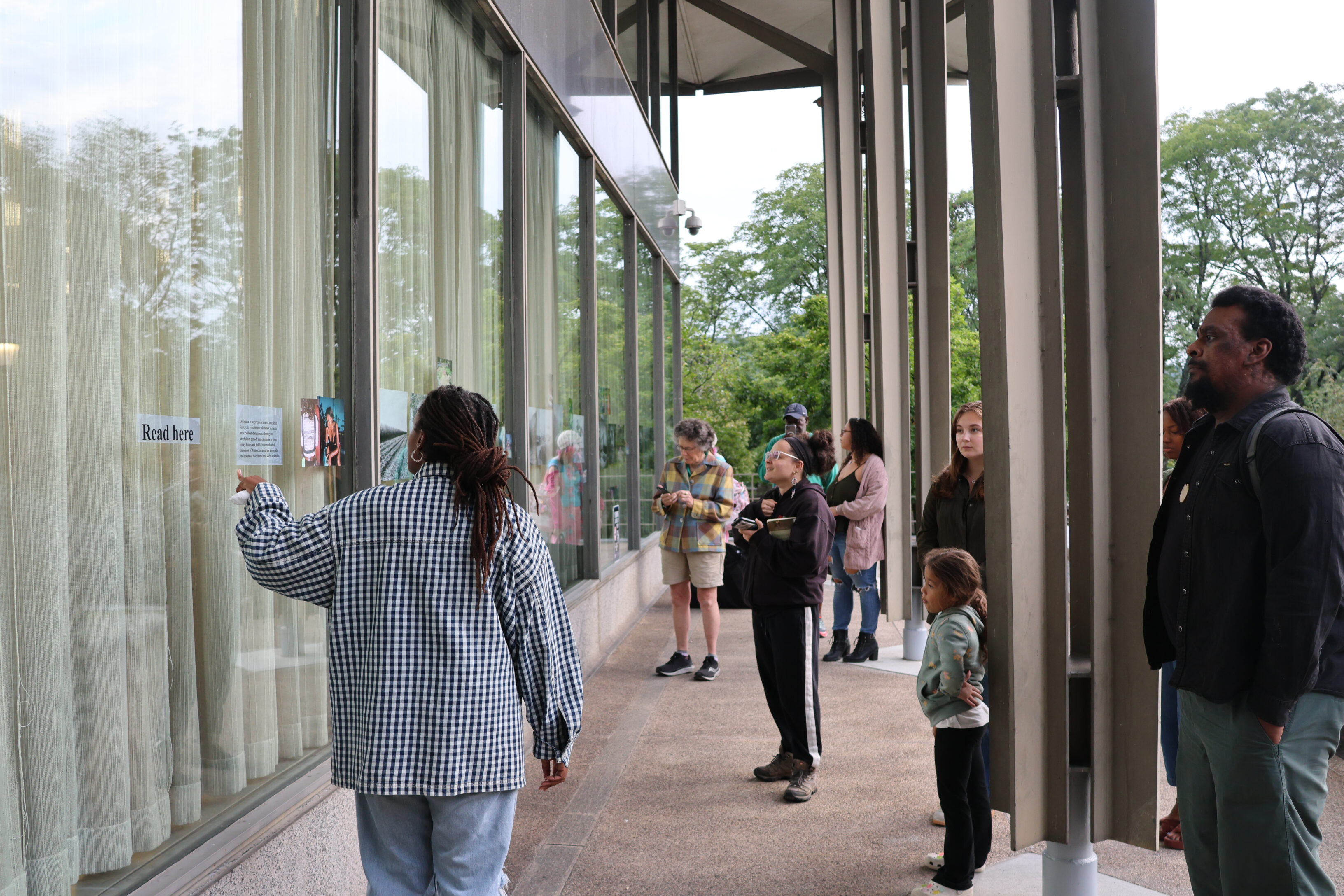
Phyars-Burgess said this approach is post-documentary and pseudo-journalistic, highlighting the nature of the project as discovery and record-making in a world where people can only interact with the impacts of slavery.
Khalid Taylor, a Bethlehem resident and event attendee, said the installation gave community members reflections on themselves and their history in the world. He also said he felt the power of the diaspora, which was created through the trans-Atlantic slave trade.
“To see people across the globe have similar but also varying experiences around one particular plant and what it has done and how it’s shaped lives and generations, I think is really profound,” Taylor said.
He said he is grateful for the library as a third space and for having the resources to engage others in learning, creative expression and community building.
Phyars-Burgess said the exhibit aims to reconcile not just the history of enslavement and the communities who still feel its effects centuries after, but also her own personal history, with modern conceptions of labor and culture.
“I think my personal history is the intrusion,” Phyars-Burgess said. “Where my family comes from, how they got here, how I ended up growing up in Bethlehem, is the intrusion. And my goal is to really navigate that, pick it apart and see how my existence connects me to history.”
In exploring the labor of her ancestors, Phyars-Burgess undertook a labor of her own.
“Everything Nice” in its essence had to be an international experience in order to trace the trans-Atlantic slave trade and the evolution of sugarcane across borders and cultures, Phyars-Burgess said.
“This is a project that I feel constantly needs work,” Phyars-Burgess said. “Mental work, emotional work, and then of course physical labor.”
Phyars-Burgess said she made an active choice to continue the project, even when it was challenging for her.
“It’s a labor that I often have wanted to put down,” Phyars-Burgess said. “But I have not put it down because of what it forces me to do, which is to confront these ideas with the reminder that this is not a forced labor for me. This was a choice that I made.”
She said she reflected on the lack of choice her ancestors and millions of enslaved workers had, and her experience allowed her to research, see, and understand the labor of American life in a new way.
Charlyann Acosta, a lifelong Bethlehem resident, also attended the event. She said the experience of walking around the building was a beautiful way to record a history of immense pain and harm while also honoring the people who exist in it today.
“I like the way that it lets you walk around and invites you again to reflect on yourself, reflect on the way that you view history or the way that you view people,” Acosta said.
The opportunity to have Phyars-Burgess’s exhibit in the Bethlehem Public Library allows her to come full circle with her previous experiences.
“The library blew my mind as a kid, and it continues to do so,” Phyars-Burgess said. “Access to knowledge was the very thing that was denied to enslaved people. Access to knowledge gave me the tools to dream. It expressly allowed me to feel and be felt.”
Comment Policy
Comments posted to The Brown and White website are reviewed by a moderator before being approved. Incendiary speech or harassing language, including comments targeted at individuals, may be deemed unacceptable and not published. Spam and other soliciting will also be declined.
The Brown and White also reserves the right to refuse the publication of entirely anonymous comments.