



The class of 2030 was a record-breaking admissions year for Lehigh’s undergraduate enrollment.
Since the pandemic, Lehigh’s first-year enrollment has been on the rise, following its planned strategic enrollment growth.
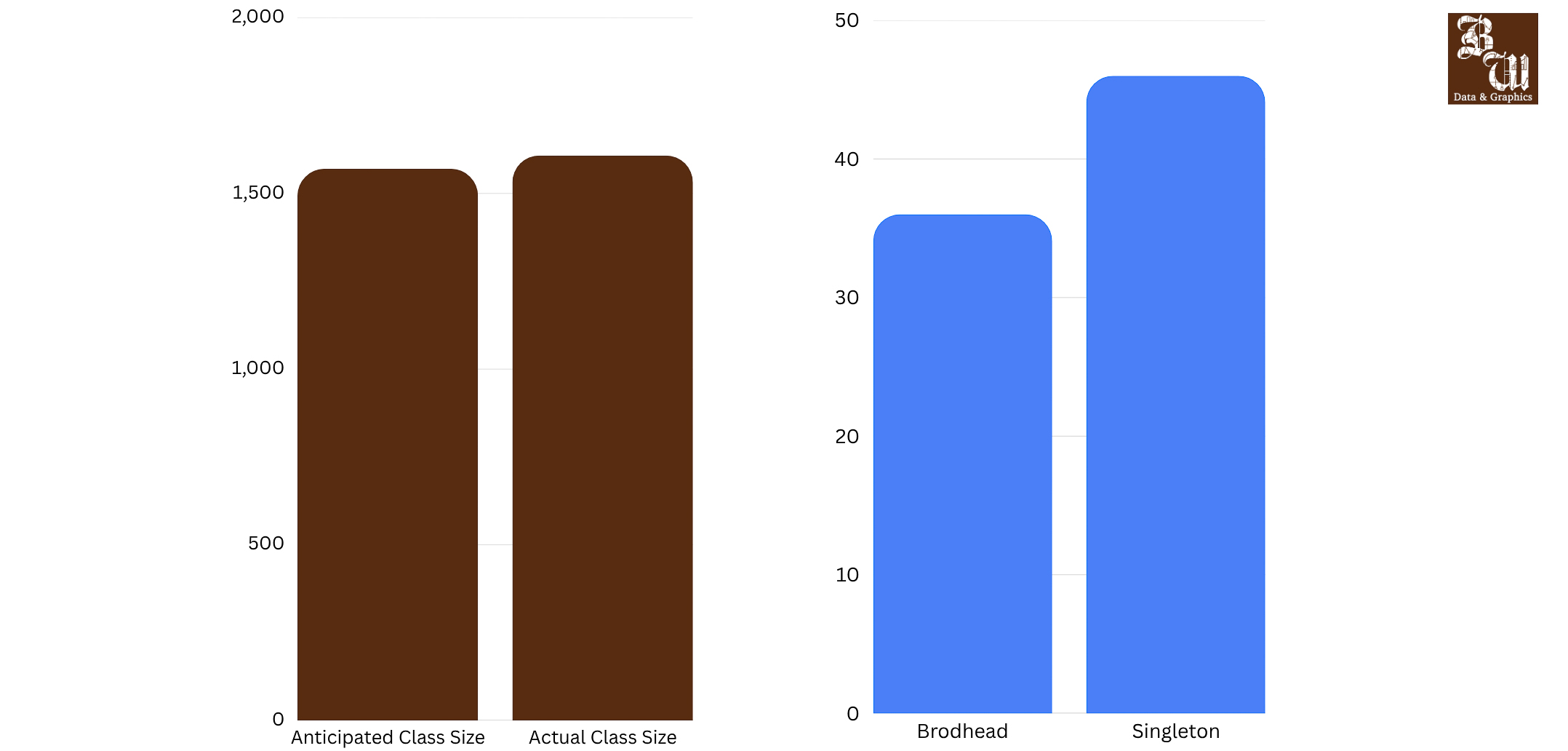
Currently, there are 1,608 first-year students.
Lehigh uses the 10th day of class to assess the final numbers for the enrollment of the first-year class. Bruce Bunnick, director of admissions, said the target enrollment was 1,570 first-year students.
“The increase is modest,” Bunnick said. “That’s about a 2.4% increase over the targeted number of students.”
He said this increase in students was on track with projections.
Bunnick said Lehigh’s efforts to encourage accepted students to take the final step and enroll have paid off.
With the enrollment increase, the university made changes to its housing arrangements for first-year students.
Michaela Criswell, Lehigh’s associate director of housing services, added that this re-evaluation is common in college housing.
“It’s allowed us to be more thoughtful and strategic with the way that we’re looking at our housing inventory — the stock that we have and what’s available,” Criswell said.
Criswell said this year, there are 46 first-year students in Singleton and 36 first-year students in Brodhead.
In March, the housing team learned of the influx of first-year students leading them to reconfigure where first-years would be living.
On the first-year housing contract, students could indicate whether they were interested in living in the suite-style options of Singleton.
This survey allowed the housing services team to gauge interested students and place them in the suite-style housing.
Criswell said her team was intentional with the spaces they put first-year students.
She said a key part of this intentionally was that these first-year students lived near dining options.
Brodhead has a dining hall in the building, and Singleton is near Hawks Nest and the University Center.
Criswell said another goal was to group first-years in each building, so they had peers in the same situation as them.
For students living in Singleton, first-years are close to two other first-year dorms, Taylor and McClintic-Marshall.
However, first-years living in Brodhead are much further from other first-year students.
All offices involved said ensuring these first-year students still have a traditional dorm experience was important.
“We really tried to plan, because the number was higher this year, how we could still make that first-year experience great even though they’re not in a traditional first-year building,” Chris Ottey, senior associate director for housing services, said.
Ottey added that his team worked closely with the Office of Residence Life and the Office of First-Year Experience to figure out a conducive way to fit the increased number of first-year students among other students.
Due to first-years living in Singleton, sophomores who are typically housed in those residence halls had to move elsewhere.
Criswell said sophomores were offered the opportunity to move to Southside Commons at the same rate they’d pay for Lehigh’s on-campus housing.
“Almost every group we offered [Southside] to took us up on it,” Criswell said. “Then we were able to use some of those Singleton spaces again more intentionally for first-years.”
She added that no students in Brodhead were offered to move.
Ottey noted that no students were forced to move – the shift was offered to students, and enough students were interested in the opportunity.
Bunnick said with this modest increase, the acceptance rate for this class was approximately 27%.
Bunnick said even with the increase in first-year students, the college admissions landscape for Lehigh, and across the country, remains competitive.
Looking ahead, Bunnick said the admissions team expects modest, yet manageable increases in first-year enrollment in the years to come.
He said the increase won’t hinder students’ academic and overall experience.
“We’ve managed to reach a point where we have come close to the initial strategic enrollment growth, and I think that we’ll simply have to wait and see what the plan is for the coming year,” Bunnick said.
Comment Policy
Comments posted to The Brown and White website are reviewed by a moderator before being approved. Incendiary speech or harassing language, including comments targeted at individuals, may be deemed unacceptable and not published. Spam and other soliciting will also be declined.
The Brown and White also reserves the right to refuse the publication of entirely anonymous comments.