



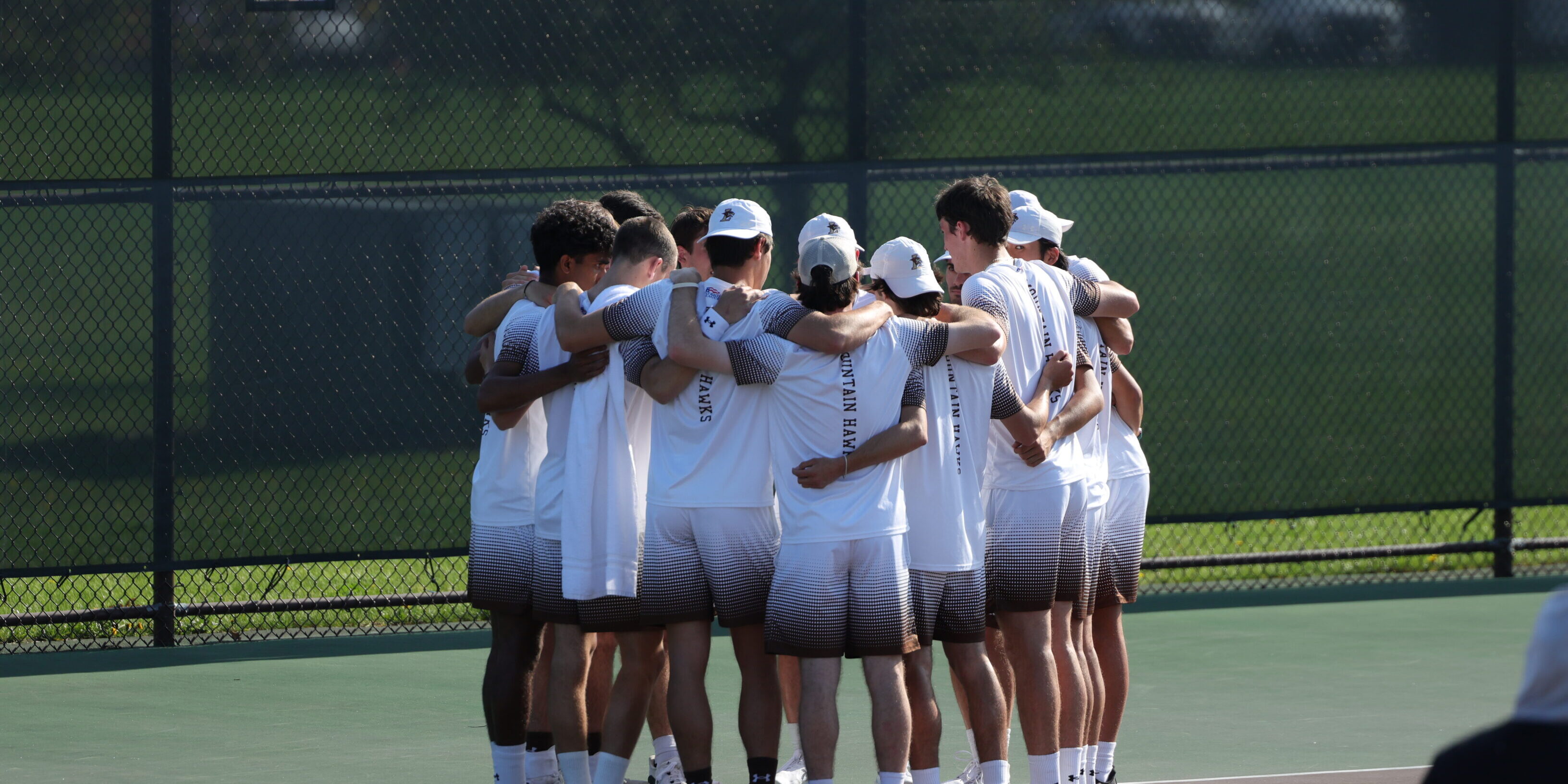
Brazil, Canada, Germany, Israel, Serbia and Spain.
Those are the countries the Lehigh men’s tennis team come from.
Aleksandar Daskalovic, a sophomore on the team, is from Belgrade, Serbia.
Daskalovic’s tennis career started in London, where he was born. He first picked up a racket at 5-years-old. When he was 11-years-old, Daskalovic and his family moved him to their home country, Serbia, to continue his training and education.
He attended Poslovno Tehnicka Skola and spent much of his time at Tennis Club Partizan, training, traveling and competing in singles. When Daskalovic was 18, he knew it was time for a change. He said his coach at the time showed him there was a way to continue his passion for tennis, but in a different environment. This brought Daskalovic to Lehigh.
In his first season as a Mountain Hawk, Daskalovic won Patriot League Rookie of the Year. Even with personal growth, Daskalovic said the biggest change in collegiate tennis was the addition of a team environment.
“We are playing for something greater than ourselves, which is something I would have never expected to experience playing a sport as individual as tennis,” Daskalovic said.
It’s not uncommon for international tennis athletes to come to the United States to continue their careers through joining a collegiate program.
In 2022, the NCAA found tennis was the leading sport for international student-athletes in all of Division I men’s sports at 64%.
At Lehigh, Daskalovic is one of seven players who are international students. The following players are from outside the U.S.:
- Aleksandar Daskalovic, sophomore, Belgrade, Serbia
- Rafael Gracie, junior, Brasília, Brazil
- Ofer Hacohen, junior, Ga’aton, Israel
- Benedict Horn-Bourque, senior, Montreal, Quebec
- Victor Imanishi, junior, São Paulo, Brazil
- Alex Van Lumich, senior, Zaragoza, Spain
- Julian Winter, first-year, Burgkunstadt, Germany
Unlike Daskalovic, junior Rafael Gracie always knew he wanted to play collegiate tennis.
Gracie grew up in Brasília, Brazil and to increase his chances of getting into a Division I school, he decided to attend high school in the United States at Grandview Preparatory School in Boca Raton, Florida.
After becoming a Mountain Hawk, Gracie agreed with Daskalovic and said the biggest change in tennis was the individual and team dynamic.
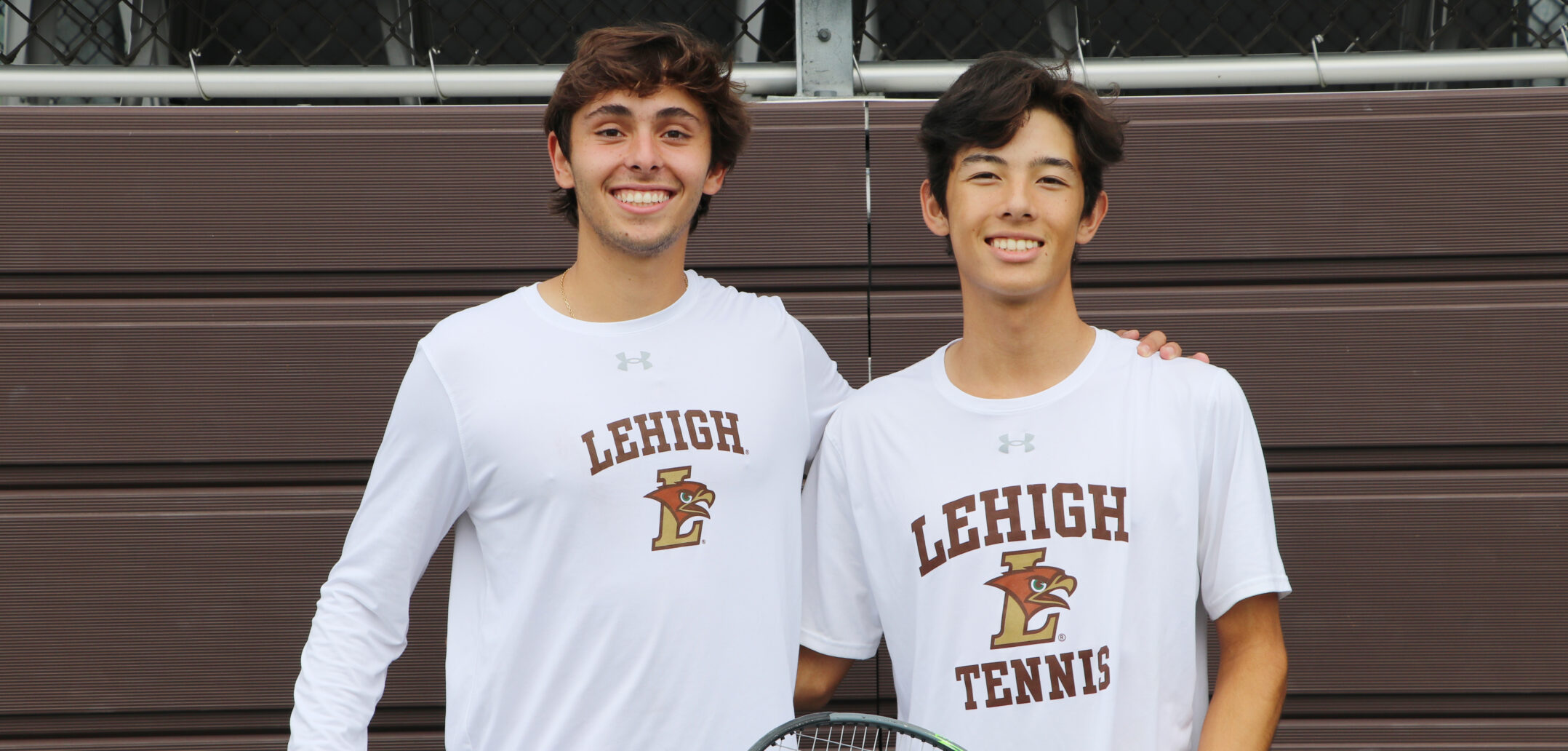
“We’re 12 players trying to get better at the same time and push each other,” Gracie said.
The structure of youth tennis is part of the reason international students dominate at the collegiate level. Most American players develop within a school or an academy based framework, targeting collegiate enrollment immediately after high school.
International prospects are usually products of club based systems. These club opportunities have players compete at both the amateur and professional levels, while increasting their Universial Tennis Ranking.
Additionally, youth tennis is more individualized, which changes once athletes get to college. In collegiate tennis, athletes have a new team dynamic – training and competing alongside one another.
For junior Ofer Hacohen, Lehigh is a place he feels supported as an international student athlete. Hacohen grew up in Ga’aton, Israel and after finishing his 2-year-and-six-month military service, he wanted to continue his tennis career and education in the United States.
“With a big international community (it) is very accepting no matter where you’re coming from,” Hacohen said. “Especially my former captain (who) introduced me to a lot of people. I could have never expected that.”
With the team’s international diversity, Daskalovic said it reinforces a team culture, as they all need each other for support.
This is the first time in history both of the team captains are international students: Alex Van Lumich and Benedict Horn-Borque.
Horn-Borque said playing tennis at Lehigh has given him a new enjoyment for the sport.
Unlike individual youth or professional tournaments, college tennis features multiple matches played simultaneously on side-by-side courts to decide a cumulative team score.
“A big difference between professional tour and college tennis is that you’re allowed to be super loud on the court,” Horn-Borque said. “Your teammates are right next to the court cheering after points, encouraging you when you’re struggling and creating energy throughout the match.”
He said the support during matches helps him feel like he’s not playing for himself, but his team. Horn-Borque said this energy can help athletes compete at a higher level that wouldn’t be possible on their own.
“Personally as an international (student), I’d say that my teammates are my family, and that coach is somewhat of a mentor to us, as we are so far from home.” Daskalovic said.
Comment Policy
Comments posted to The Brown and White website are reviewed by a moderator before being approved. Incendiary speech or harassing language, including comments targeted at individuals, may be deemed unacceptable and not published. Spam and other soliciting will also be declined.
The Brown and White also reserves the right to refuse the publication of entirely anonymous comments.