



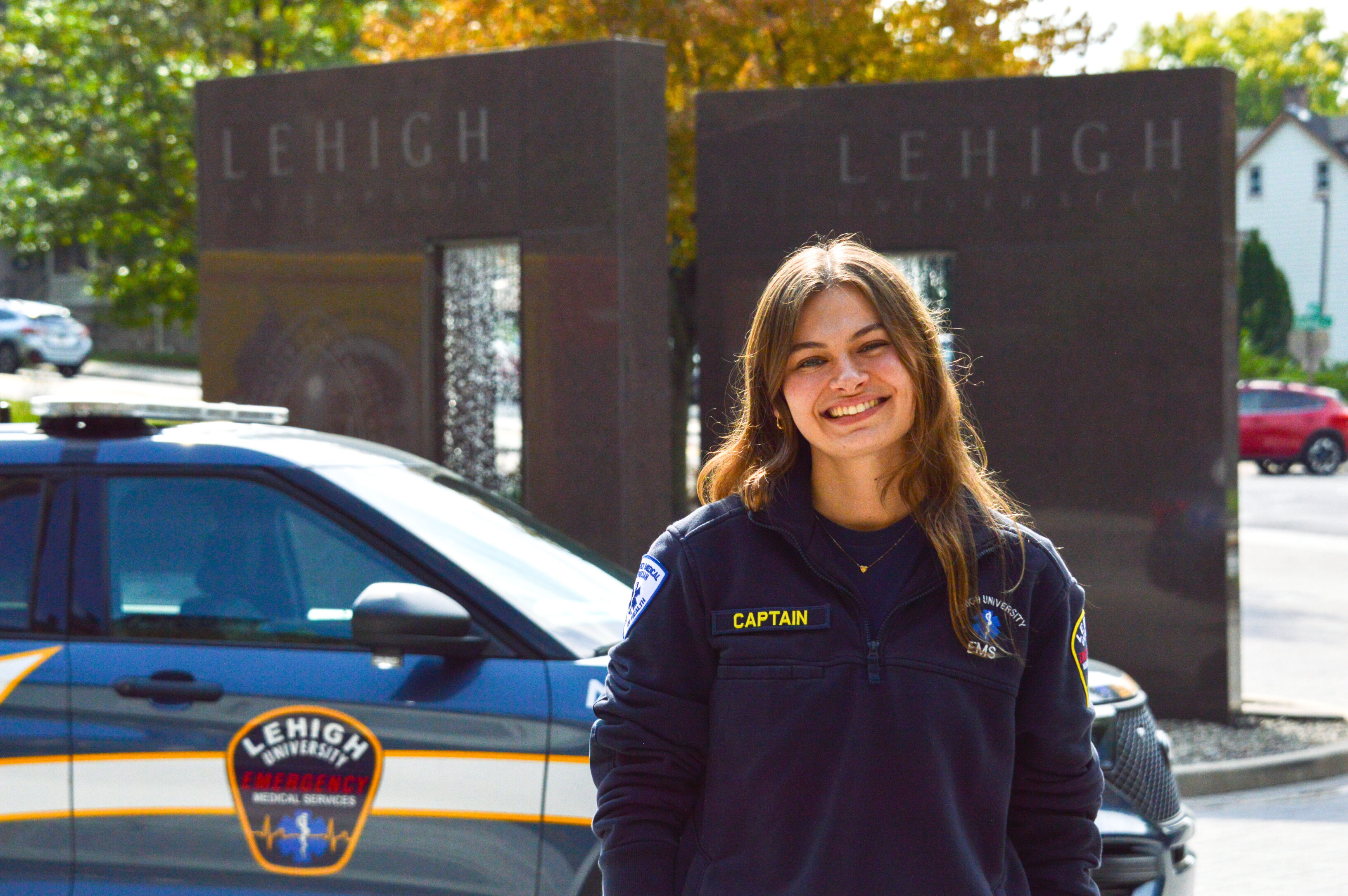
When most people think of emergency medical services, they picture high-stakes, life-or-death situations. For Brooke Bourgal, ‘27, it was no different.
As a shy, first-year pre-med student navigating an overwhelming club fair, she cautiously put her name down at the Lehigh University Emergency Medical Services (LUEMS) table.
“I was thinking, ‘It’s up to me to save someone’s life,’” Bourgal said.
She said at the time it seemed like a relevant resume builder, and she had no plan to get her EMT certification or idea of what she was signing up for.
Nearly four years later, Bourgal serves as the organization’s captain.
Under Bourgal’s leadership, LUEMS operates as a free, 24/7 basic life support service while classes are in session and is run almost entirely by student volunteers.
LUEMS currently has 98 members, all of whom either hold an Emergency Medical Technician (EMT) certification or are working towards one so they can assist on calls.
Bourgal said many students complete their certifications through LUEMS’s partnership with Moravian University, which runs EMT training courses every spring and summer. Students can also opt for a quicker, full-time course during academic breaks.
Students who sign up without prior experience begin as explorers and are required to work one 12-hour shift per month. When LUEMS receives a call for service through a Lehigh University Police Department dispatcher, three members typically respond to the scene.
Crew chiefs are experienced members who work at least 12 hours each week and lead the response, followed by an EMT who treats and assesses the patient, determining whether hospital transport is necessary. An explorer observes and learns from real-world scenarios while working toward their EMT certification.
Bourgal still remembers her first call.
“I had my little pink bag and a radio in my lecture hall of 100 people,” Bourgal said. “Then it just (started) beeping really loud, and I’m like, ‘Oh my God.’ Everyone is looking at me, and I jump up, grab all of my stuff, and I’m out.”
She said the call was very hands-on for her first response.
Bourgal said the patient was experiencing complications related to low iron levels. The LUEMS crew administered oxygen and stabilized the patient until a Bethlehem ambulance arrived to transport them to the hospital.
After the call, Bourgal said she knew she was passionate about helping people through EMS.
According to their website. In 2025, LUEMS responded to 262 calls for service.
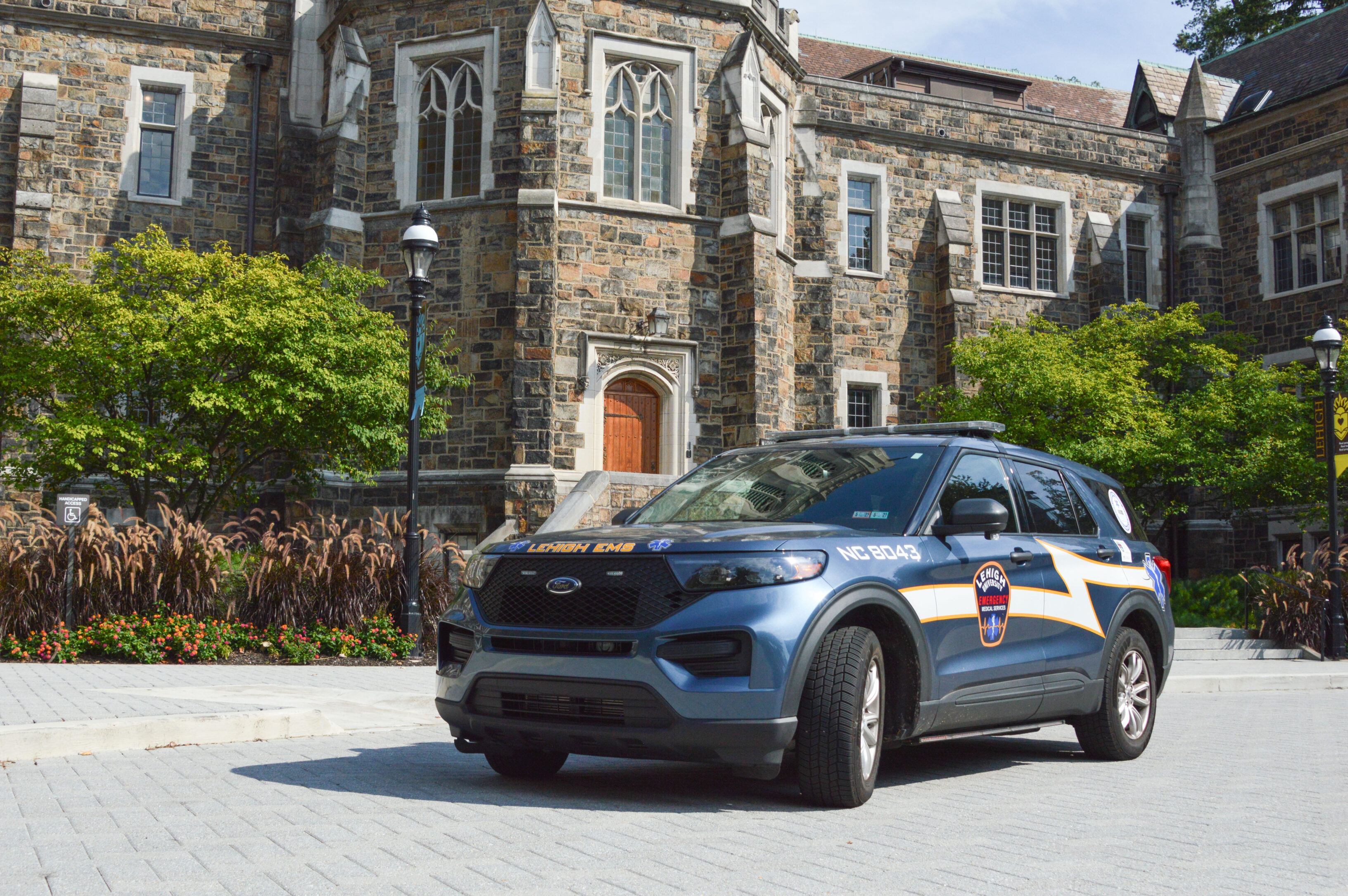
She said the organization is considered a quick response service, which means they respond to emergencies quicker than a typical Bethlehem City ambulance is able to.
Bourgal said the city of Bethlehem only has a few ambulances on call at a time, often taking around 15 minutes to respond to calls on Lehigh’s campus. LUEMS responds to emergencies in around five minutes, but she said this can vary based on distance and whether people move quickly.
She said typically, with calls to fraternity houses where a party was shut down, there can be hundreds of students in the street.
“I’ll use my lights and sirens, but most kids are desensitized to it nowadays, so it can take me anywhere from five to seven minutes to get up there,” Bourgal said. “If someone is having an opioid overdose, after six minutes your brain cells start dying because they don’t have enough oxygen; this fast response is part of what makes (LUEMS) important.”
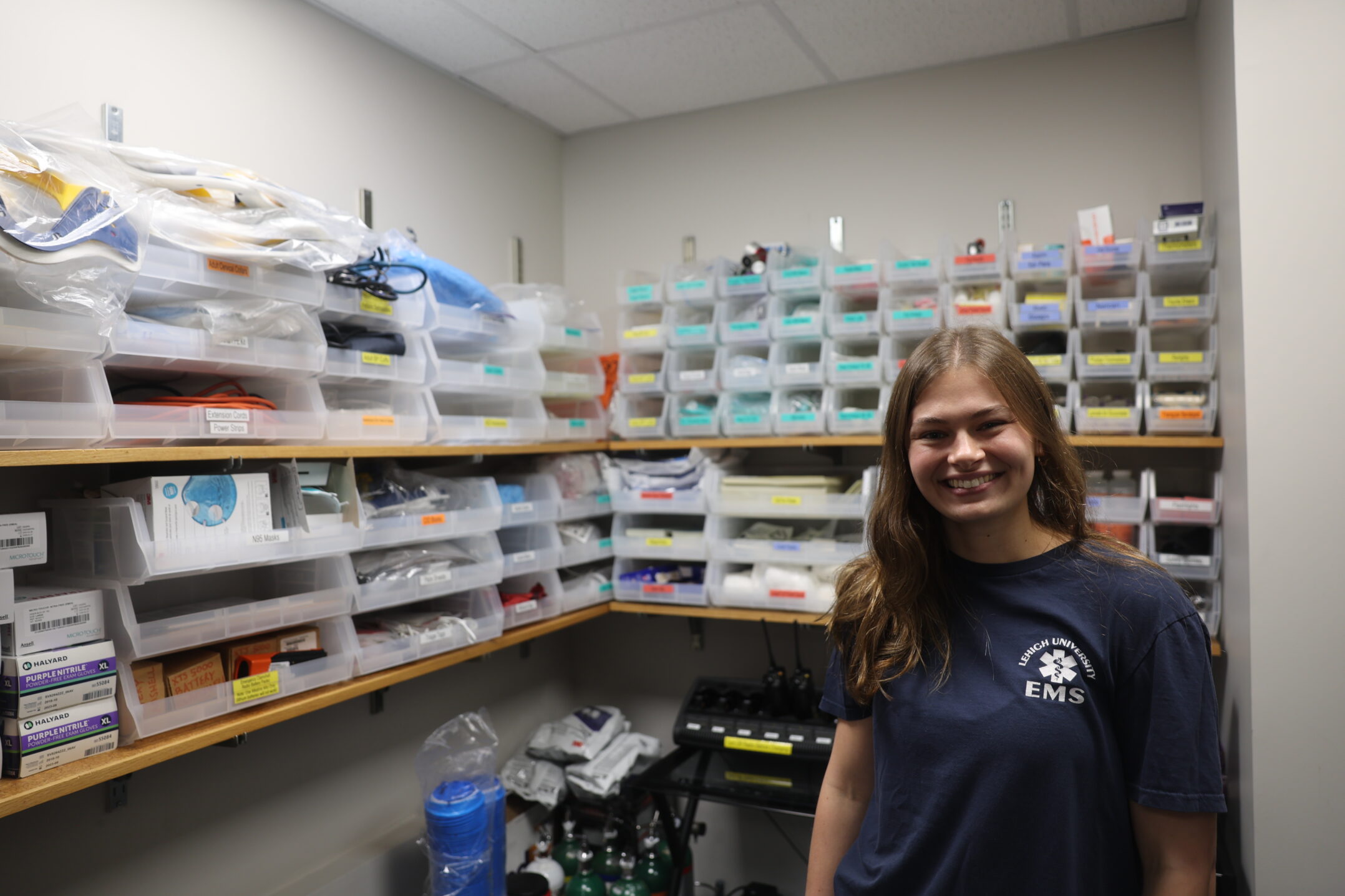
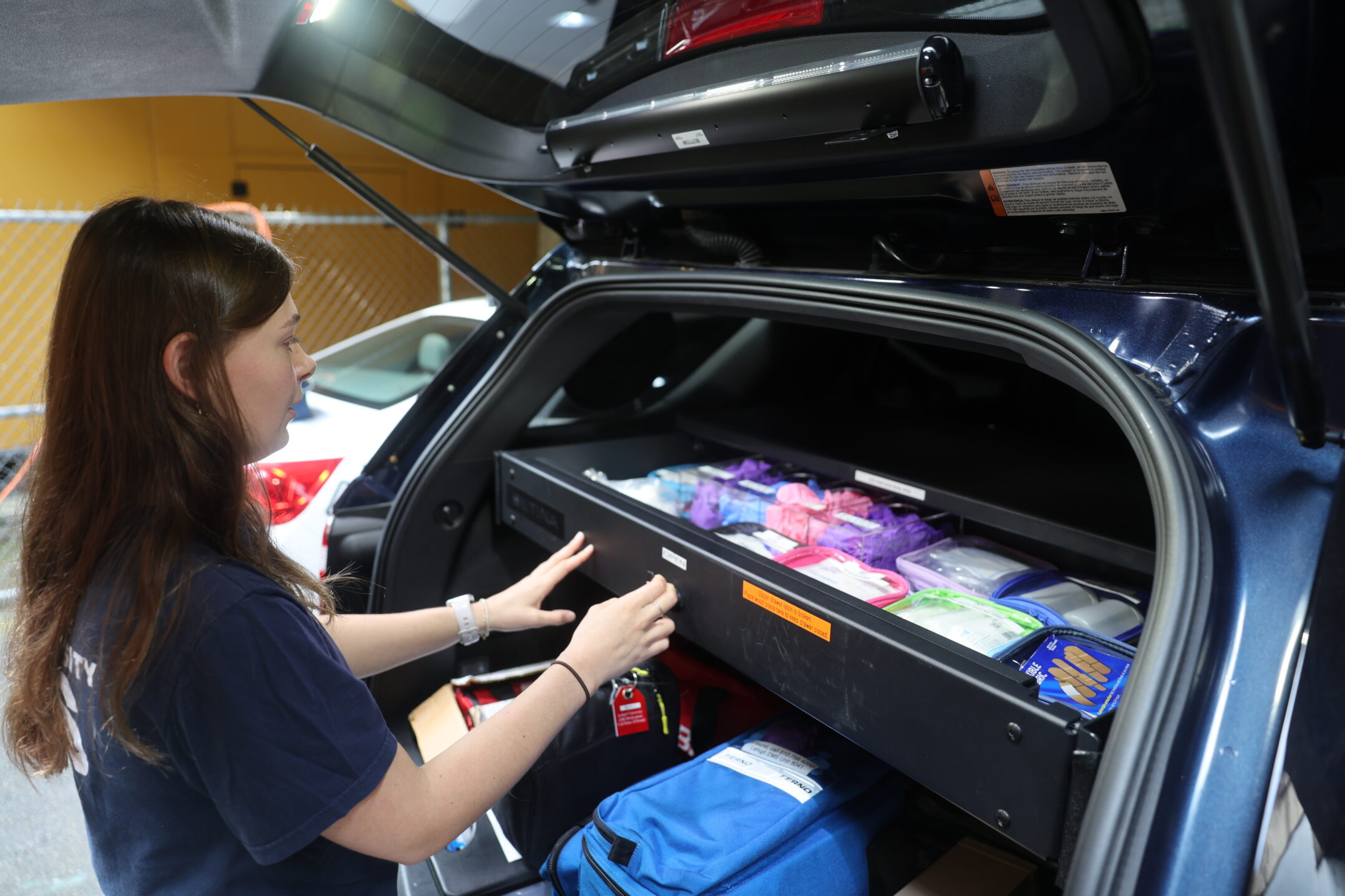
On calls, EMTs carry a “jump bag,” which Bourgal said has the essential equipment needed to initially assess and treat a patient. This includes a stethoscope, blood pressure cuff, trauma kit and emergency medications like Narcan and EpiPens.
They also have additional emergency equipment in their vehicles, such as cervical collars to stabilize a patient’s neck and spine, an oxygen machine, saline water, gauze and tourniquets in the event of an active shooter situation.
Although calls vary depending on the time of day, the majority of calls that LUEMS receives are related to intoxication.
Pre-med student Arielle Ohana, ‘28, currently serves as an administrative lieutenant and crew chief for LUEMS and said Thursday, Friday and Saturday nights are when they receive the most calls about intoxication.
Ohana and Bourgal both spoke about the importance of preventative measures to keep students safe and how to respond when somebody is suffering from a medical emergency.
“It’s really important for (students) to want to call us and feel safe and comfortable in doing so,” Ohana said. “Coming to students as their peers, especially emphasizing how they should be honest with us so we can treat them properly and know the right course of action to take, is so important.”
Ohana and Amelia Crosby, another LUEMS EMT, do regular presentations on recognizing signs of opioid overdoses, alcohol poisoning and Lehigh’s medical amnesty policy.
Jenna Rose, assistant director of health advancement and prevention strategies, said students are required to take an alcohol education course that touches on drug use and recognizing an overdose before attending Lehigh.
Students also receive training on Lehigh’s medical amnesty policy during their orientation.
“The main thing that we want students to know is, no matter what, to call,” Rose said. “We want to make it very clear that Lehigh Police want students to be safe and protect each other.”
Bourgal said she believes students must know how to recognize signs of an overdose and administer Narcan to promptly begin reversing the effects.
Students can receive free Narcan from the lobby of the LUPD station and the Health and Wellness Center. Alexandra Smith, the associate director for fraternity and sorority life, also said the Interfraternity Council has purchased Narcan cabinets for fraternity houses.
“If they see someone overdosing and give Narcan, they can bring them back to life in two minutes rather than the seven (minutes) that it may take me to get up there,” Bourgal said. “You just saved someone’s life. That’s so crucial.”
Bourgal also stressed the importance of calling LUEMS even after Narcan is administered, because it’s not a substitute for emergency medical care.
Ohana said she’s heard of people who are hesitant about calling LUEMS out of fear of getting hit with expensive ambulance bills, but the student service itself operates cost-free. This is because it’s run on an entirely volunteer basis.
As Bourgal nears the end of her time as captain, she said her favorite memories come from helping students who remind her of herself as a shy first-year signing up at the club fair.
“I’ll show them how to work the radio or something, and seeing that little sparkle in their eyes when they giggle and say, ‘this is so fun, you made this so enjoyable for me’ is just something I love,” she said.
Bourgal said she wants to make sure they know that it’s her first time on Earth too. She said she’s always learning when she goes on calls, and that’s OK.
Ohana has a similar outlook on LUEMS — she enjoys helping new members adjust and easing their nerves.
With the upcoming LUEMS elections in November, Ohana is hoping to step up and be elected to fulfill the role of captain for 2027.
“The most important thing for me is transparency,” Ohana said. “I think it’s important to have someone that people feel comfortable enough to go to, especially with their concerns, in such a high-stakes environment where you never really know what to expect.”
Comment Policy
Comments posted to The Brown and White website are reviewed by a moderator before being approved. Incendiary speech or harassing language, including comments targeted at individuals, may be deemed unacceptable and not published. Spam and other soliciting will also be declined.
The Brown and White also reserves the right to refuse the publication of entirely anonymous comments.