



Chloe has a three-hour basketball game ahead of her; she needs something to drink and refuel.
But Chloe isn’t real — she’s a fictional basketball player created for “Healthy Choice,” a computer-based simulation developed and programmed by Shan Li, an assistant professor at Lehigh University’s College of Health.
The simulation turns everyday nutrition decisions into simulated cases designed to build nutrition literacy and critical thinking skills. Li studies how people learn, solve problems and differentiate their behavior.
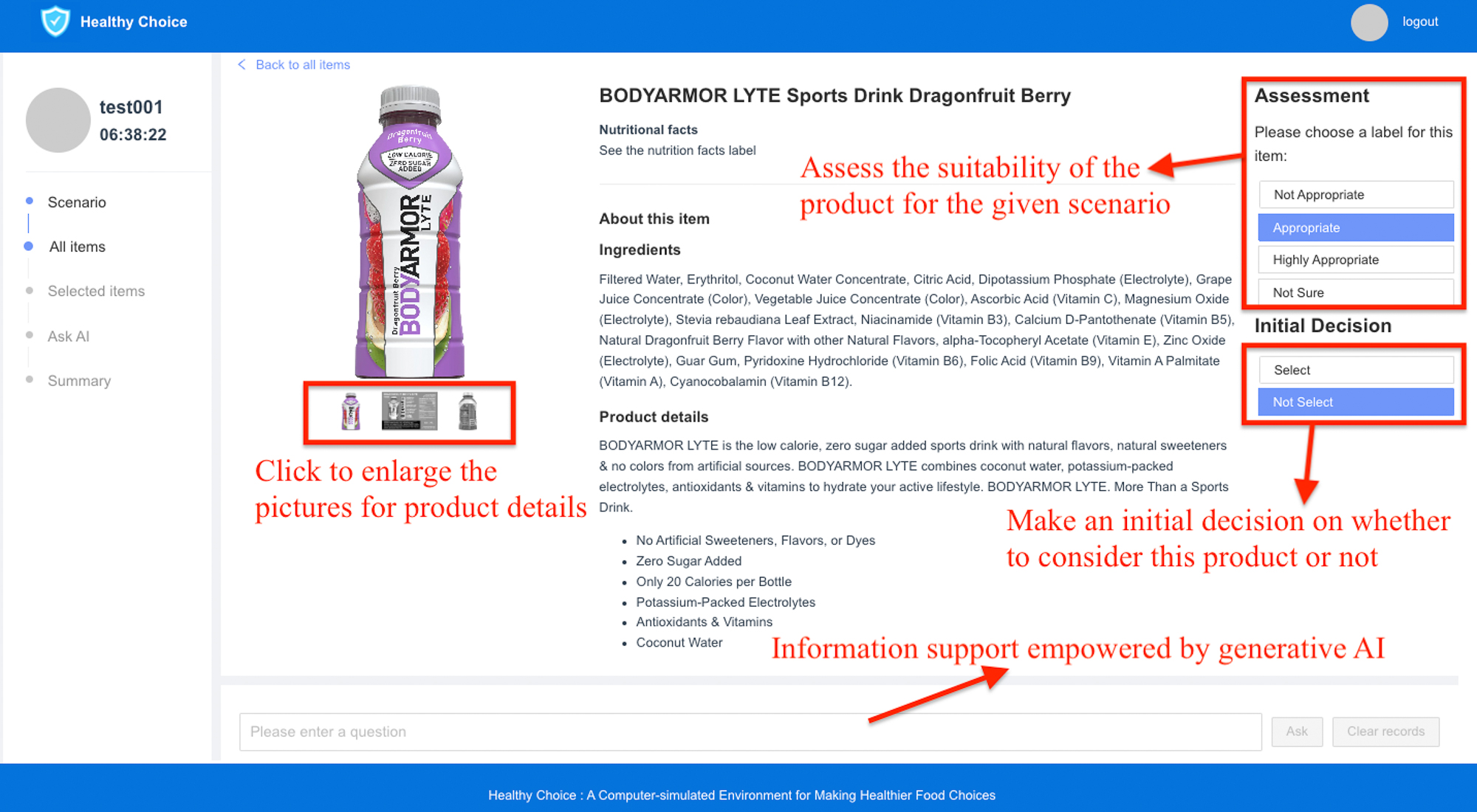
On Li’s computer screen, several options appear: Gatorade, Powerade, Bodyarmour Lyte and Vitaminwater. The program, which also includes an AI-powered chat feature, puts users into Chloe’s situation and asks them to decide which drink best fits her needs.
The platform doesn’t immediately tell its user which drink belongs in Chloe’s gym bag. Instead, it asks the user to identify what matters — hydration, electrolytes, carbohydrates, sugar or caffeine — then inspect nutrition labels, compare products and explain the final recommendation.
For Li, the decision on which sports drink is only a small part of the point. He cares about understanding the thinking that comes before the choice.
He said every time people go to a supermarket, there are so many brands of yogurt, bread, energy drinks and sports drinks.
Those choices are complicated because the best option is different for each person.
Someone preparing for an endurance event needs different nutrients than a student pulling an all-nighter or a person looking for a post-workout snack.
“I designed this platform to help people improve their nutrition literacy,” Li said.
Healthy Choice turns those decisions into cases.
During a demonstration, Li clicked into a basketball-game scenario. Before evaluating a single drink, the user first reads about the virtual customer and identifies information that could influence the decision.
Then the products appear.
Users can click into each one to see ingredients and nutritional information and rate it as “not appropriate,” “appropriate,” “highly appropriate” or “not sure.” They can narrow down their options, compare nutrition facts and use an embedded generative artificial intelligence tool to ask questions about unfamiliar terms.
Eventually, the user has to select a product.
The inspiration for this platform was shaped by a question that has followed Li throughout his career: what makes people use the information they’re given.
He began approaching this question through technology.
At Beijing Normal University in China, Li studied educational technology and became fascinated by how digital tools support learning. He began designing learning technology platforms, but the more he built, the more interested he became in what the technology couldn’t explain.
“I still needed to understand how people learn from a psychological perspective, because people have different thinking patterns, they have different motivation, emotions and all those internal processes can affect their learning, can affect their problem-solving,” Li said.
That realization took him from educational technology to science, where psychology, education and technology intersect.
“I really want to explore the frontier of these fields,” Li said. “Being a professor is my dream job.”
That interest in how people think also carries into his classroom.
Abena Agyemang, ‘28, has taken more than one course with Li and said his teaching style often relies on questions and student participation.
“It was a lot of discussions, getting our opinion on topics,” Agyemang said. “He likes to ask students a lot of questions.”
She also described Li as approachable and said his materials are typically straightforward.
“He’s really easy to ask questions to,” Agyemang said.
At Lehigh, Li’s work uses innovative technology.
That same desire to understand the process behind an answer shaped one of Li’s earlier projects.
During his doctoral studies, Li worked on BioWorld, a simulated environment that allows medical students to practice diagnosing virtual patients. However, on this platform, reaching a diagnosis is not the end.
Students must also explain how they arrived there, allowing researchers to examine their reasoning rather than simply marking an answer as correct.
“They can practice diagnosing patients in this safe environment,” Li said. “They don’t have to worry about detrimental consequences.”
Li said the project allowed researchers to examine how emotions and motivations influence a student’s accuracy or efficiency.
“We try to understand everything from an educational perspective,” Li said.
For student-athletes, having that information collected in one place can make everyday nutrition decisions easier.
Elizabeth Ehrhardt, ‘28, is a cross-country athlete and population health major. She said athletes have access to nutrition professionals and advice, but sorting through all the information can be difficult.
“I think nutrition information is so convoluted sometimes, especially with social media,” Ehrhardt said.
She said athletes can hear different recommendations from different sources, making it valuable to have a place where they can compare information themselves.
“Having all the information in one place, in a trusted source, I think would definitely be very useful for us (athletes),” she said.
Ehrhardt, who lives off campus and buys her own groceries, said she could imagine using a tool like Healthy Choice to compare different sports drink brands before deciding what to purchase.
She said having this kind of platform in an app would be easy for athletes since their phones are almost always on them.
Li said he hopes Healthy Choice can eventually be used beyond Lehigh and help more people make informed decisions about nutrition.
The platform is still developing, but the idea behind it follows the same question that has shaped much of Li’s work and gets at his ultimate goal of understanding not just the decision someone makes, but the reasoning behind it.
Comment Policy
Comments posted to The Brown and White website are reviewed by a moderator before being approved. Incendiary speech or harassing language, including comments targeted at individuals, may be deemed unacceptable and not published. Spam and other soliciting will also be declined.
The Brown and White also reserves the right to refuse the publication of entirely anonymous comments.