



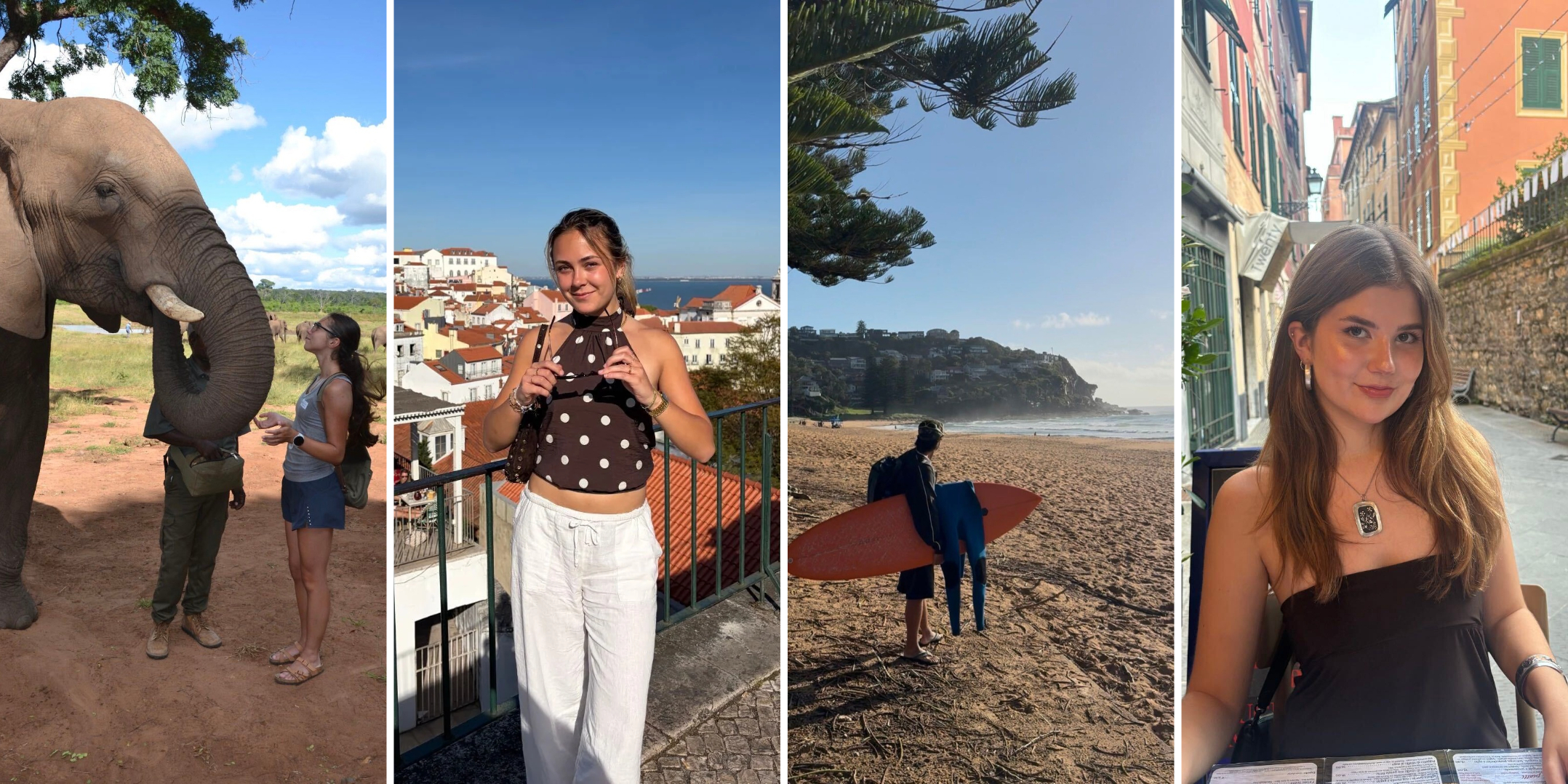
From South Africa to Australia and everywhere in between, Lehigh students have traveled across the globe, immersing themselves in new cultures, exploring unfamiliar places and experiencing life beyond Bethlehem.
Four Lehigh students — Mari Hanson, ‘28, Evan Mangifesta, ‘27, Charlotte Holtby, ‘27 and Kristen Lomuto, ‘27, —spoke with The Brown and White about their study abroad experiences, the challenges they faced and their advice for students considering studying abroad.
Q: Where did you study abroad, and why did you choose that location?
Mari Hanson, ’28: I studied abroad in Santiago, Chile, through the Lehigh Launch program during my first semester of freshman year. This past summer, I also completed a seven-week internship in Montenegro. Before Lehigh, I studied abroad in Germany for a year during high school. For Chile and Montenegro, it was more about the opportunities and programs being offered than the locations themselves.
Evan Mangifesta, ’27: I studied abroad for 12 weeks in Australia and six weeks in Rome. I chose Australia for the beaches and weather because I love surfing. I also wanted to experience European culture, history and a different language, which is why I chose Rome.
Charlotte Holtby, ’27: I studied abroad in Madrid, Spain, for four months in a Spanish language immersion program with IES Abroad and lived with a host family. I’d visited Spain with my family before and absolutely fell in love with the country. Madrid was a bigger city with a mix of different types of people, and that’s what I was looking for.
Kristen Lomuto, ’27: I studied abroad in Cape Town, South Africa, from the end of January to June 2026. I was drawn to Cape Town because of the weather, nature, outdoor activities and its rich history. I also wanted to experience somewhere completely different because I hadn’t traveled much before.
Q: What was your favorite memory from studying abroad?
Hanson: In Chile, I loved the trips I took with my friends. We would try to find new places to explore and visit, and we went to the Atacama Desert together as a Lehigh Launch group. In Montenegro, it was really the people. Everyone was so welcoming, warm and generous, and I loved getting to experience the Balkan lifestyle.
Mangifesta: One of my favorite memories was taking a week-long trip to New Zealand with my close friend. We rented a van and traveled along the coast of the South Island, stopping in small fishing villages and surfing. We met people who said they hadn’t seen an American in 15 or 20 years. It was really special getting to meet people and see how differently they live.
Holtby: I didn’t expect to make such good friends with people from different colleges across the United States. I made lifelong friends through my program, and we got to travel together. I also really loved my Spanish professor. He was one of the best professors I’ve ever had because of how engaged he made everyone in class.
Lomuto: My favorite memory was definitely going on a safari in Kruger National Park. I went with other students from my abroad program, and we got to stay there and see so many incredible things.
Q: What was the biggest challenge you faced while studying abroad?
Hanson: In Germany, homesickness was definitely more prominent because I was gone for a full year. In Chile, the biggest challenge was the language barrier. I didn’t know any Spanish, and my host mom didn’t know any English. I’m a very extroverted person, so not being able to fully express my personality was difficult. But you find other ways to show appreciation, like helping around the house or picking up fruit from the market.
Mangifesta: I didn’t face any major challenges, but living on my own in a different country was definitely an adjustment. In Rome, the language barrier was probably the biggest challenge. I wasn’t fluent in Italian, but I started learning more of the language by living there and being immersed in the culture.
Holtby: The language barrier was definitely my biggest obstacle. I was in a Spanish immersion program, so every class I took was in Spanish. I also lived with a 76-year-old Spanish woman who only spoke Spanish. It was difficult at times, but I wanted to push myself culturally and experience something different.
Lomuto: There was definitely some homesickness because I went completely by myself. I didn’t know anyone there, and no one from Lehigh was anywhere on the African continent. I quickly made friends, though, and I still talk to a lot of them every day. Adjusting to the slower pace of life in Cape Town was also different from what I was used to in the United States.
Q: What was the biggest cultural difference you experienced?
Hanson: Coming from a small town in Minnesota, I was used to making small talk with people. In Germany, it’s not as common to talk with someone on the train or strike up a conversation with a cashier. It’s a more direct culture with greater respect for individual space and privacy. Once you get to know people, though, those friendships are incredibly rewarding.
Mangifesta: Even though people speak English in Australia, they use a lot of different slang. It was funny because I sometimes found it easier to understand someone speaking English as a second language than someone from Australia. In Rome, I lived in a more local neighborhood, without many fluent English speakers, so navigating cafes and restaurants was a different experience.
Holtby: The sidewalks and walking culture in Madrid were definitely a shock. People don’t necessarily walk on the right side of the sidewalk, so you constantly have to watch where you’re going. I also noticed differences in teaching methods, especially how interactive and engaging my classes were.
Lomuto: The friendliness of people in Cape Town was a positive culture shock. Random people would approach me and start conversations just because they wanted to talk. I also learned a lot about South Africa’s history and the lasting effects of apartheid (a system of legislation that upheld segregation against non-white citizens of South Africa), which gave me a different perspective on the social inequalities I was seeing.
Q: What did studying abroad teach you about yourself?
Hanson: I learned a lot about my independence. I have a twin sister, and we’re very similar, so studying abroad in Germany was the first time we’d been separated for that long. It helped me realize that I could make my own friends and build my own community. I think it proved to me that I could be my own person, independent of my twin.
Mangifesta: It changed the way I think about my future. Being abroad made me re-evaluate what I want to do after graduation and how I want to structure my life. I definitely want to incorporate more travel, experience new cultures and pursue something a little more creative and entrepreneurial.
Holtby: I learned that I’m a lot more independent than I thought I was. I spent a lot of time exploring Madrid by myself, whether that was going to museums, trying restaurants or just walking around the city. You can make studying abroad a really social experience, but you can also make it a really cool, independent experience.
Lomuto: I learned that I could be a lot more spontaneous. I’m usually super Type A and plan everything in advance, but abroad, I learned to go with the flow. I was able to do things like suddenly hop on a 10-hour bus, travel along the Garden Route and stay in hostels. It took some adjustment, but it really got me out of my shell.
Q: What do you miss most about studying abroad?
Hanson: I miss the communities I became part of. In Germany, I lived with a host family for a year, and I’m still in contact with them and the friends I made. It’s funny because when you’re abroad, you can get homesick for home, but once you’re back, you start missing the place you were living. It really does become another home.
Mangifesta: I definitely miss the freedom I felt in Australia. Even though it was nerve-wracking being on the other side of the world, there was something really special about being somewhere completely new and having the ability to explore. That’s a feeling I still think about every day.
Holtby: I miss being able to try something new every day. Madrid is such a big city, and even after four months, there was still so much left to see, eat and experience. I also miss the kindness of the people. I met so many nice strangers, whether it was on the metro, in restaurants or at museums.
Lomuto: I miss Cape Town like a person. I miss the weather, the scenery, the hiking, the beaches and the mountains. The people were so friendly and interesting to talk to. I also miss the slower, more relaxed way of life compared to the fast-paced environment we’re used to here.
Q: What advice would you give to students considering studying abroad?
Hanson: Don’t limit yourself to where other people are going or what they’ve done. Choose something for yourself and don’t be afraid to go somewhere unfamiliar. You don’t have to know the language or have a direct connection to the country. You’ll find your place and your people if you’re willing to take that next step and learn about the culture.
Mangifesta: If you have the opportunity, definitely do it. Be spontaneous, put yourself out there and make an effort to meet people outside your immediate friend group. I’d also recommend exploring places that aren’t necessarily popular tourist destinations. Some of my best memories came from meeting people spontaneously in places I wouldn’t have visited as a tourist.
Holtby: Try something new and do something that pushes you outside your comfort zone. You don’t have to do the same program as your friends or live in the same situation. Be open to new foods, people and experiences. Also, save up as much money as you can because studying abroad can be more expensive than you expect.
Lomuto: Be spontaneous and say yes to things. Make the most of the time you have because you’re not always going to have an opportunity like this to explore. Try to meet people outside of Lehigh, especially people who actually live in the country you’re visiting. I learned so much from the South Africans I became friends with, and those friendships were really valuable to me.
Comment Policy
Comments posted to The Brown and White website are reviewed by a moderator before being approved. Incendiary speech or harassing language, including comments targeted at individuals, may be deemed unacceptable and not published. Spam and other soliciting will also be declined.
The Brown and White also reserves the right to refuse the publication of entirely anonymous comments.