



Sounds of bike chains and tools clatter. Straight ahead, 40 kids’ bikes are lined up with different types and sizes, neatly arranged in seemingly pristine condition.
Five bicycles are up on repair stands, each surrounded by two to four people. Community members are asking each other questions, helping each other out, all smiling and learning from one another.
While bicycle repair may appear to be the common thread connecting everyone in the room, a greater link is their shared goals: learn, teach and empower.
Founded in 1994, the Coalition for Appropriate Transportation advocates for improving multiple forms of transportation in Northampton and Lehigh Counties while empowering and educating the community on non-automobile transportation.
The Bethlehem-based nonprofit’s bicycle cooperative, one of their main programs, provides community members of all ages with affordable bicycles to get to school, appointments and access to employment opportunities. No one is priced out for different financial circumstances.
“We try to empower people and meet people where they are. The (Coalition for Appropriate Transportation) wants to be a community resource to everybody,” Scott Slingerland, executive director, said.
Bikes can be acquired by a pay-what-you-can donation to the coalition, usually significantly lower than what the bike would normally cost, or one can volunteer five hours of work in the shop in exchange for a bike.
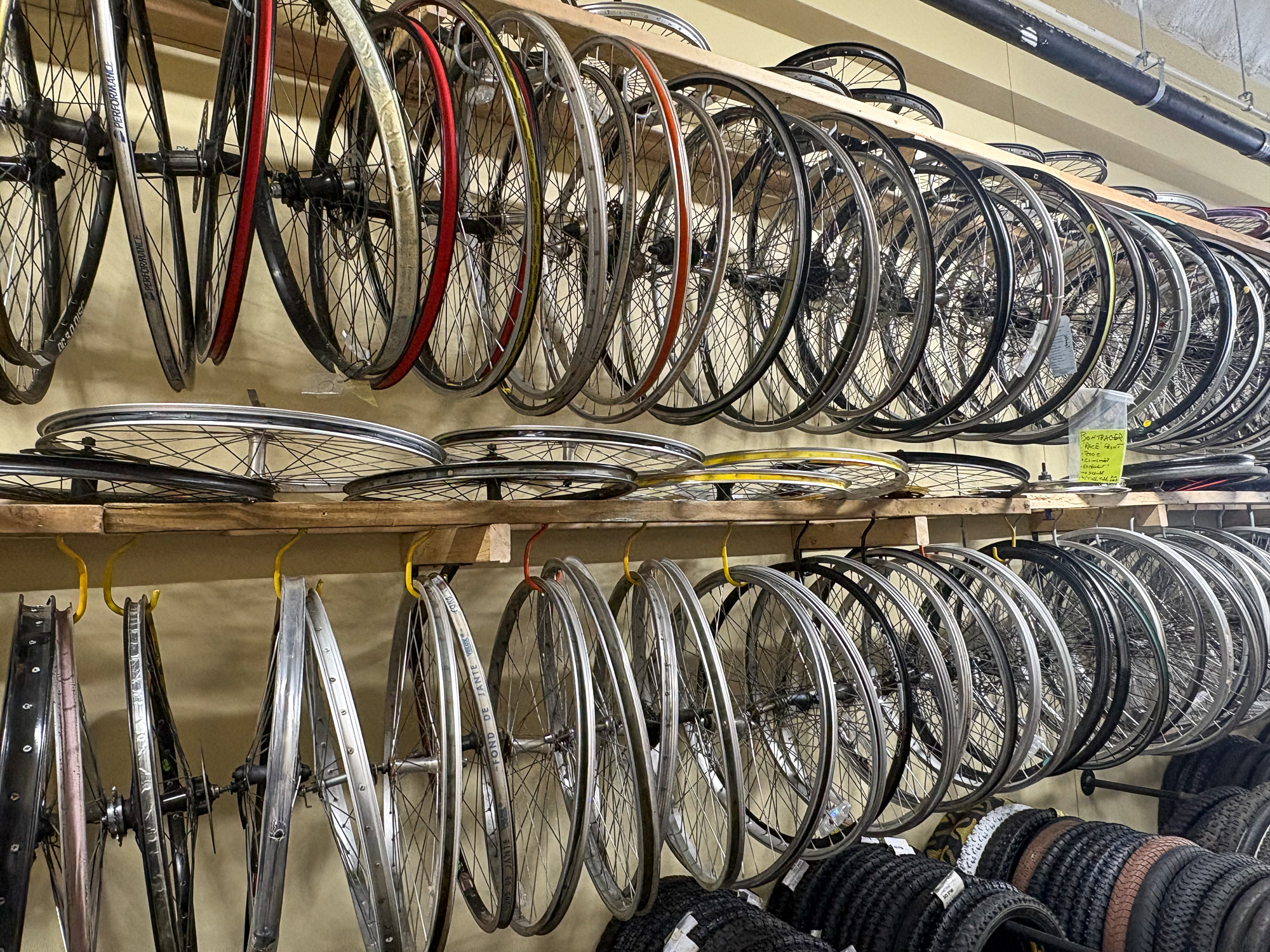
There’s also the opportunity to create a bike from start to finish. When the co-op receives bikes through donations that can’t be repaired, the salvageable parts are placed in bins to be used to create an entirely different bike.
The co-op receives all their bikes through donations or old, unused and discarded bikes, which are then assessed and repaired if needed by volunteers.
With around 10 to 15 main volunteers, there are only two full-time staff members, Slingerland and Sissy Kennedy, youth bicycle program coordinator.
Those receiving a bike are able to choose from the refurbished bikes or the selection of bikes and frames that are waiting to be checked and, if needed, fixed.
Volunteers come to the co-op with all different experience levels in fixing bikes, with some who have been working on bikes for years, while others have never touched a bike.
More experienced volunteers work with those who are less experienced to go through a 65-point checklist to ensure a bike is safe to ride, teaching others as they complete the list.
Tim Phillips, a Coalition for Appropriate Transportation board member and the volunteer coordinator, spends most weekdays at the shop. He started volunteering with the coalition after the COVID-19 pandemic.
Phillips was looking to fill his free time and saw a post from Slingerland looking for volunteers to fix children’s bikes before the holidays. After riding bikes since he was 12 years old, Phillips had limited repair experience at first, but said he learned a lot from experienced volunteers.
“When you help somebody or if you teach somebody something, they win, but you win also,” Phillips said. “You’re constantly sharing your knowledge with somebody who knows less than you. But you’re constantly being taught by someone who knows more than you.”
Kathy Karanink, a creative arts therapist who works at a long-term residential care program, brings her residents to the co-op once a week. She said the events provide residents with a place to socialize with others and learn new skills.
“We always felt welcome coming here,” Karanink said. “(The coalition) was always very understanding and compassionate to our needs as well and always welcome us with open arms and make us feel good about ourselves.”
The co-op doesn’t just provide people with bikes. They also teach community members who receive bikes how to ride them, if needed, and how to fix common problems that arise while riding.
“What’s special about the bicycle cooperative is that everybody’s helping everybody and the knowledge is basically open source,” Slingerland said. “We try to remove the barriers and the bureaucratic challenges. We don’t ask for proof of income; it’s self-certifying in a way that we take people for their word.”
Inside the co-op hangs a bike rack like the ones found on public buses for people to practice hanging up their bikes while commuting.
“It’s very intimidating for someone for the first time to get their bike and stand in front of (a bus) that’s running and put their bike on that stand,” said former Coalition for Appropriate Transportation President Bill Meiklejohn. “So they can practice here, get rid of that anxiety.”
Those who receive bikes are given bike locks, different baskets, lights, seats and helmets.
The coalition holds weekly bike rides for all different groups, as well as different mechanical classes from bicycle maintenance to advanced classes teaching participants how to service their entire bike.
Kennedy, who runs the youth bicycle program, says the coalition has partnerships with around 12 elementary schools and will hold five week-long bicycle training clubs to teach children to safely ride their bikes in the neighborhood.
Parts like tires, brake pads and seats are usually bought new as they wear out.
Phillips said having a bike opens the door to travel and commute farther away. He said for most people, the bike covers the first or last few miles of their journey. Bikes can be used to reach a bus or other modes of transportation and then travel farther. He said having an adequate bus system alongside the bikes is important.
The organization has seen an increase in success after outgrowing their previous location in West Bethlehem, which became too small for the operation as people were sharing tools and bumping into one another.
They moved to Walnut Street on the North Side earlier this year, where the facility has five work areas with individual tool sets, allowing more people to work at one time and getting more done faster.
Meiklejohn credits the new space to increased awareness, recognition from local governments and an overall increase in advocacy.
“It gave us so much visibility,” Phillips said. “We have so many more people coming in and we have so many parents bringing their kids in.”
They also have bike storage areas in the connecting parking garage and use that space as a quieter place for people to learn how to ride.
Meiklejohn said a television screen hung up adjacent to the window displays real-time bus routes and updates, so even when no one is at the shop, community members can use the information for their transportation needs.
The coalition is currently working on their holiday bike program, where last year they distributed 150 bicycles Kennedy said partnering with Bethlehem businesses aims to provide 200 bikes to children in the Lehigh Valley who’ve been collecting bikes since the summer.
“It’s really a very heartwarming experience when these kids come in, and you know it’s the only Christmas present they’re getting, and they’re so excited about it,” Kennedy said.
Meiklejohn highlighted the community impact of the co-op, when they had to move 400 bikes from the old location to the new one. Initially, thinking the process would take a long time, they estimated they needed 30-40 volunteers to help, but after sending out an email, 130 showed up the next morning.
Volunteers walked the bikes one and a half miles away and took the bus back to get more, eventually moving all the bikes in 5 hours.
“It gives you a renewed faith in humanity,” said Meiklejohn. “It really does.”
Comment Policy
Comments posted to The Brown and White website are reviewed by a moderator before being approved. Incendiary speech or harassing language, including comments targeted at individuals, may be deemed unacceptable and not published. Spam and other soliciting will also be declined.
The Brown and White also reserves the right to refuse the publication of entirely anonymous comments.