



When she left Jamaica as a young adult for New York City, Staceyann Chin never thought she would return. After coming out as lesbian in her home country, she was sexually assaulted by a group of men and sought refuge in a safer place.
Although she knew she would face racism in America, Chin, a poet, Tony-nominated actress, writer and activist, felt she couldn’t express her sexuality in Jamaica, so she left, jumpstarting her career in the arts.
But when the COVID-19 pandemic hit in 2020, Chin decided to return to Jamaica with her young child.
In Jamaica, Chin bought 70 acres of land and built a farm named Kindred on The Rock, with the goal of creating a safe and inclusive space that welcomes people with different backgrounds and identities.
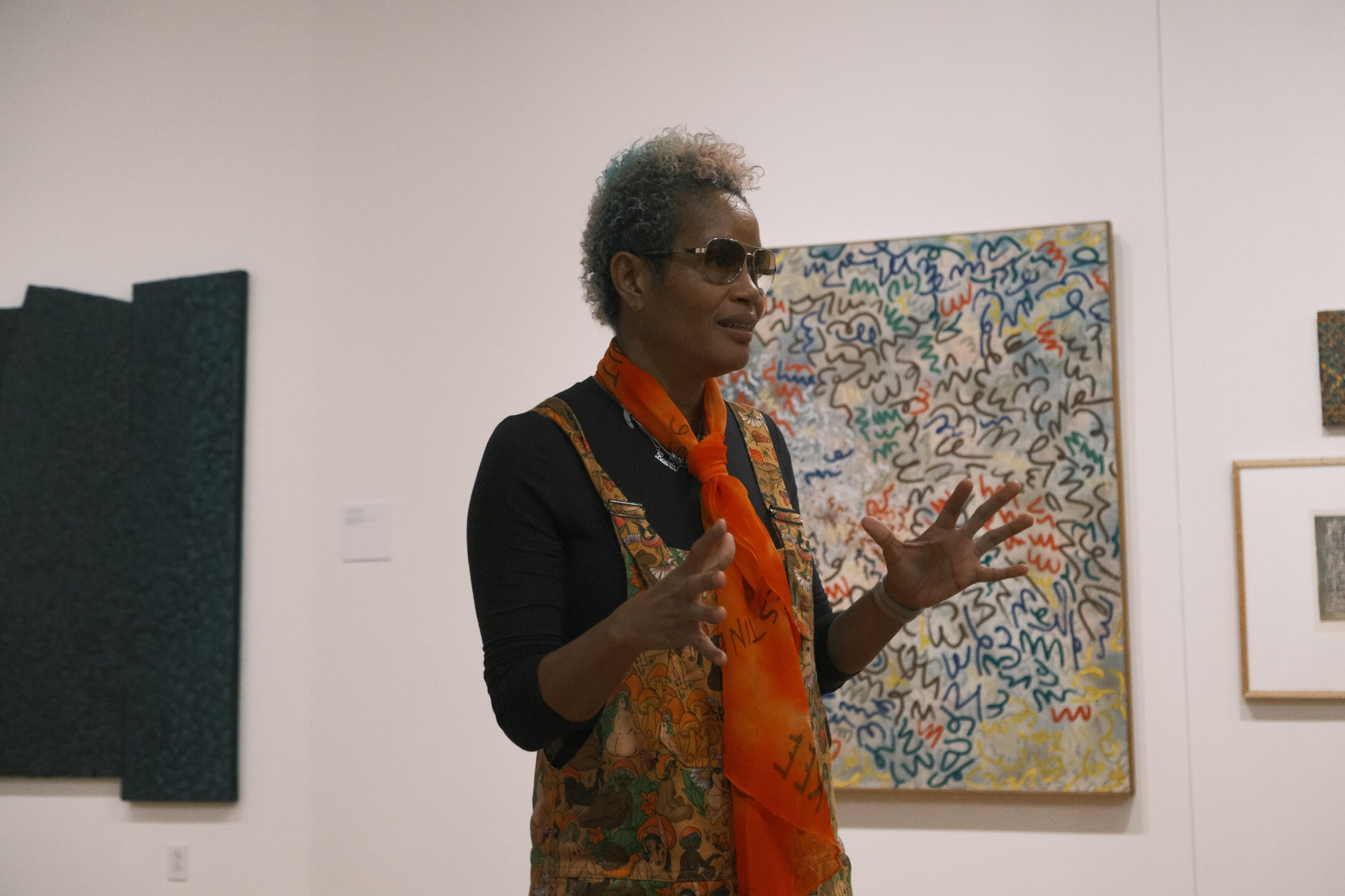
On Oct. 20, Chin led a lecture titled The Prodigyal: Leaving and Returning. She discussed her journey returning to Jamaica and spoke on the human right to move across borders.
The lecture was one of five events Chin hosted at Lehigh that week as the Africana Studies Program Fall 2026 Visiting Faculty Fellow.
Chin began The Prodigyal lecture with the story of her birth.
Reading from her 2010 memoir “The Other Side of Paradise,” Chin described the relationship between her Jamaican mother and white father, and how her mother kept her pregnancy a secret from her grandmother.
Chin said she arrived into the world, “2 ½ pounds of baby.” She grew up without her mother present, and was eventually separated from her grandmother and brother. She said her childhood was often a struggle, but she had a will to survive.
Chin said attending university saved her.
It was a place where she could have a bigger life, and a place where she explored her sexuality and questioned societal constructs.
When she moved to the U.S., Chin wrote poetry and was published in multiple anthologies, acted on and off Broadway and wrote two books.
Since graduating and becoming a mother, Chin said her involvement with social movements has evolved, but is still a constant part of her life.
Chin said she wears something everyday to express her solidarity with Palestine. While at Lehigh, she wore an orange scarf with the message “Free Palestine” written in her daughter’s handwriting. She said she wears the scarf for whoever needs to see it.
Chin said another university cancelled her visit when they learned of her views on Palestine, an experience she said has stuck with her.
She said the ability to move across borders and throughout the world is one of the biggest privileges humans have today, and there has always been a question of who belongs or doesn’t belong in a country.
“America has been a place of refuge, from long before I was born, before you were born, before even this university was born,” Chin said. “But I feel like the overt policing of borders has widened the gap between the people who are safe and the people who aren’t … it’s always a question of who belongs here, who doesn’t.”
The need for dialogue at Lehigh
Chin said when she came to Lehigh over a decade ago, she said it felt like a liberal arts school where students believed in a more equitable future, including the voices of marginalized people.
She said the culture at Lehigh felt different during this visit.
“I find myself standing in a room of people who are trembling and afraid, and who feel in many ways silenced by their experiences here,” Chin said. “But still pushing on and trying to keep a conversation and freedom and democracy and equity and progress going.”
Chin said she heard of a need for safe spaces at Lehigh to connect and talk about issues in the news, on campus and in students’ personal lives.
Aileen Mero, ‘28, attended Tuesday’s lecture and said Chin also came to her class taught by English Professor and Africana Studies Director Simone A. James Alexander the same day.
Mero said she related to Chin’s experience of being embarrassed by her grandmother for being illiterate. Mero said her parents, who are from Ecuador and Mexico, don’t speak English, and when she was growing up, she felt a similar shame.
Mero also said she connected with Chin’s sentiment about the importance of higher education and the privileges and opportunities it has provided her.
Finding belonging through land
During Wednesday’s lecture called “World Building: Re/Imagining Sites of Belonging,” Chin talked about the story behind Kindred on The Rock and the importance of land.
Chin said when she decided to build Kindred on The Rocks, she initially was not welcomed because of her queer identity.
“It’s illegal to be lesbian in Jamaica … people are really suspicious of lesbians and gay people, and they think we are pedophiles,” Chin said during her lecture.
Chin said she responded to the suspicion with kindness.
Every time she bought groceries herself, she also left sealed bags at the doors of neighbors. She helped elderly residents and shared water from her household’s storage tanks with those who needed it.
Eventually, the residents of the village came to accept her presence and she built personal relationships with some members of the community.
Chin told the story of a boy named Akeem who regularly came to the farm. She later came to learn his association with Chin had resulted in bullying and vulgar name calling.
But Akeem decided to come regardless.
Chin said the comments she began to hear about herself included things like: “Ms. Chin is a lesbian, you know, but she is nice.”
She said she initially approached the community believing her education would provide her with knowledge to bring back and share. She later realized she had been the one learning from her community the whole time.
Chin said the reason she buys land for communal use is because marginalized communities need access to land as a source of security, food and shelter. She encourages people to buy as much land as they can.
“I think as the world shifts towards more and more and more power in the hands of corporations, as the companies that do AI require more and more of the water, as places like Amazon take up more and more of our land, we are going to need spaces to gather,” Chin said.
Comment Policy
Comments posted to The Brown and White website are reviewed by a moderator before being approved. Incendiary speech or harassing language, including comments targeted at individuals, may be deemed unacceptable and not published. Spam and other soliciting will also be declined.
The Brown and White also reserves the right to refuse the publication of entirely anonymous comments.