



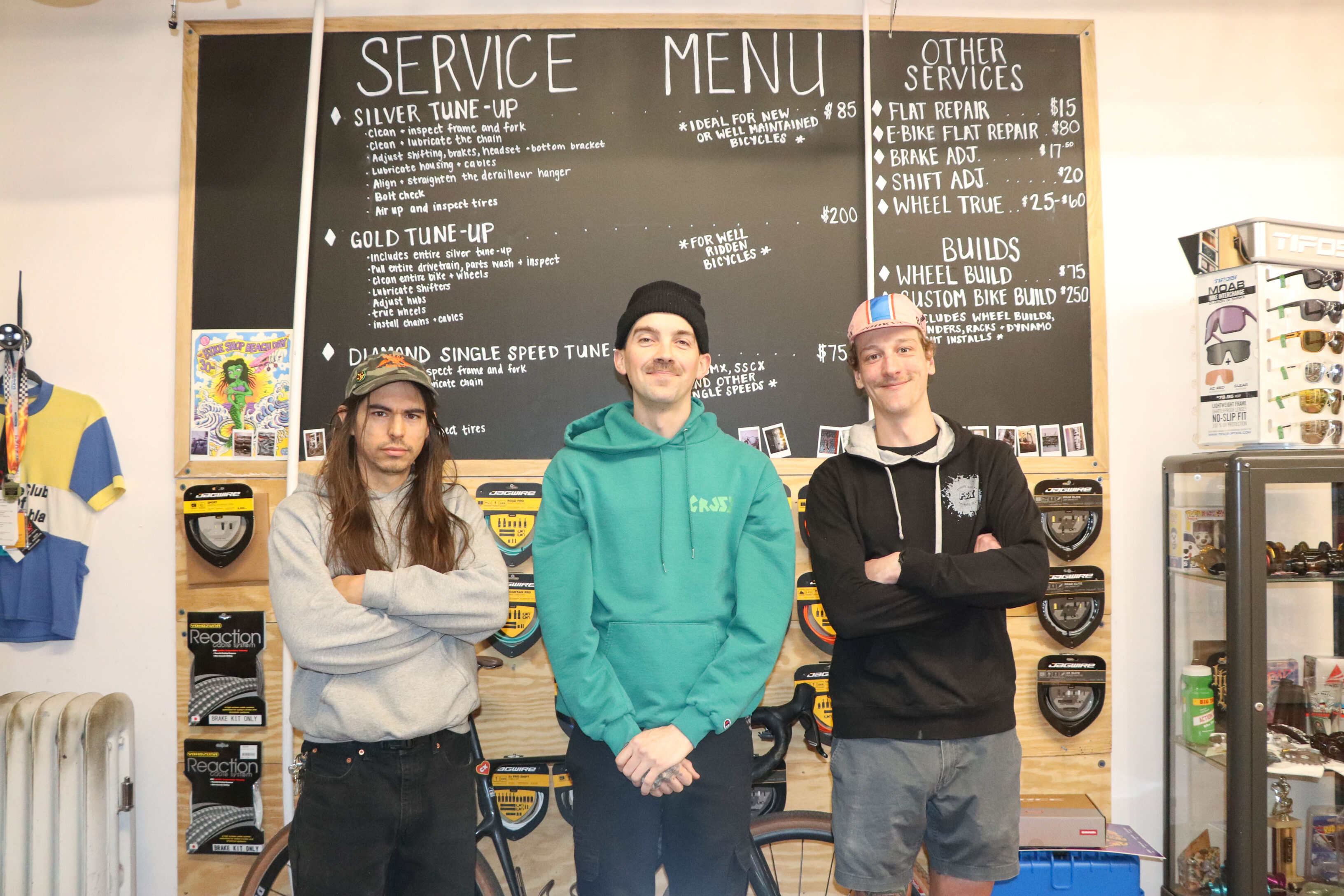
A cup of coffee, a bicycle repair and a holiday gift purchase all come with different price tags.
For three Bethlehem small businesses, rising prices for gas and groceries impact the amount of disposable income residents have left to spend on their products.
Owners of Lit Coffee Roastery & Bakeshop, Action Wheels Bike Shop and Crewy Woo said the futures of their businesses are on the ballot this midterm election season.
Their businesses are dependent on customers’ spending power.
Scott Effting, owner of Action Wheels Bike Shop, said he’s seen firsthand a rise in financial pressures for his customers.
He said some of his customers depend on bicycles to commute but cannot afford multiple bike repairs at once. Instead, Effting has found that many of his customers seek bike repairs one part at a time. Customers are also buying fewer add-on parts than they once did.
Effting said customers’ stories of financial hardship have directly shaped his priorities when it comes to voting for elected officials.
He said more affordable healthcare and a lower cost of living would allow customers to have more money for things they enjoy.
“I would just like to see my tax paying dollars go to the stuff that helps us out,” Effting said.
Ann Morrissey, co-owner of Crewy Woo, a family-owned boutique in Bethlehem, said she has also noticed rising household expenses influencing customers’ purchasing decisions.
She said when necessities cost more, treating oneself can be harder to justify at stores like her own.
“Anytime people have to spend more on food and more on gas — things that are a necessity — they’re going to spend less in a gift store,” Morrissey said.
Effting has worked at Action Wheels Bike Shop for 14 years and has owned it for nine, after buying the business with his family. He said he used to be able to re-order products throughout the year without price changes.
Now the parts he uses frequently cost more each time he orders them. Effting said shipping expenses have increased immensely. He attributed much of that pressure to tariffs, including their effects on products manufactured domestically with imported materials.
Similarly, at Lit Coffee Roastery & Bakeshop, Matt Hengeveld, co-owner, said higher costs for coffee, paper cups and to-go containers have made operations more expensive and limited growth opportunities for them.
Hengeveld said the business remains stable but worries that raising prices for customers in response to increased operational expenses would not be well-received and would make the business less competitive. Instead, he said, the cafe will absorb some of the costs while adjusting prices.
“I can’t just say I’m going to take all of that expense and push it on the customer,” Hengeveld said.
Instead, he said, the cafe will absorb some of the costs while adjusting prices.
Customer frequency has remained steady, but Hengeveld said he noticed some shoppers have begun choosing cheaper bags of coffee.
The cafe has also hosted music shows and art displays, offering customers many reasons to visit beyond buying a cup of coffee. He said the goal of those events is to bring customers back in.
Effting said he also enjoys seeing other small business owners participate in community events, and his love for their work is greater than the challenges they experience.
“It’s like a labor of love,” Effting said. “Seeing all of my friends who manage or work at small businesses, seeing them all being more involved in the community.”
As he considers the election, Hengeveld said he wants candidates to recognize how tariff policies affect small and independent businesses.
He said he favors requiring congressional approval for tariffs rather than imposing them through executive action.
“I don’t think that all tariffs are bad,” Hengeveld said. “I do think (they) can create a level playing field for U.S. businesses, but I also feel like when handled more heavy-handedly, they can become really detrimental and really put small businesses at a disadvantage.”
He said small businesses have fewer options than larger companies for adjusting purchasing arrangements when costs rise Hengeveld said Lit buys supplies through distributors, and switching providers doesn’t necessarily yield considerable savings.
Morrissey also identified differences between small and large businesses — broader customer bases give larger businesses more money to operate, while smaller stores face limits on purchasing inventory.
However, she said her experience with tariffs differs from that of other small businesses.
Morissey said tariffs affected Crewy Woo last spring, but they received government refunds from tariff-related charges which eased expenses.
She said her biggest challenge this year has been foot traffic. She said, fewer people seem to be walking around Bethlehem’s South Side as compared to Main Street, restricting opportunities to attract shoppers.
When asked whether election-related decisions could affect Crewy Woo, Morrissey said she did not expect midterm election results to impact her business as much as it would others.
For Hengeveld, the stakes go beyond his business.
Seeing all of these independent businesses struggle financially, could discourage people from becoming owners, he said.
Effting views this upcoming election as an opportunity for change. However, he said he’s also worried — regardless of who wins — about Congress efficiently making changes that would ease pressures on his shop.
He said making products more affordable again could take years. But, he also said he’s encouraged by the younger generation and the difference each person makes with their vote.
“I am very hopeful, and I think we can get back to where we need to,” Effting said. “I love what I do, and I don’t want to change. I can’t imagine what else I would do.”
Comment Policy
Comments posted to The Brown and White website are reviewed by a moderator before being approved. Incendiary speech or harassing language, including comments targeted at individuals, may be deemed unacceptable and not published. Spam and other soliciting will also be declined.
The Brown and White also reserves the right to refuse the publication of entirely anonymous comments.