



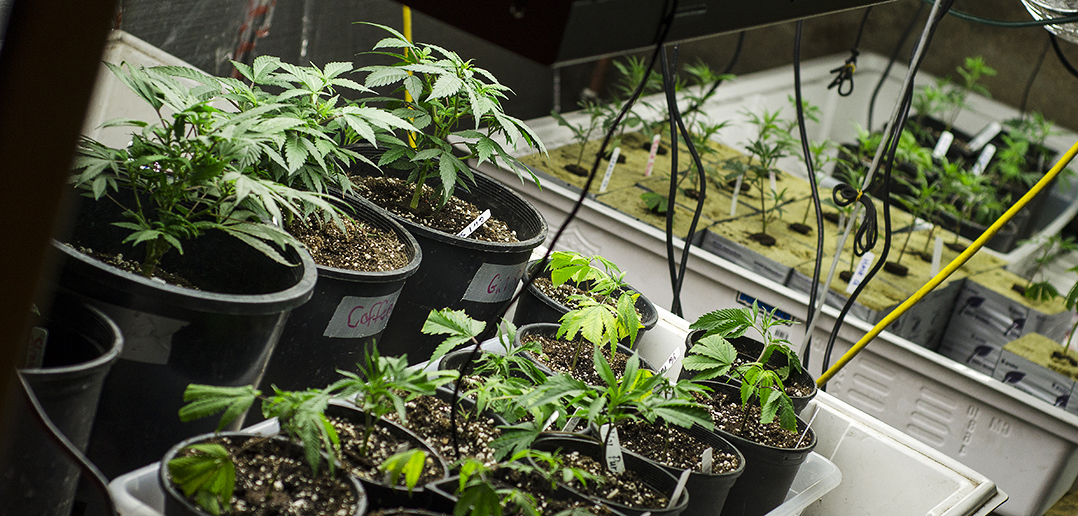
The legalization of marijuana is a popular topic of discussion within the United States, particularly during the political campaign season. A survey conducted last month by the Center for Public Affairs revealed a record-high number of Americans — 61 percent — support some sort of legalization of marijuana.
While support is gaining ground, only four states — Alaska, Colorado, Oregon and Washington — have made the sale and possession of marijuana for medical and non-medical use legal. However, some restrictions remain in place.
Bridget Brown, ‘16, is from Oregon, where a referendum in the 2014 midterm elections was passed in favor of legalization. In July of that year, possession became legal, and in October, the possession and sale of marijuana for medicinal purposes was officially legalized. This coming fall, recreational stores will open across the state.
Brown said the process has not been as smooth as people may have expected.
“It wasn’t something that happened overnight,” she said. “The transition has taken a little while.”
Brown, who resides in a small town in eastern Oregon, is from one of several areas of the state that has decided to disallow recreational stores or production. Because of this, Brown said she hasn’t noticed much of a difference in her community.
“I’m sure there are other communities where you can really see a difference,” she said. “But from where I live, it’s not all that noticeable.”
Despite these certain limits, possession is still allowed across the state.
Brown said the topic has always interested her and so she has been closely following the process.
“It’s such a big change for the country,” she said, “even if it’s been happening rather slowly.”
Brown supports legalization and points to the tax revenues as the main incentive. In the first month of legalization alone, Oregon received $3.5 million. While Brown said she is fine with people using marijuana for recreational purposes, she understands others are not. Nevertheless, she said it’s difficult to see how someone could be against the monetary benefit.
Rachel Margraf, ‘18, is from Washington, where legalization was approved in 2012. She lives in Oak Harbor, a small town two hours north of Seattle whose marijuana limitations are similar to that of Brown’s community.
The biggest business in her area is the U.S. Navy, which is overseen by the federal government. In Oak Harbor, state and federal law collides.
“Even though they live in a state where it’s legal, the members of the Navy are not allowed to use marijuana because it’s still illegal on the federal level,” Margraf said.
Margraf said this is one of the main reasons why she has yet to see the effects of marijuana legalization.
“Part of the reason I haven’t been around it much is because I don’t run in the right social circle for that,” she said. “But it’s also because there are such heavy restrictions near me because of the Navy, so it’s not around as much.”
Margraf said it is disturbing to think the state is approving something that allows people to do harm to their bodies. With legalization, marijuana use will skyrocket because people like to think there aren’t health repercussions, she said. When Margraf learned an old friend from high school was using marijuana, the thought was hurtful.
“There’s nothing I can do about it,” she said. “But I feel bad that there are people out there who think it’s safe just because the state allows it. It’s like the government is letting the people down by not focusing on how bad it is for you.”
For Margraf, the tax revenue is not enough to support the legalization.
“It isn’t very beneficial because most of the money will probably go used for the health issues that arise from the drug’s use,” she said. “So then the state isn’t really profiting from it.”
While dissent for legalization is apparent in these states, the conversation in California, where medicinal marijuana is legal, is much different. Jennifer Liu, ‘17, lives just outside of San Francisco, and she said it’s not a matter of if, but a matter of when.
“It doesn’t seem like there are nearly as many people opposed to making it fully legal in California as there are in other states,” she said. “I think it’s because we’re not dealing with medicinal laws and recreational laws at the same time. We’ve had legalization for medicinal marijuana for a while now. So I think it’s easier for people to get on board with the idea of it being legal for recreational use, too.”
Unlike Brown and Margraf, Liu lives in a community where marijuana use is rather apparent. She said it has been like this for a while.
“It was definitely available in high school,” she said. “I didn’t do it or hang out with people who did. But it wasn’t weird to hear about other people doing it.”
Liu said she expects her state to approve full legalization sometime in the near future. It’s a good idea, she said.
“It’s not even about the tax revenues,” she said. “Obviously, they’re great. But it’s just not as big of a deal as people think it is. It’s a plant. Who cares what people do with it?”
Comment Policy
Comments posted to The Brown and White website are reviewed by a moderator before being approved. Incendiary speech or harassing language, including comments targeted at individuals, may be deemed unacceptable and not published. Spam and other soliciting will also be declined.
The Brown and White also reserves the right to refuse the publication of entirely anonymous comments.