



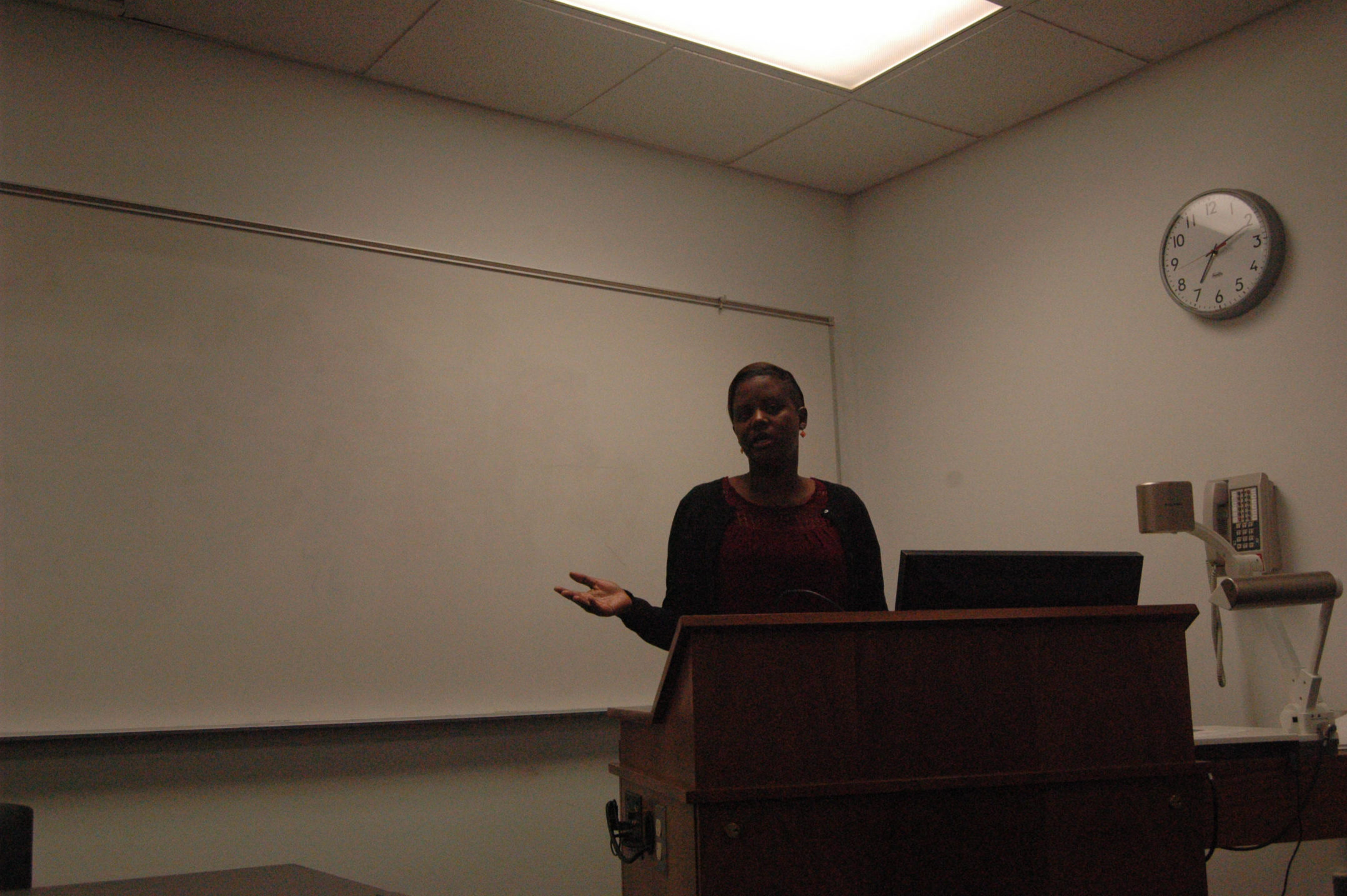
Consolee Nishimwe, a Rwandan genocide survivor, and Naila Amin, a former child bride, visited Lehigh on Nov. 8 to share stories about the atrocities they’ve faced in their lives. The two speakers were invited to campus by the Lehigh University United Nations Partnership for the purpose of promoting female empowerment on campus.
“It was a well-planned genocide,” said Nishimwe, remembering her experiences in the 1994 Rwandan genocide of the Tutsis, the ethnic minority of the country. “People on the radio told the Hutus to kill Tutsis. ‘Kill the Tutsi from young to old.’”
She explained how the genocide rose from the long-standing conflict between the two cultural groups.
For many years, the Tutsis have experienced hated and abuse from the Hutus, leading to a government-sanctioned mass slaughter of the group after several Hutu politicians overtook the Rwandan government in a coup d’état.
Before escaping the country to immigrate to New York, Nishimwe and her family were on the run from organized killers patrolling their area.
Armed with machetes, the killers shouted “No pity for enemies” throughout the night. The destruction of homes and loss of life were a terrible sight for her. She saw friends and neighbors turn on whomever was a Tutsi.
“There was fear we had in our hearts,” Nishimwe said. “We were not afraid animals, but humans.”
At one point, they took shelter with a family who had killed multiple Tutsis. Luckily, the children of the family recognized Nishimwe’s mother as their school teacher and pleaded with them to help her family and not to cause harm.
Another close call came when Nishimwe’s family went toward a stadium in the city. Government officials led Tutsis to the stadium on the promise of safety, but set it up as a trap to kill anyone who entered.
Nishimwe said her mother’s instinct helped saved her family from the execution site. But after three months of hiding, more trouble arose.
One night, Nishimwe overheard Hutus talking “very cheerfully” about how they killed her father. Her brothers were killed soon after.
“They killed my brothers and threw their bodies in a septic tank,” she said. “Almost everybody on father’s side was killed.”
Nishimwe told the audience how rape was a weapon in the genocide. She, like many females in the conflict, was raped. Her mother was in tears after she told her what happened.
Despite witnessing the pain from the war, her mother told to never have hatred in her heart. Nishimwe said her faith and her guidance from her mother helped her get through the difficult transition back and learn to forgive the cruelty of others.
That message of forgiveness is an ideal that is also shared by Amin, a previous child bride who had to forgive her parents for making her become one.
Amin explained her family originated from the Pashtun, a tribal group from Pakistan where women were viewed to serve their husbands. At 8 years old, she didn’t realize she was getting engaged until her older brother told her at his wedding.
Her culture mandated this.
“We were trained to become brides,” Amin said. “When I had my first boyfriend, my dad beat me to a pulp.”
When school officials in New York saw the bruises, they alerted Child Protection Services. She recalled the image of her parents in handcuffs from the event.
On Jan. 1, 2005, was the “last of the old Nalia” Amin said, as she flew to Pakistan to meet with her arranged husband.
Amin said the experience was like “being with a rapist” and expressed how she was groped constantly by the man.
One day, she attempted to escape her conditions, but was captured by her husband who ordered her to be followed by a group of armed soldiers. Amin was later raped by her husband and abused physically and mentally.
“He fed me tomatoes, knowing that the acidity would irritate the kidney stones I had,” Amin said. This was one of several practices her husband used to torture her.
Miraculously, Amin’s father dissolved the marriage agreement with the man after getting in arguments with her. She flew backed to the U.S., where she was met with journalists questioning her experience in Pakistan.
Through the help of counseling and friends, Amin learned to forgive her parents for their actions and now shares her story all over the country. She is now married by choice and is establishing her own foundation, which aims to give Orthodox and Muslim children a haven away from being turned into child brides.
Amin emphasized that it is “not the religion, but the culture” that caused her to become a child bride.
“The religion is about peace,” she said. She said she looks toward changing the customs of the culture as well.
After the presentation, Mudassir Kadri, ’18, expressed his views on both issues. He said he believes more stories such as these need to be shared to stop these issues.
“It’s happening day to day and it’s not systematic, it’s in a cycle,” Kadri said. “We need to feel something about it and do something to change it.”
Comment Policy
Comments posted to The Brown and White website are reviewed by a moderator before being approved. Incendiary speech or harassing language, including comments targeted at individuals, may be deemed unacceptable and not published. Spam and other soliciting will also be declined.
The Brown and White also reserves the right to refuse the publication of entirely anonymous comments.