



When Floyd Beachum taught high school history, he used hip-hop as a teaching method.
His students listened to old-school hip-hop and used an analytical lens to find messages embedded in the music.
“When you legitimize hip-hop and integrate it into the academic setting, what it says is that it’s not rebel music, it’s not necessarily outlawed music, it’s not just ‘stuff’ I listen to at home with my friends,” Beachum said. “(Hip-hop) now serves a purpose and is present in the classroom for broader critique and analysis, to connect it to bigger, scholarly ideas.”
Today, Beachum is the Bennett associate professor of urban school leadership at Lehigh. He teaches educators about the importance of using music in the classroom to connect with students.
On Jan. 22, the State Administration of Press, Publication, Radio, Film and Television of the People’s Republic of China, also known as SAPPRFT, decided hip-hop culture and media personalities with tattoos could no longer appear on television.
With this ban came new media guidelines from the SAPPRFT’s publicity department. According to its website, actors “whose morality is not noble,” who are “tasteless, vulgar and obscene” and “whose ideological level is low” cannot be used in media appearances.
Beachum said the SAPPRFT’s actions are similar to the reactions of the general public when hip-hop first emerged as a genre.
“People were questioning the morality, the hairstyles, speech, tattoos and all these sorts of controversial things,” Beachum said. “The ban in China, to me, sounded like a crackdown on morality-related things.”
Kashi Johnson, a professor of theatre, said the ban is on black culture and its interpretation rather than hip-hop itself.
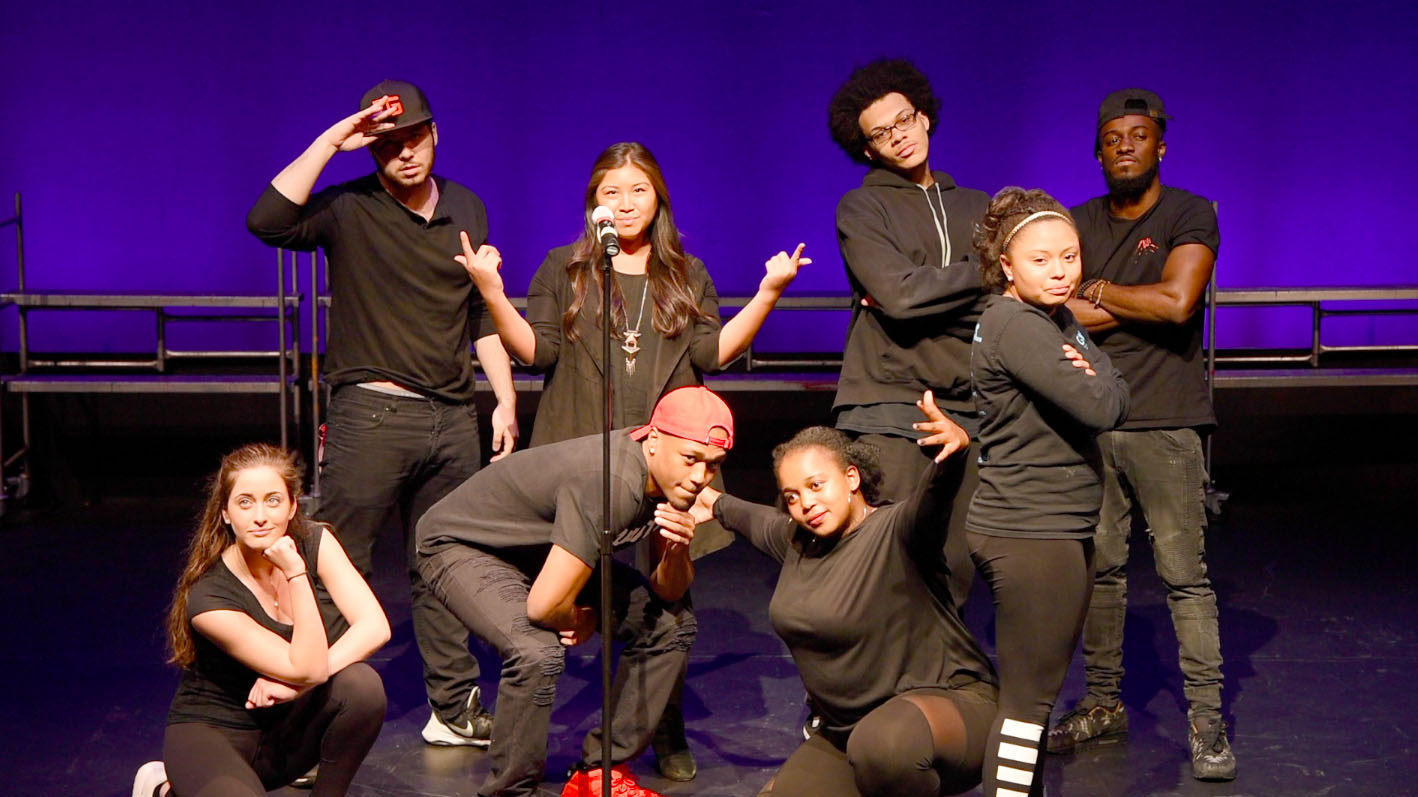
Johnson, who is frequently called ‘Queen Kash’ by her students, said she feels strongly about hip-hop’s place in present-day society as well as the importance of its origins. She displays her love for hip-hop in her class, “Act Like You Know,” which has a 10th anniversary show coming up in April.
“At its core, hip-hop is a performative art form,” Johnson said. “It was created by black and Latino youth who were marginalized in New York City, during a time when unemployment was high, education quality was very low. It was a really bad time and they created something out of nothing. They created this powerful, vibrant art form.”
Monica Miller, an associate professor of religion and Africana studies and the director of Lehigh’s women, gender and sexuality studies, said her interest in hip-hop goes beyond its historical context.
“One of the reasons why I’m fascinated with (the study of) hip-hop is because it provides a cultural example that is always ever-changing,” Miller said. “It’s got the historical past to it, therefore (the study of) it is not transhistorical. There are ways that it needs to be properly contextualized and be made historically contingent.”
This cultural past has roots in some of the civil rights movements that took place during the 20th century in the United States.
“If you think about the civil rights movement and the Black Power movement, there was also the Black Arts movement,” Beachum said. “These movements had music to them, and they had the culture to them, which is what made these movements — it wasn’t just the marches, the protests and other means of raising up voices — there was a lifestyle around that.”
Lehigh students enroll in hip-hop classes to learn more about this lifestyle.
Jamal Connelly, ’19, said he heard about Johnson’s course prior to coming to Lehigh.
“I thought, ‘Oh wow, a hip-hop theatre class? You get to learn about poetry and performance?'” Connelly said.
He said his curiosity drew him to the class.
Juwan Royal, ’18, said “Act Like You Know” helped him learn more about himself.
“I see a lot of value in a class like this because you’ll learn things that will be lifelong,” Royal said.
Comment Policy
Comments posted to The Brown and White website are reviewed by a moderator before being approved. Incendiary speech or harassing language, including comments targeted at individuals, may be deemed unacceptable and not published. Spam and other soliciting will also be declined.
The Brown and White also reserves the right to refuse the publication of entirely anonymous comments.