



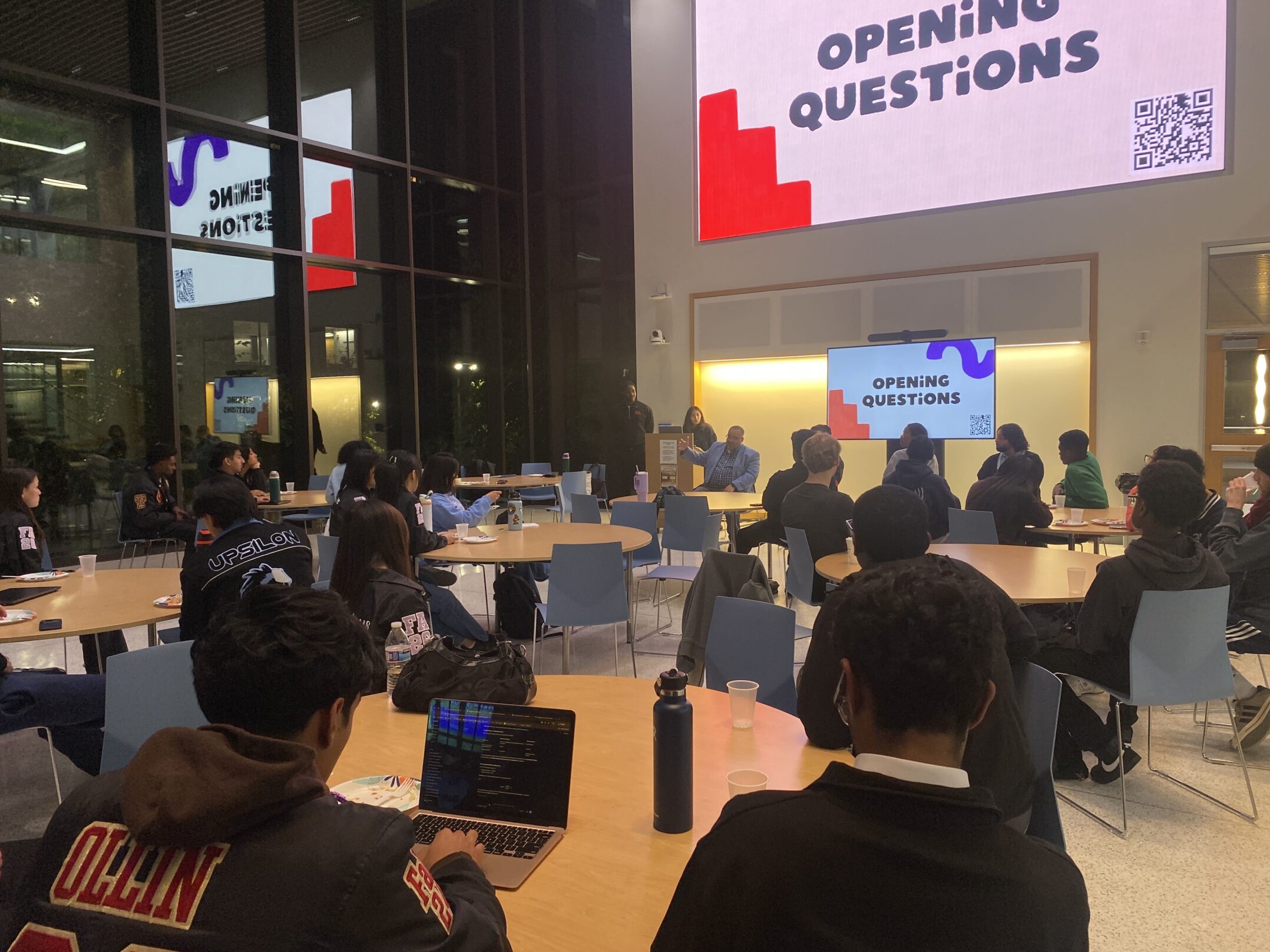
To address the stigma that surrounds Greek life, the Cultural Greek Council hosted a panel with Greek alumni and faculty members, highlighting the importance of cultural organizations at predominantly white institutions.
Kamoi Davis, ‘27, president of the Cultural Greek Council and vice president of Phi Sigma Chi Fraternity Inc., and Ashley Palafox, ‘27, president of Lambda Theta Alpha Sorority Inc., hosted the Wednesday panel titled “Let’s Talk.” The event featured three Lehigh faculty and staff members — Robert Robinson, Alexandra Smith and Enrique Rosado — and one Lehigh graduate student, Jackie Vargas-Bines, ‘24, ‘27G.
Each of the panelists sought community through Greek organizations during their time in college.
At Lehigh, Vargas-Bines was a Division I basketball player and currently works for the National Marrow Donor Program nonprofit, providing stem cells to patients with blood cancers and disorders. She said joining Lambda Theta Alpha Sorority Inc. helped her find herself and develop her leadership skills.
Robinson, the director for the Center for Cultural Engagement and alumni member of Alpha Phi Alpha Fraternity Inc., said the biggest thing Geek life did for him was help with retention for minority students because it built a sense of community.
“There were guys and girls and people who just wouldn’t (have connected) if you didn’t have those venues and opportunities,” he said.
The panelists discussed mixed perceptions around Greek life and their personal experiences before joining.
Smith, associate director for the Office of Fraternity and Sorority Affairs and alumna of Alpha Kappa Alpha Sorority Inc., said she also had a relatively positive experience with Greek life during her college years. She said her mother was an AKA alumna, leading her to grow up around chapter meetings and community events.
Smith said this motivated her to join the organization and eventually bring the chapter back from suspension during her senior year at the University of Dayton.
Vargas-Bines said prior to joining, she had little knowledge about cultural sororities other than historically-Black sororities. She said she assumed that Greek life generated drama and conflict among its members.
Rosado had similar sentiments.
“I learned that the fraternity experience is much more than just the partying and everything you hear on the news,” said Rosado, assistant director of Fraternity and Sorority Life and alumni of Lambda Sigma Upsilon Fraternity Inc. “I learned about civic engagement and doing work for communities and being (genuine) role models to the people that are coming after you.”
Community service and mentorship is a major part of most Greek organizations. Rosado said his fraternity independently fundraised $2,000 for their local community.
Robinson said he mentored many of his fraternity brothers after joining.
The panelists reflected on their membership as a lifelong commitment.
Smith also said Alpha Kappa Alpha Sorority Inc. has many traditions that surpass the college years.
Rosado said without his involvement in Lambda Sigma Upsilon and their advising, he would not be working for the Office of Fraternity and Sorority Life. He said he wanted to get involved due to the lack of advisors for cultural fraternities and sororities.
“When you join, there’s an understanding that it’s a commitment for life and so I would much rather do things that I feel like are going to create a positive change in my organization than just sit,” Rosado said.
Smith relayed a similar feeling, saying her involvement with AKA helped her get to where she is now by providing her with a network of people who would always lend their support to her.
The extensive network is strengthened by the lifelong commitment that the members agree to when joining the Greek organization.
A commonly cited barrier for Greek Life is the high annual dues and fees. The panelists agreed that the price of membership is a major problem.
While Lehigh provides aid for membership fees, Smith said it’s low on funds, and each individual member needs to put in effort to raise those funds by building connections with others. She said when she was in college, she wrote letters to AKA alumnae to secure donations and fund her $1,800 dues.
Smith said increasing membership costs are due to the difficulty and high insurance premiums associated with insuring a chapter.
Rosado said to be aware of all the fees that are associated with Greek life, including the recurring ones, before joining. All information about the costs associated with Greek life are accessible online for students.
The talk closed with panelists recognizing the responsibilities that come with membership in a cultural fraternity or sorority.
The event was labeled as a 5×10 because Davis said it was beneficial for first year students during their college transition. Many upperclassmen and Greek members were in attendance, as well.
Palafox said her biggest takeaway from the panel was how crucial cultural Greek organizations are important at a predominantly white institution because they enable people of color, who otherwise may be underrepresented on campus, to build community with one another.
She said this community extends beyond current members to alumni who have built a support system for them.
“It’s not just a predominantly white institution, it will be a predominantly white world — predominantly white job force that we’re entering in,” Davis said.
Comment Policy
Comments posted to The Brown and White website are reviewed by a moderator before being approved. Incendiary speech or harassing language, including comments targeted at individuals, may be deemed unacceptable and not published. Spam and other soliciting will also be declined.
The Brown and White also reserves the right to refuse the publication of entirely anonymous comments.