



This famous quote by Howard Beale in the movie “Network,” released in 1976: “I’m mad as hell and I’m not gonna take it anymore,” is how Gary Schwitzer described his feelings about health coverage in the media today.
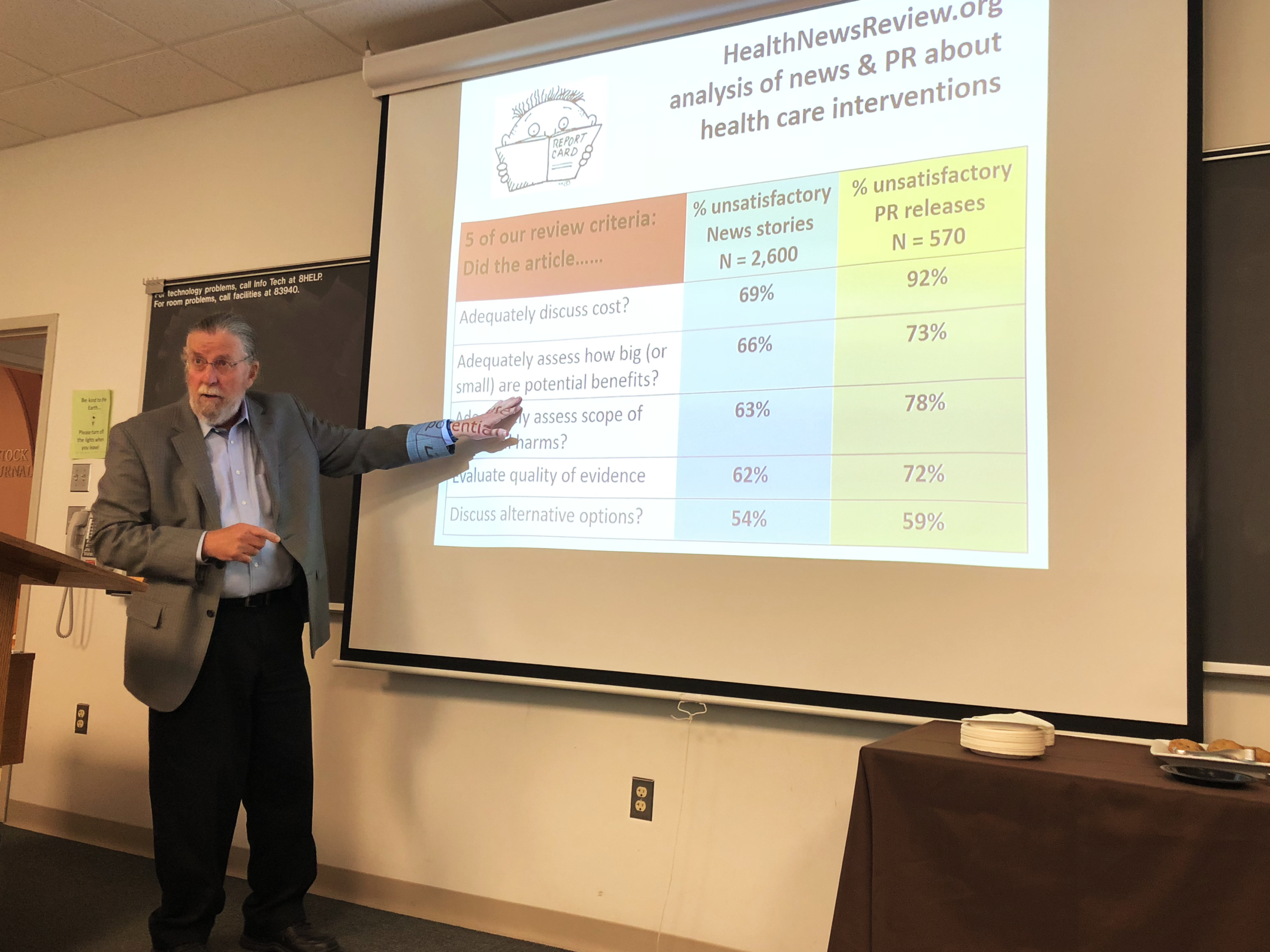
Schwitzer, the publisher and founder of the Health News Review site, which is losing its funding at the end of 2018, explained the problems with health news during his discussion, “Grading Health Care News to Help People Improve their Critical Thinking” on Sept. 20 in Coppee Hall.
The site evaluates and grades health news and press releases based on 10 criteria points. The points then translate to a zero- to a five-star rating.
“Right now, health news is harming more people than it is helping,” Schwitzer said.
Schwitzer said the most common issues with health news are failure to discuss costs, benefits versus risks and lack of quality evidence. Many articles use a small piece of information to make a headline or a story that will appeal to a reader, but often these reports only have a single source and lack the proper research.
Schwitzer said the public is only receiving the benefits of a certain treatment or healthcare finding rather than the data collected. Thus, readers are not receiving the information they need.
There are a number of factors that lead to poor health communication, however, Schwitzer said including misleading information is particularly harmful. Often, a scientist who has a conflict of interest with the subject matter, such as receiving funding from an organization that will favor a certain result, conducts the research featured in an article.
The way the information is presented can also lead to misconceptions.
In his lecture, Schwitzer presented an advertisement that read, “free preventative mammograms.” He explained that messages like this can lead people to believe that the act of simply getting a mammogram prevents breast cancer, which is not the case.
Rachel Oppenheimer, ’22, said she feels like she has been tricked by the media’s portrayal of health studies.
“Now I’m going to think every time I see an advertisement, like the one about the preventable mammograms, ‘that isn’t really true,’” Oppenheimer said.
While the health information featured in articles comes from universities, government agencies and medical centers, Schwitzer, a journalist himself, believes the responsibility of properly informing the public is on journalists.
He said it is the job of journalists to be truthful and unbiased. Reports should be complete, free of any misconceptions and backed by evidence.
“I remember when I was one of those reporters, not for very long, who committed a lot of the flaws we now critique every day, but I also remember when I saw the light and sort of had an epiphany,” Schwitzer said. “I’m just thankful that happened.”
Schwitzer says this reporting is not “fake news” as it is not deliberately trying to harm consumers. It is simply journalists presenting “sloppy and unfinished” work that leads readers to believe false information that can have a negative impact on their health.
Sarah Vaknin, ’22, said she often uses the Internet to look up her symptoms when she is sick. She said she was completely unaware that there were issues with medical reporting.
“It was eye-opening to see how inaccurate a lot the major news stories and websites can really be,” Vaknin said.
Schwitzer strives to publish as many real stories about people harmed by false medical information that he can before the year’s end in order to keep people safe and encourage consumers to become skeptical. Schwitzer said he hopes someone will start a website with the same objective because right now, HealthNewsReview.org is the only American site that reviews health communication.
“These past 12 years of helping, not only journalists, but also consumers improve their critical thinking, is exactly the way that I would have wanted to reach the final stages of my career,” Schwitzer said.
Comment Policy
Comments posted to The Brown and White website are reviewed by a moderator before being approved. Incendiary speech or harassing language, including comments targeted at individuals, may be deemed unacceptable and not published. Spam and other soliciting will also be declined.
The Brown and White also reserves the right to refuse the publication of entirely anonymous comments.