



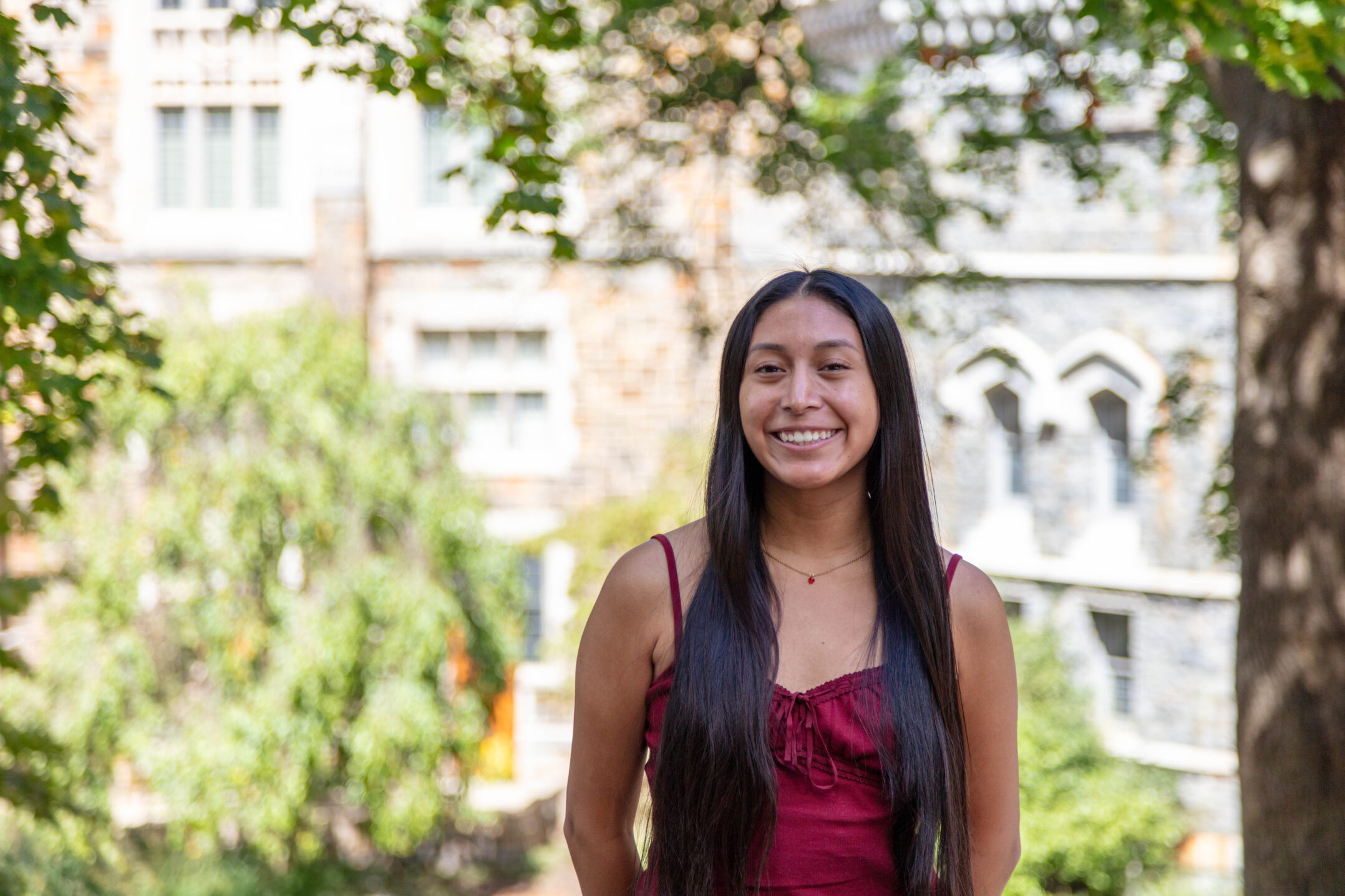
When I was a one-year-old, my mom was pushing me in a stroller on the Santa Monica Pier. A man approached her, looked at me, and asked, “Is she Mayan? I can tell by her nose.”
My mom, who’d only had me for four months at that point, awkwardly smiled and walked away.
On my 18th birthday, I took a DNA test. I did it largely because of a question that appeared on nearly every college application: “Are you African American/Black, American Indian/Alaska Native, Asian, Caucasian/White, Native-Hawaiian/Pacific Islander or prefer not to answer?”
Whenever I was asked about my background before college, I would simply say I’m Hispanic or Latino. It never occurred to me that I’d also be expected to specify a race.
That question left me stumped — but also curious. My mother would never let me select “prefer not to answer” because she wanted people to know who I am, especially since my Irish last name might confuse them.
Eight weeks later, my results arrived: 99% Indigenous to the Yucatán Peninsula and 1% Basque. Technically, that meant I fit under the “American Indian/Alaska Native” box.
But knowing what box to check didn’t make my identity feel any clearer.
I was adopted from Guatemala when I was eight months old, and I couldn’t be more different from my family. My sister towers at 5 feet 10 inches with piercing hazel eyes. My mom is 5 feet 5 inches with those same eyes.
I stand at exactly 5 feet tall with eyes I’ve always described as “poop brown.”
My grandparents, cousins, aunts and uncles all look like each other in one way or another. That’s something I’ve never had — though I never craved it either.
My family never made me feel left out because I wasn’t biologically related to them. I’ve known I was different from them since my first memory of noticing my darker skin color in first grade. I didn’t care, and I still don’t.
But as time went on, imposter syndrome crept in.
I’ve lost count of how many times someone has approached me speaking Spanish and I’ve stood there frozen, too embarrassed to say I can’t speak the language back.
While I do speak some Spanish — I can write it, read it and understand my professors in class — my accent is painfully American, and I can’t even roll my r’s.
I hide that embarrassment by only speaking during small group discussions or talking when my name is fatefully drawn by my professor’s participation bag.
I thought I could get away with hiding that insecurity — that people wouldn’t notice how “not Hispanic enough” I felt — for the rest of college, and honestly, the rest of my life.
I was wrong.
A family member once told me I have white privilege because my whole family is white. Close friends — who I know mean well — have slipped up too.
The first time someone called me “whitewashed” is still engraved in my brain. The first time I was told I’m “not really Hispanic” replays every time I’m surrounded by other Hispanics.
I know I’m Hispanic. I look it, and I live it.
But why don’t I always feel it?
One day at a friend’s apartment, I struck up a conversation with someone who was half white and half Puerto Rican. We laughed about how neither of us could speak Spanish well. Then he said, “So you’re a ‘no sabo’ kid.”
I laughed and asked what that meant. He explained it’s a term used to mock people of Latino descent who don’t speak Spanish fluently.
It perfectly described my situation, until I realized that’s how “real” Hispanics must see me.
And that insecurity never goes away — especially when I see people protesting with their country’s flag draped across their back. I can’t help but wonder: Who would call me names if they saw me wearing a Guatemalan flag?
For years, I curled my hair because I was tired of the pin-straight strands staring back at me in the mirror. I curl my eyelashes every day because I hate how they point down, and I avoid practicing Spanish out loud, terrified that someone will mock the way it sounds coming from my mouth.
I don’t hate who I am, and I don’t want to erase the pieces of me that reveal my heritage. I don’t hate the color of my skin, my long black hair or my Mayan forehead.
Lately, with everything happening in the world — from immigration debates to rising anti-Hispanic rhetoric — I feel more pride in my heritage.
But that’s the hardest part. I know where I come from. I just wish I could feel Hispanic and not just look it. I hope one day I’ll finally feel like I belong too.
Comment Policy
Comments posted to The Brown and White website are reviewed by a moderator before being approved. Incendiary speech or harassing language, including comments targeted at individuals, may be deemed unacceptable and not published. Spam and other soliciting will also be declined.
The Brown and White also reserves the right to refuse the publication of entirely anonymous comments.