



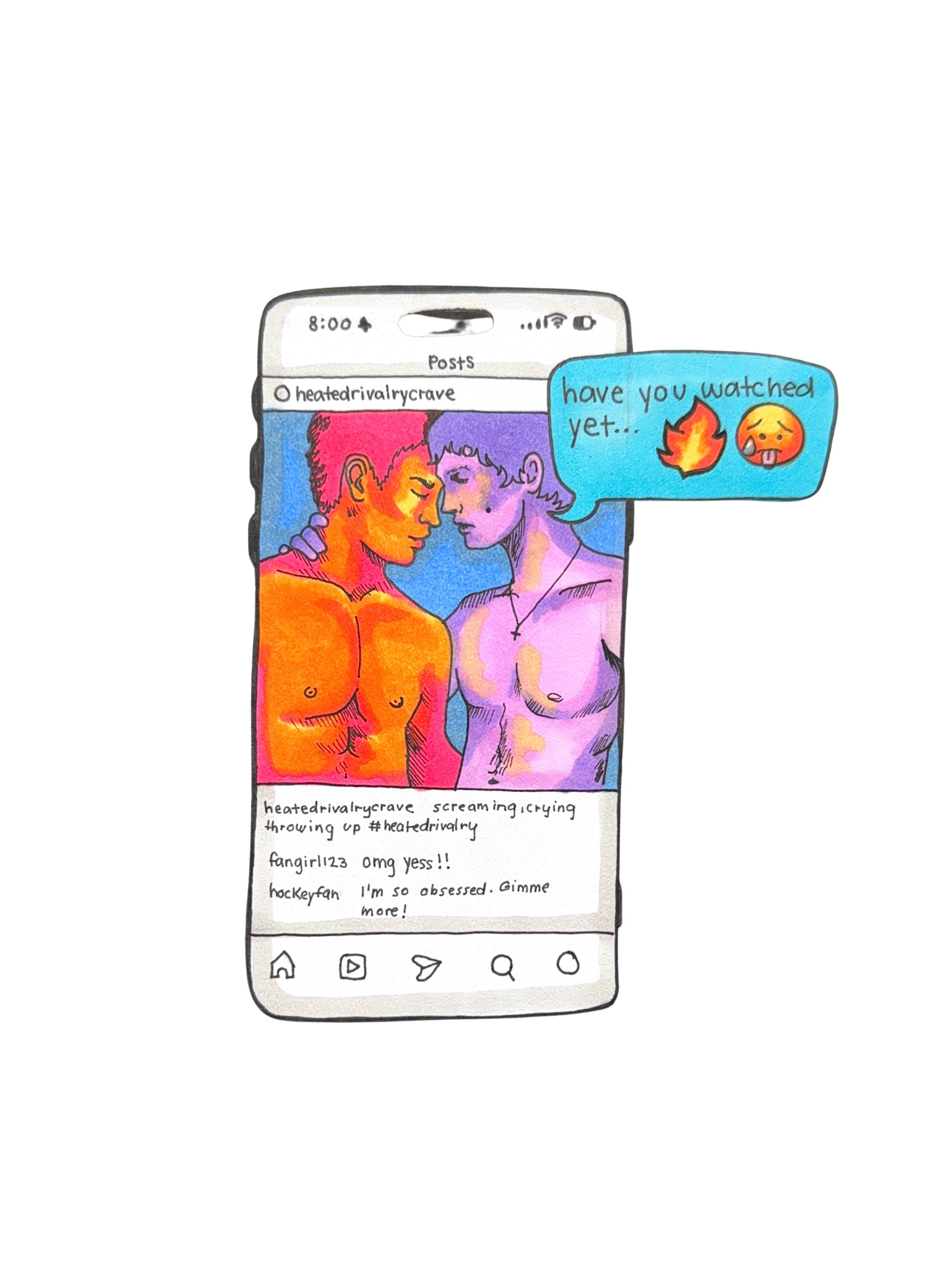
There aren’t many shows that take over campus conversations the way Heated Rivalry has.
Since premiering on Crave on Nov. 28 and later reaching a wider audience on HBO Max, the adaption of Rachel Reid’s novel has been everywhere on campus — in classroom discussions, dorm lounges, group chats and across social media feeds.
What started as a smaller Canadian streaming series has quickly grown into something much bigger. It’s not just trending, it’s shaping conversations.
Connor Storrie and Hudson Williams, who play rival hockey players-turned-lovers Shane Hollander and Ilya Rozanov, have become major public figures overnight. They’ve appeared on talk shows, headlined fashion events and even carried the Olympic torch for the 2026 Winter Games in Milan and Cortina.
New York City Mayor Zohran Mamdani even encouraged residents to stay home during a January snowstorm and read Heated Rivalry through the public library. The show is no longer niche — it’s in the mainstream.
But the attention alone isn’t what makes this moment important.
We aren’t talking about Heated Rivalry just because it’s dramatic or romantic. We’re talking about it because it feels different. The series places a queer love story at the center of professional hockey — a space long seen as hyper-masculine and unwelcoming to LGBTQ+ athletes. Instead of treating their sexuality as a side plot, the show makes it the focus.
Week after week, viewers watch Shane and Ilya deal with pressure, secrecy and the fear of being exposed. Their relationship isn’t framed as a scandal. It’s framed as real. It’s messy, emotional and vulnerable. And that honesty matters.
The show’s impact has gone beyond the screen. Professional hockey player Jesse Kortuem publicly came out as gay and cited Heated Rivalry as part of what helped him feel ready to do so. When a TV series can influence someone to live more openly, that says something about power.
On our campus, where identity and community are already central to student life, Heated Rivalry has become more than entertainment. Students gather for watch parties in dorms and houses. Memes and fan theories circulate in group chats. Themed parties draw crowds. For once, a show isn’t just filling out TikTok feeds — it’s bringing people together in person.
That sense of connection is rare.
Heated Rivalry deserves the attention it’s getting. Not because it’s viral or full of steamy scenes, but because it tells a story that many people haven’t seen represented openly before. It challenges the idea that certain spaces, like professional hockey, can only look one way. It shows that vulnerability and strength can exist together.
In a generation that values openness and identity exploration, this show reflects what many of us are looking for in the media: stories that feel honest. We’re not just watching it. We’re seeing parts of ourselves in it.
For a campus community that often searches for connection in a fast-paced digital world, that matters. And if a TV show can spark real conversations about authenticity, belonging and courage, then it’s more than just entertainment. It’s a moment worth paying attention to.
Comment Policy
Comments posted to The Brown and White website are reviewed by a moderator before being approved. Incendiary speech or harassing language, including comments targeted at individuals, may be deemed unacceptable and not published. Spam and other soliciting will also be declined.
The Brown and White also reserves the right to refuse the publication of entirely anonymous comments.