



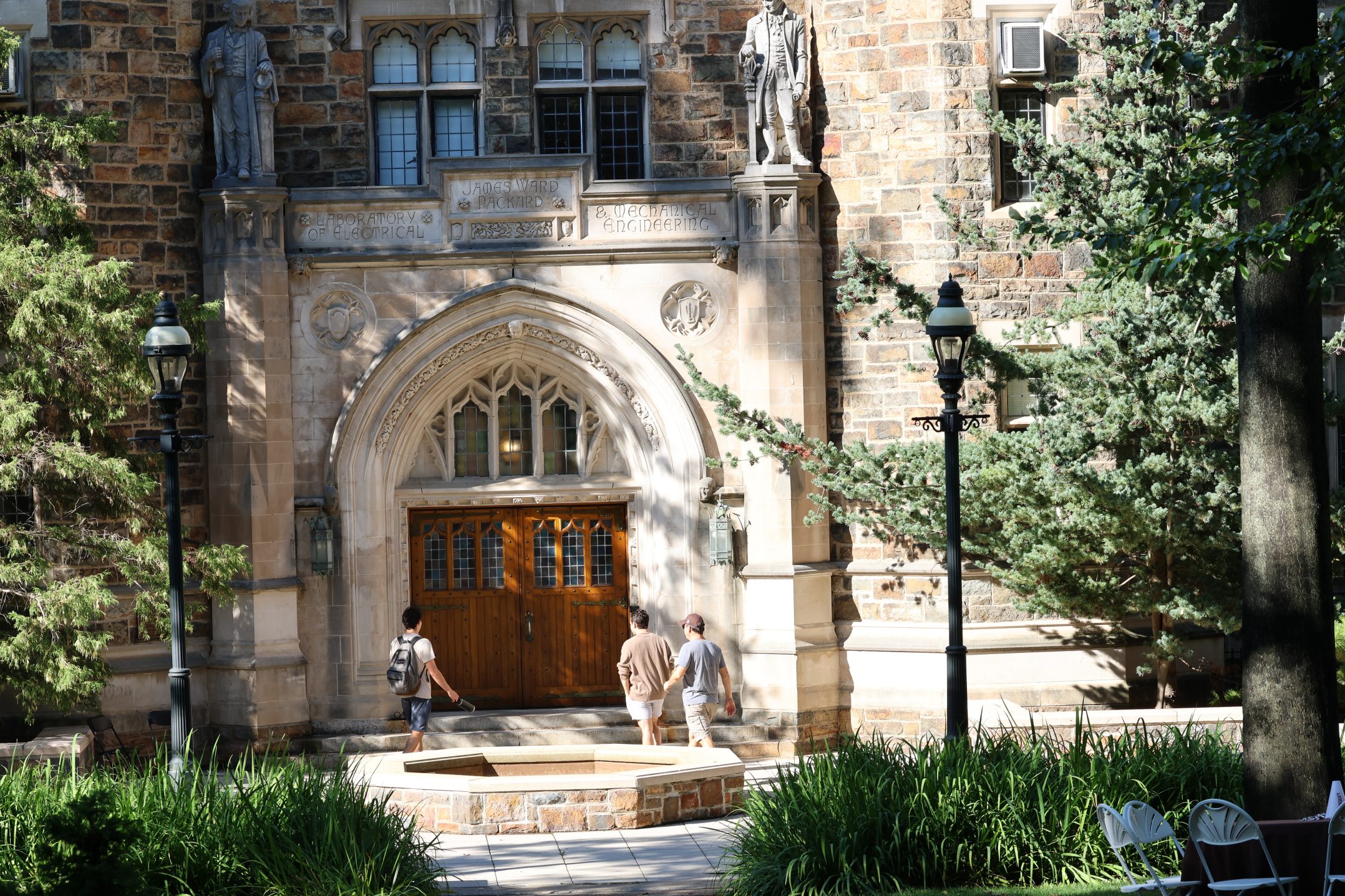
On Feb. 26, Lehigh’s Psi Upsilon chapter hosted Evelyn Piazza to discuss the dangers of hazing and strategies to prevent it. Members of the Interfraternity Council and Panhellenic Council were invited to attend.
Piazza is the mother of Tim Piazza, a Penn State student who died in February 2017 after enduring severe hazing. The incident caused damage to all of his organs except his kidneys, as well as severe brain swelling and neurological damage.
“My life is anything but normal now,” Piazza said. “Every holiday hurts because he’s missing.”
Following their son’s death, Piazza and her husband advocated for the passage of Timothy J. Piazza Anti-Hazing Act in Pennsylvania. Adopted in 2018, the law established stricter penalties for hazing, including felony charges in severe cases.
Piazza now speaks at colleges and universities across the country, sharing her family’s story and urging students to end hazing practices.
According to the Hazing Prevention Network, hazing is defined as any intentional action or situation that causes embarrassment, harassment or ridicule and risks emotional or physical harm to members of a group or team, regardless of their willingness to participate.
Hazing has a long history at higher education institutions across the U.S., including at Lehigh.
Recorded incidents at Lehigh have included forced drinking, physical assault, forced servitude and sleep deprivation across multiple fraternities and sororities, some of which remain active or have merged with other chapters.
In September of 2025, Pi Lambda Phi was reported for an incident in which a member was confronted at a residence and threatened with a machete and cattle prod stun gun for failing to pay organizational dues. The chapter was later dissolved after the claims, along with other hazing-related charges, and were substantiated by the Lehigh University Police Department.
Piazza said hazing persists because of the power structure within Greek life, a lack of adult authority and a sense of retribution among members who were hazed themselves.
Cullen Mangan, ‘28, the president of Psi Upsilon, echoed that sentiment, and said a culture of retribution can perpetuate hazing and that Lehigh’s relatively isolated location may contribute to participation.
Piazza said hazing often begins with lower-level requirements, such as wearing specific clothing or serving as a designated driver, before escalating to more harmful acts, including physical abuse, forced alcohol consumption and intentional humiliation.
Beyond immediate physical risks, she emphasized the mental health consequences of hazing, including depression, low self-esteem, shame, and in some cases, suicide.
“You are playing Russian Roulette with someone’s life,” Piazza said. “By doing these things, you can’t predict how someone will react, and you don’t know how far someone else is willing to take the situation.”
Piazza said hazing is a form of power reinforcement that creates a cycle of abuse. She urged new members to refuse participation and to report incidents to chapter leadership, university administrators or law enforcement.
“Go to your advisor, go to your national(s), go to your Greek Life department,” she said. “Just address it and make it stop. Just because it happened to you, doesn’t make it right.”
She also encouraged organizations to evaluate their structures and address power imbalances. She said leadership must set a clear tone that hazing is unacceptable.
Mangan said Psi Upsilon has adopted a no-tolerance policy for hazing and that similar standards should be implemented more broadly across Interfraternity Council chapters.
“I think a lot of people have the mindset that (Fraternity and Sorority Life) and (Interfraternity Council are) out to get them, when I feel like in actuality it’s the opposite,” Mangan said.
Daniel Oshri, ‘28, said individual chapters taking proactive steps to eliminate hazing, along with educational events like Piazza’s presentation, can help change campus culture.
“It exists everywhere,” Oshri said. “Talks like the one we did today help spread awareness of the situation.”
At the conclusion of the presentation, Piazza read a letter her son had written to himself, which the family received after his death. The final line read: “cherish everyone.”
“Cherish everyone,” she said. “Everyone is important. Everyone is worthy of being treated like they matter. Make something good come out of something that has been so horribly bad. Make change happen.”
Comment Policy
Comments posted to The Brown and White website are reviewed by a moderator before being approved. Incendiary speech or harassing language, including comments targeted at individuals, may be deemed unacceptable and not published. Spam and other soliciting will also be declined.
The Brown and White also reserves the right to refuse the publication of entirely anonymous comments.