



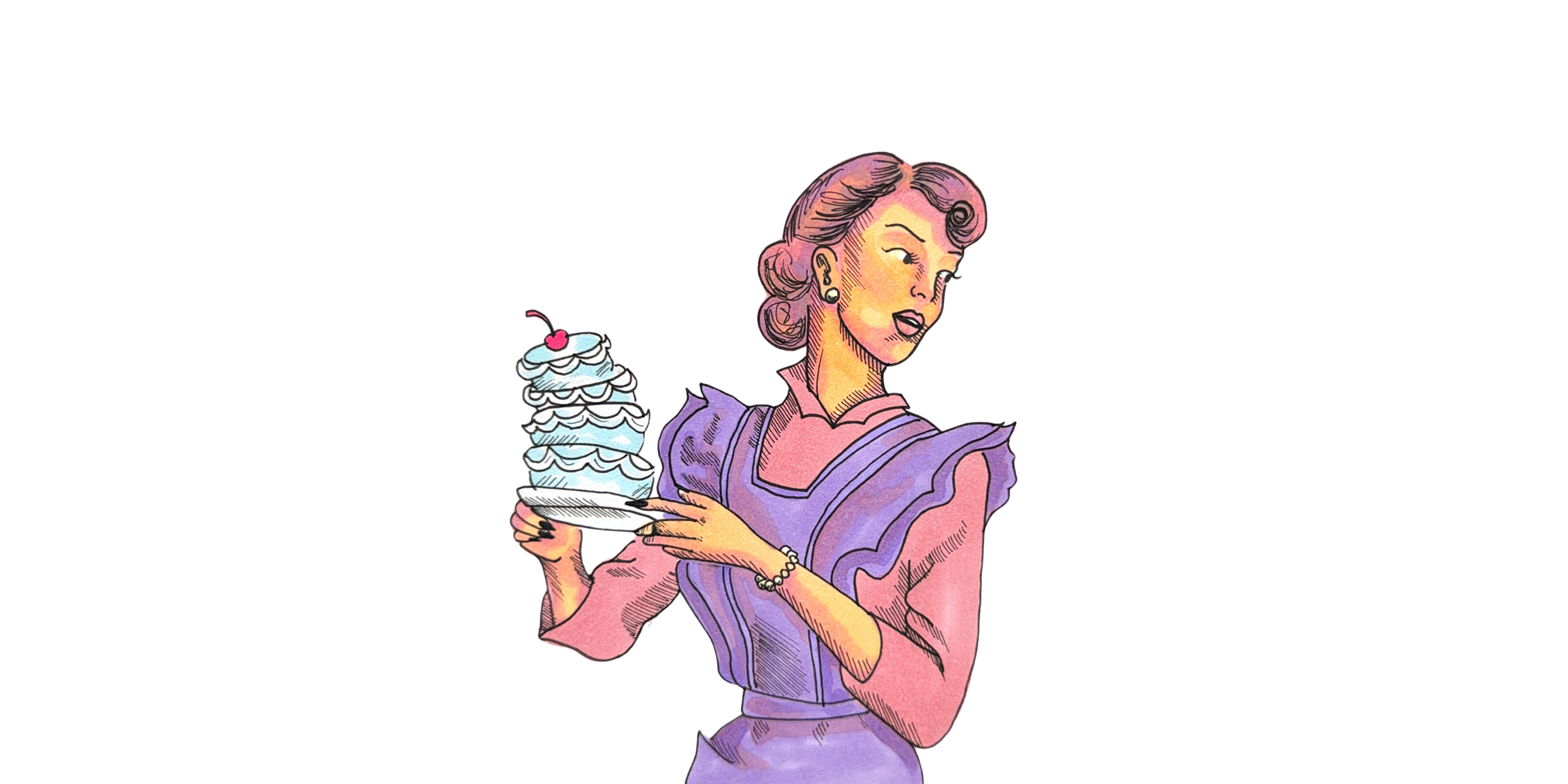
If you’ve been on TikTok recently, you’ve likely seen the trend built around the phrase, “I’m the perfect mix of Saturday night and the rest of your life.”
The format is simple. First comes a photo carousel: a girl getting ready, applying mascara and eyeshadow, snapping a quick selfie before heading out. Or a clip from a crowded bar, music playing in the background, laughter echoing.
The second slide shifts the mood. The same girl appears in sweatpants, cradling a baby or laughing with their cousin’s children. Night out, night in. Party girl, future mother.
On the surface, the trend captures balance. However, more than that, this trend feels like an extension of other trends we’ve seen regarding femininity, like influencer tradwives, “I’m just a girl” and girl dinner. All of these trends started out innocuous enough. Tradwives were just creating escapist content about making things from scratch and living on a farm, “I’m just a girl” was “just a joke” and “girl dinner” poked fun at the way women eat charcuterie-board-like snack plates when left to their own devices.
However in each case, the trend shifted from something lighthearted and fun to reflecting a broader cultural shift toward a new era of misogyny. “Girl dinner” became popular as a trend right as ultra-thinness returned as the dominant beauty standard. “I’m just a girl” and “girl math” became ways for women to tie irresponsible spending habits back to their gender — something men once used to do for us.
The “Saturday night/rest of your life” trend is similarly innocuous on the surface. It could even be seen as empowering because it allows women to be both party girl, future wife and mother at the same time. However, in a post-Roe world, it’s understandable that many on Tiktok are uncomfortable with the idea that “the rest of your life” means holding a baby and smiling in your family home.
Since the Supreme Court decision in Dobbs v. Jackson’s Women’s Health Organization, there’s been more misinformation about birth control and a renewed push from political leaders for women to have more babies.
There’s a reason that many are defaulting to “the rest of your life,” meaning having a baby. For decades, women’s futures have been framed around marriage and motherhood. But is that really all it takes for a woman to be able to be in a long-term loving relationship?
Some women are responding to the trend with a counter-version that takes out the “rest of your life” part completely. One user paired clips of her going out and the caption “babies scare me.” Other women are using the “rest of your life” portion to show off their imagined futures — whether that’s medical school or simply a day-to-day activity that brings them joy.
“Saturday night” isn’t just about going out. It represents freedom, youth and fun, but also novelty, flirtation and the sense of being fully alive. Similarly, “the rest of your life” shouldn’t just be about a hypothetical future baby, even if that’s a part of it. Instead, it should be about all of the things that make life worth living.
In the more honest version of the trend, the hypothetical partner isn’t positioned as someone to impress or shrink for. Instead, they’re imagined as someone who fits into a life that already has multiple dimensions.
There are many ways to be a girl right now: corporate, creative, single or married. However, this trend reduces that ability to be multifaceted into just two sides: party girl and mother. In 2026, being a woman shouldn’t mean fitting into one — or even two — roles. It should mean having options and feeling confident enough to choose as many as you want, without letting any single one define you.
Comment Policy
Comments posted to The Brown and White website are reviewed by a moderator before being approved. Incendiary speech or harassing language, including comments targeted at individuals, may be deemed unacceptable and not published. Spam and other soliciting will also be declined.
The Brown and White also reserves the right to refuse the publication of entirely anonymous comments.