



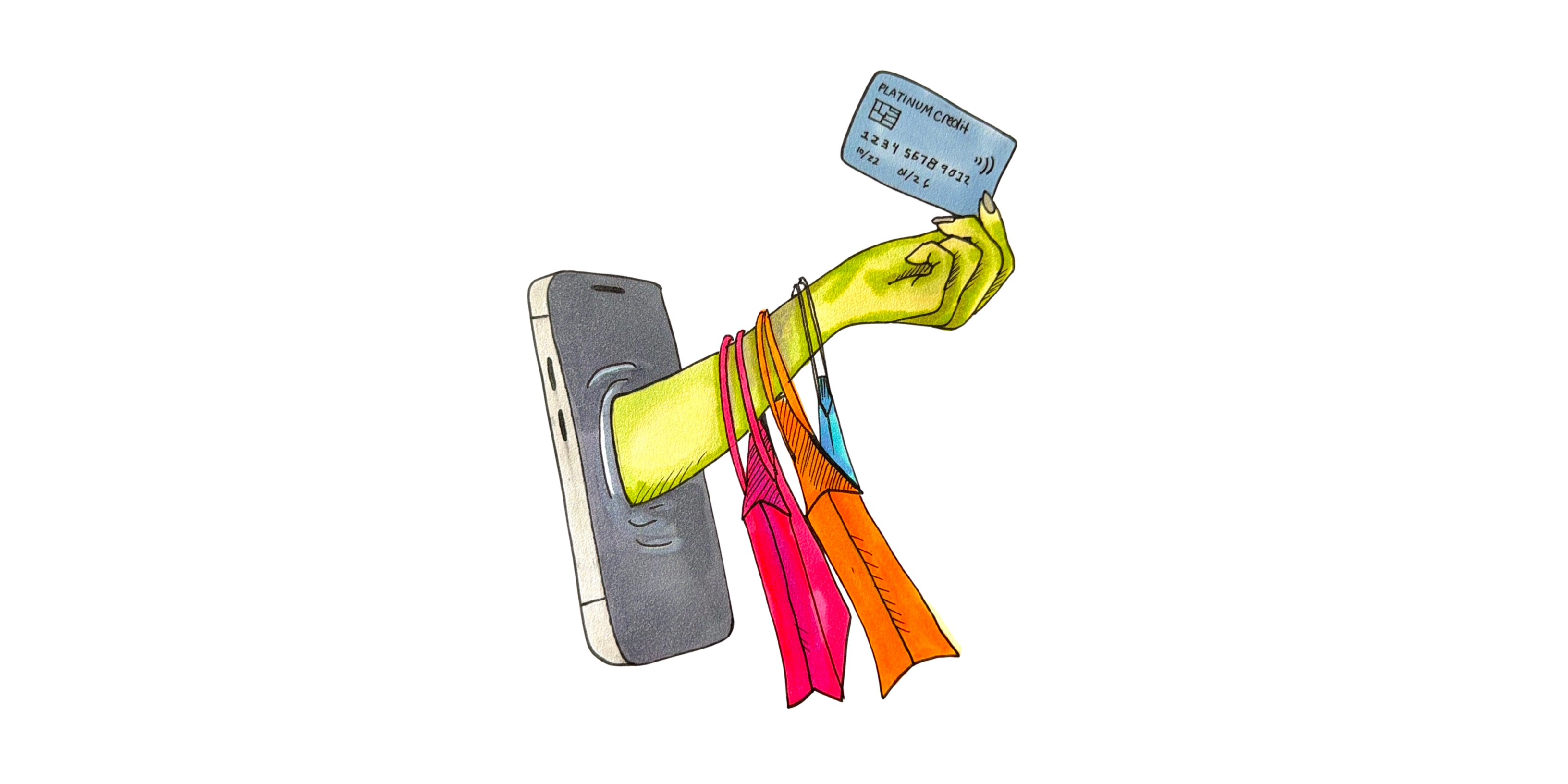
Every semester, the pattern repeats.
A student arrives with the newest phone. Weeks later, a specific pair of sneakers appear across campus. Dorm rooms begin to mirror the same viral decor. What follows is an unspoken expectation to keep up to match what others have.
None of these purchases are inherently problematic. Taken together, however, they reflect something larger: the growing influence of consumer culture on student life.
Consumerism is often framed as a distant issue tied to corporations or advertising firms. In reality, it operates much closer to home. It shows up in everyday routines such as scrolling through Instagram between classes, noticing what peers own or making small, often unconscious comparisons that shape daily decisions. These moments may seem insignificant, but over time, they influence how students define values and success.
Today’s students encounter marketing at a scale no other generation has experienced. Social media has blurred the boundary between entertainment and advertising. Influencers present products as personal recommendations. Sponsored content is constantly embedded into feeds. What appears to be just a social space also functions as a marketplace, where nearly every post has the potential to sell something.
This environment creates pressure to not only fit in socially, but to keep up materially. Viral trends accelerate that pressure. A single post on TikTok can turn any ordinary product into a perceived necessity almost overnight. Even with awareness of targeted marketing, resisting that pull remains difficult, especially when those trends are reinforced by peers.
College students are particularly vulnerable. These years are defined by identity and finding a place to belong. Consumer culture reframes that process, encouraging students to express identity through purchases rather than experiences or values.
The effects are noticeable. Devices are replaced before they fail. Clothing is bought for short-lived trends. Spending becomes less about necessity and more about visibility, with purchase increasingly influenced by how they appear to others.
Part of the challenge is how normal this cycle has become. Trends move in the blink of an eye, and over time, this neverending consumeristic pattern reinforces the idea that whatever we have will never be enough for us.
Instead of appreciating what we already own, our attention shifts to whatever everyone else seems to be getting next. Noticing that pattern doesn’t stop consumer culture, but it can make it easier to pause and ask whether every trend is actually worth our attention.
This isn’t a harmless cycle. It shapes financial habits, influences priorities and reinforces comparisons. For many students, it can also create unnecessary financial strain, as the pressure to keep up doesn’t always align with limited budgets. There will always be a newer product, another trend and another promise of improvement. Consumer culture depends on a constant sense of insufficiency.
The issue isn’t consumption itself. It’s the extent to which choices are shaped without even realizing it. When every scroll doubles as advertising, participation becomes difficult to avoid.
Ignoring these pressures isn’t realistic. Students need to be more aware and more intentional about what they choose to spend money on. This awareness doesn’t require rejecting consumer culture all together, but it does require questioning it.
Exploring our futures is difficult enough without constant distractions pulling our attention to the next new thing. The question isn’t just what we want to buy, but why we feel the need to buy it in the first place.
Comment Policy
Comments posted to The Brown and White website are reviewed by a moderator before being approved. Incendiary speech or harassing language, including comments targeted at individuals, may be deemed unacceptable and not published. Spam and other soliciting will also be declined.
The Brown and White also reserves the right to refuse the publication of entirely anonymous comments.