



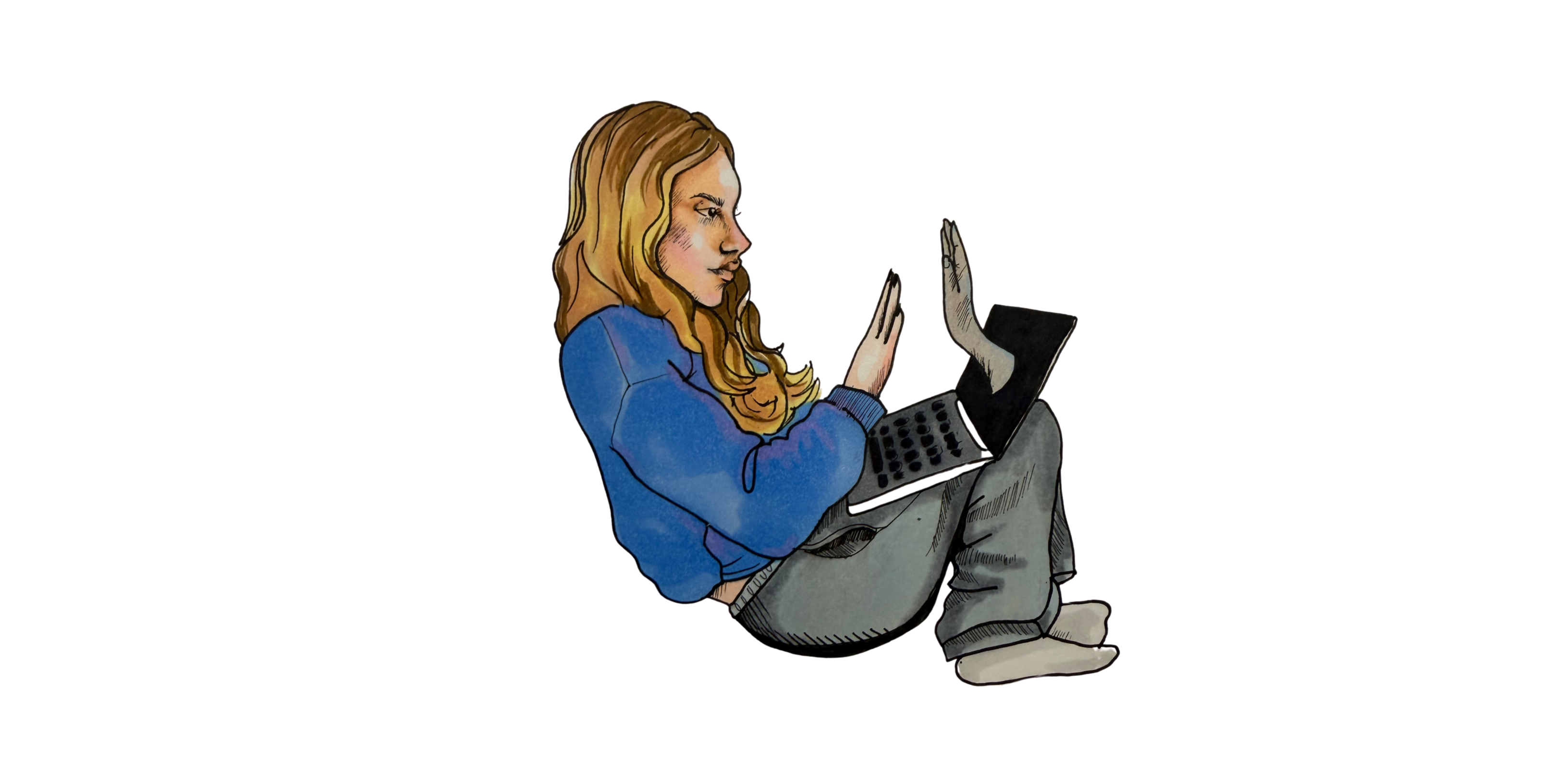
People like to think they know celebrities.
A popular musician posts a music video or an athlete shares a workout, and suddenly it feels like they’re part of the day. People like and share, and the more this happens, admiration can start to feel like friendship.
Psychology Today defines this phenomenon as a parasocial relationship — a one-sided connection that exists only in the fan’s mind.
Parasocial relationships aren’t new. In 1956, researchers Donald Horton and R. Richard Wohl observed that television viewers felt “intimate” with people on screen, even though no real relationship existed, and coined the term. The behavior existed long before that — and will continue as long as humans seek connection.
On our campus, this influence runs beyond fashion or slang. Students sometimes look to celebrities as benchmarks for success and confidence, modeling not just what they wear or sell, but how they present themselves to the world. That influence can shape everything from self-image to career goals, all without students realizing it.
Today, platforms like Instagram, TikTok and YouTube offer constant glimpses into celebrities’ lives, making it easier than ever to feel like we actually know them.
But we don’t. And that distinction matters. What the audience sees is a curated version of reality, edited and filtered for the public, emphasizing perfection over authenticity.
Parasocial relationships aren’t inherently harmful. For some, especially those from marginalized groups, seeing public figures who reflect their identity can offer validation and a sense of belonging. These connections can inspire confidence, provide representation and make people feel less alone. In that sense, they can serve a real and meaningful purpose, offering comfort.
But the line needs to be drawn between admiration and assumption.
When fans begin to act as if they truly know a celebrity — interpreting posts as personal signals, defending them as if they were close friends or expecting them to behave in certain ways — the relationship becomes distorted. These public figures aren’t participants in the bond. They aren’t aware of it, and they aren’t responsible for it.
Social media intensifies this imbalance. It’s designed to create a sense of closeness at scale. A casual video from a singer or a behind-the-scenes clip of an athlete can feel candid and personal, even when it’s carefully staged for engagement and attention.
Young audiences particularly crave authenticity and connection but experience most interactions through screens. That contradiction of wanting closeness while living digitally, can blur the line between real relationships and imaged ones. Over time, this can shape expectations of friendships in ways that are difficult to recognize, sometimes leading to unrealistic standards.
This is why parasocial relationships are so compelling and require awareness.
Psychologists have found that these attachments are no longer limited to traditional celebrities. Artificial intelligence chatbots designed to simulate companionship can now generate emotional responses from users, offering comfort while further blurring the boundary between genuine human connection and simulation. This raises new ethical questions regarding AI and its impact on non-human interactions.
Admiration itself isn’t problematic. Music, sports and entertainment have long shaped and connected communities, but that influence requires boundaries. Without them, access is easily mistaken for intimacy and curated content for genuine connection.
Parasocial relationships should remain what they are: distant, one-sided and understood as such. In a world where everything feels personal, it’s important to remember that it isn’t.
Comment Policy
Comments posted to The Brown and White website are reviewed by a moderator before being approved. Incendiary speech or harassing language, including comments targeted at individuals, may be deemed unacceptable and not published. Spam and other soliciting will also be declined.
The Brown and White also reserves the right to refuse the publication of entirely anonymous comments.