



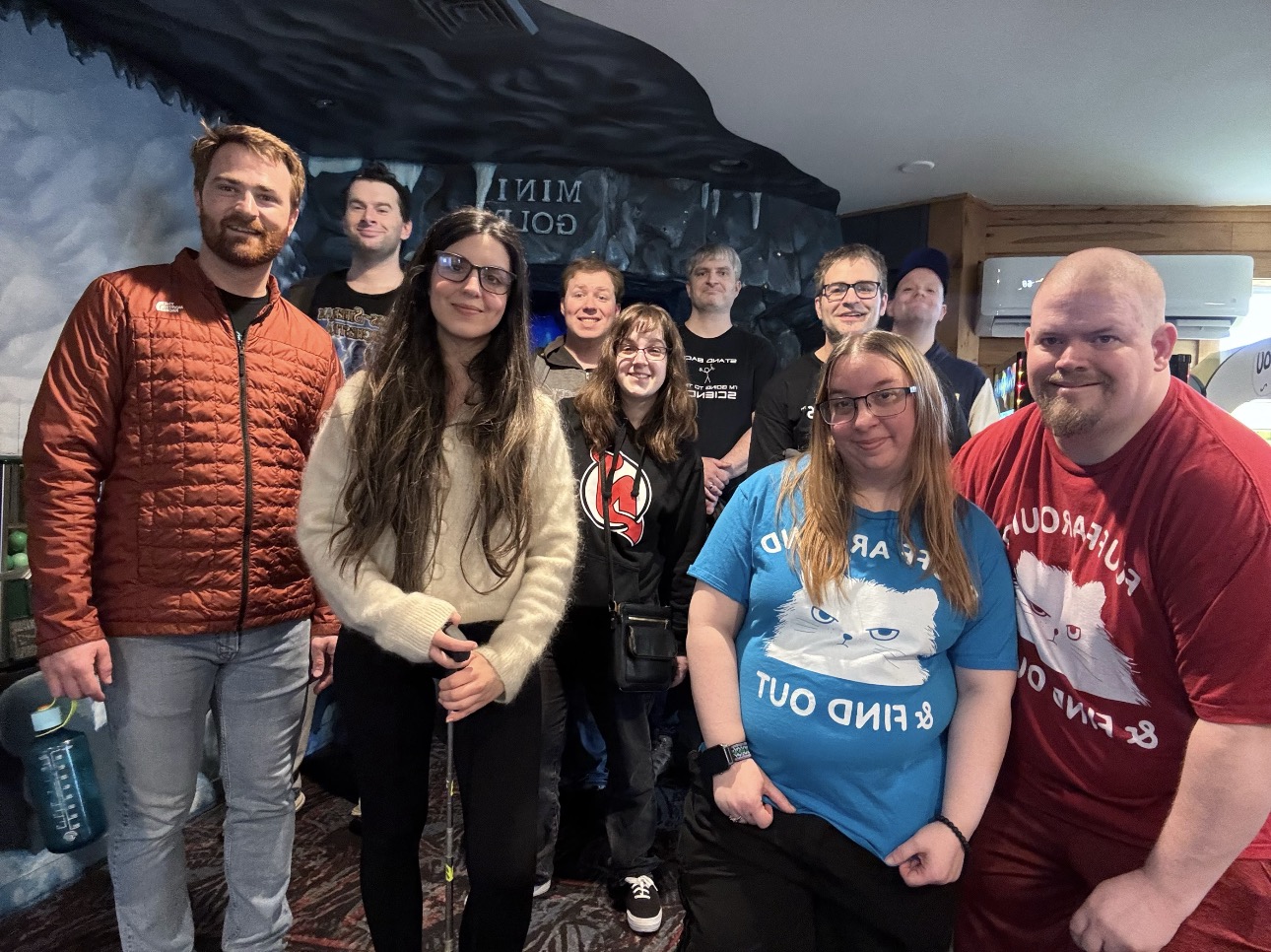
The smell of donuts and the sound of board game banter filled Donerds Donuts as strangers introduced themselves, settled into games and laughed over shared stories.
The meetup is part of a bi-monthly coffee club for adults on the autism spectrum, an initiative designed to create a welcoming, low-pressure environment for social interaction.
Hosted on the first and last Saturday of each month, the club offers more than coffee and donuts. With board games, trivia and sensory-friendly activities, the gatherings are intentionally structured to make socializing easier and more accessible.
Donerds Donuts co-owner Annabel Figueroa said she felt the program was needed and wanted to offer a safe space to interact and form social connections.
At its core, the coffee club reflects a broader effort to address a gap in community spaces for autistic adults in the Bethlehem area — a group that often has fewer opportunities for social connection after leaving school-based support systems.
Figueroa said the idea emerged shortly after opening the Bethlehem location in 2023, when customers began asking about local resources and social groups for adults on the spectrum.
“We got a lot of autistic adults asking us about groups in the area,” she said. “Then I was like, ‘Why don’t I start this?’”
What began as a small gathering has steadily grown. The group now has hundreds of members through its online platform on Meetup.com, and attendance has increased over time with both new and returning participants.
Figueroa said the first meeting drew just one person, but attendance has steadily grown with each event.
Since its first meeting, the goal of the coffee club has remained unchanged — to provide a space where participants feel comfortable being themselves.
“One of the biggest things about this group is there are no rules and everyone is free to be themselves,” Figueroa said.
That flexibility is balanced with structured social engagement. Activities like card games, group outings and casual conversations help create a predictable environment that make interactions more manageable. In the past, the group has organized outings such as bowling, mini golf and park picnics, offering additional ways for members to connect outside the shop.
Figueroa said she hopes attendees leave with more than just a few hours of social time.
“I’m hoping that people make more connections, maybe even find love, and that this group gets bigger and bigger,” she said.
For many participants, the coffee club offers something that can be difficult to find somewhere else — a sense of belonging.
William Smith, a Bangor resident who’s attended the club’s meetings for about a year, said he first heard about the group through his mother and decided to give it a try.
Since then, he’s become a regular, returning for both the activities and the personal connections he’s formed.
“I like donuts and I like meeting new people,” Smith said “I’m getting to know new people and I’ll find out what their own hobbies are. I get to make new friends.”
For Smith, the environment plays a key role in making those interactions possible. He said he feels a strong sense of understanding between himself and others in the group, which helps them communicate more easily while still maintaining their independence.
He said these shared norms are part of what makes the space feel different from other social environments.
The coffee club also reflects a broader approach by the store to engage with the community beyond its role as a business.
Donerds Donuts co-owner Andrew Underwood said the initiative aligns with the shop’s commitment to creating meaningful local impact.
“We’re engaging with the community on a daily basis by selling them donuts,” Underwood said. “So I think it’s good to give back in whatever way that you can.”
Underwood said hosting community-focused events is part of a larger vision for the business, with each location in Bethlehem and Jim Thorpe offering something special to serve its surrounding area.
In Bethlehem, that meant recognizing the lack of social spaces for autistic adults and creating one.
Underwood said the business aims to identify and support underserved groups in the community.
“There were no unstructured places outside of school where people could meet who are adults on the spectrum,” Underwood said. “We thought that this was the most impactful thing we could do.”
Even with the coffee club operating in a relatively small space, its impact extends beyond the physical setting. Through consistent meetings and a welcoming atmosphere, the group has created opportunities for participants to build relationships over time.
Figueroa said that continuity — seeing familiar faces while also welcoming new ones — has been one of the most rewarding aspects of the club.
“There are always new faces coming by, as well as the same people,” she said. “They’re making friendships.”
Figueroa hopes to expand the group’s reach and visibility within the community.
“I think it’s a great place for someone to join and start making new friends,” Smith said. “And plus, you get donuts.”
Comment Policy
Comments posted to The Brown and White website are reviewed by a moderator before being approved. Incendiary speech or harassing language, including comments targeted at individuals, may be deemed unacceptable and not published. Spam and other soliciting will also be declined.
The Brown and White also reserves the right to refuse the publication of entirely anonymous comments.