



I used to travel the world from my bedroom floor.
I would lie on my stomach with a National Geographic magazine sprawled on the floor in front of me, flipping page after page until I’d been to Africa and Asia, climbed the Himalayas, explored jungles and caves, reached the bottom of the ocean and even outer space.
My parents had a membership, so when the magazines faithfully arrived every month, I looked forward to bringing each one in from the mailbox. They were my prized possessions.
I was especially interested in the photographs. I would trace the edges of mountains and craters on the page, imagining the roughness beneath my palms and study the faces of people who lived thousands of miles away, letting each photograph bring a place I had never seen to life.
Sometimes I wondered what it would be like to stand where the photographer stood, looking at the same scene before capturing it.
Most of the time, I imagined myself in the stories. Not as the person being written about, but as the one asking “Why?”
I didn’t have a word for that yet. I wasn’t exactly sure what a journalist was, but I knew the people who made those stories seemed to have the most interesting jobs in the world.
They were able to ask questions, go places and meet people whose lives were so different from my own. I was fascinated by it.
Looking back, I realize I was already practicing a very early version of journalism: by paying attention.
I was a curious and imaginative child. I loved to read, explore and play in the woods. I would pretend I was a baby bunny hopping in the grass, a cricket chirping or my grandparent’s cherry tree reaching toward the sky.
That’s partly why I loved National Geographic. It showed me how the world worked. A lioness eating her prey. A melting glacier. It was a window into a life much bigger than mine.
But mostly, I was curious about people, always finding my way back to stories about humanity.
The stories pulled me along in a way I didn’t quite understand yet. One photograph led to a caption, the caption led to a story and each page seemed to open a new one.
I wouldn’t have called it journalism back then.
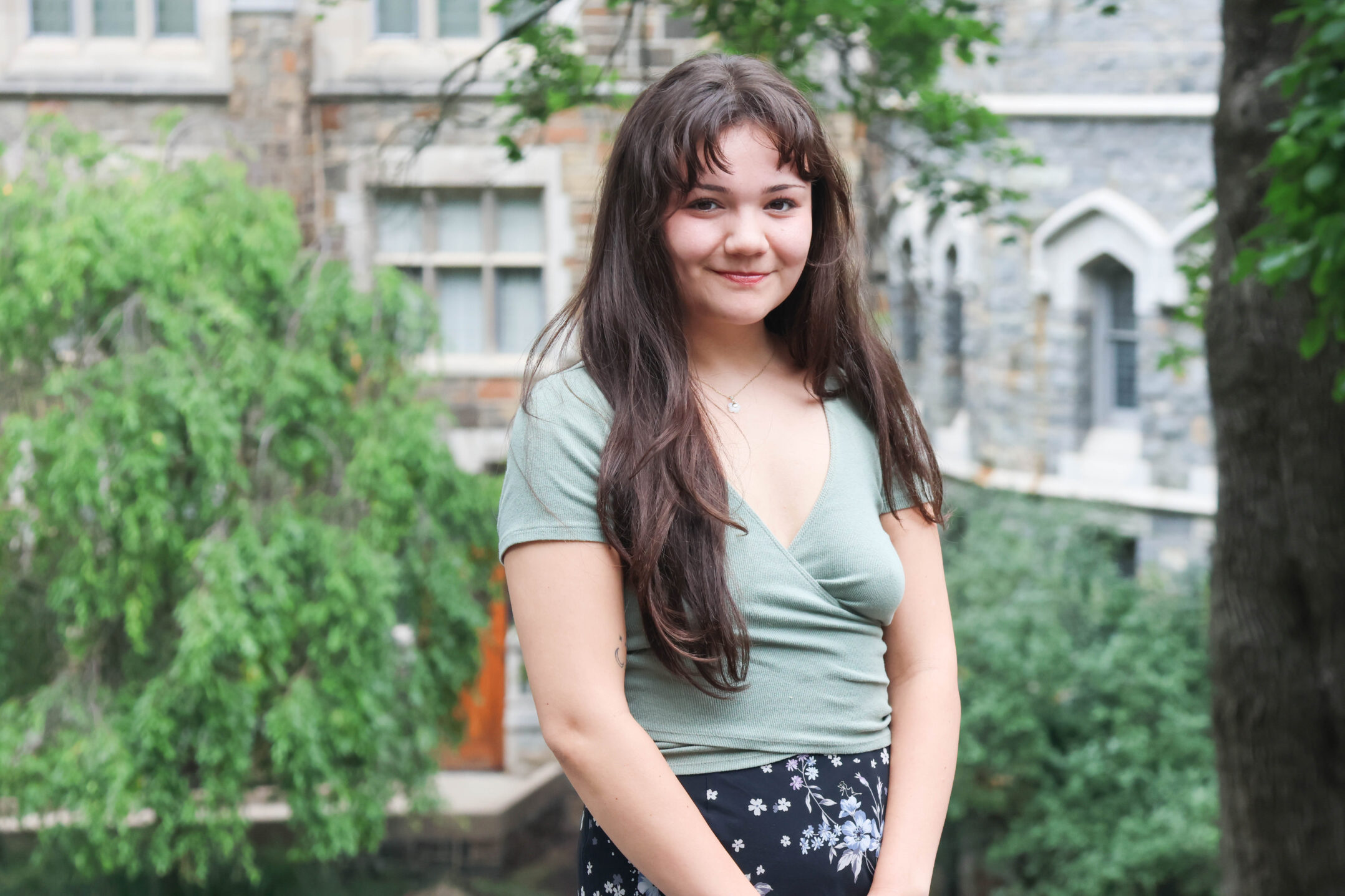
Now, I’m a senior finishing my journalism degree, following the same instincts that drew me to those stories as a child.
I’ve won awards for my work. I spent a summer interning in Lisbon, Portugal, and this summer I worked full-time as both a journalist and photographer.
I’ve interviewed people I wouldn’t have met otherwise. I’ve stood behind a camera trying to capture a person in a way that feels authentic. I’ve asked strangers questions and, more often than not, left the conversation with more questions than I started with.
I grew up to have the exact job I used to imagine while reading magazines on the floor. It’s the coolest job in the world.
The funny thing is, I don’t think I ever consciously decided this was the life I wanted. I kept following the things that interested me.
It started with books and magazines, which led me deeper into reading and eventually writing.
Writing led me toward politics and the world of news, while photography and traveling gave me new eyes and ears for the places and people around me.
In journalism, I’ve found a place where all these things can coexist. Looking back, it seems I was following a path I didn’t know I was on. It started with the kind of storytelling I found in National Geographic as a kid, and it’s the kind I now hope to create myself.
For a long time, I thought those magazines were teaching me about the world. Now, I think they were also teaching me about the kind of journalist I wanted to become.
The little girl on my bedroom floor couldn’t have known how her life would play out. She just loved looking at pictures and reading stories about places far away.
It turns out she wasn’t just imagining a different world. She was imagining a life that would one day take her there.
Comment Policy
Comments posted to The Brown and White website are reviewed by a moderator before being approved. Incendiary speech or harassing language, including comments targeted at individuals, may be deemed unacceptable and not published. Spam and other soliciting will also be declined.
The Brown and White also reserves the right to refuse the publication of entirely anonymous comments.