



A bus pulls up to the curb while residents navigate their way through the South Side. Cars move through intersections, cyclists follow bike lanes and construction continues behind temporary fencing. New developments stand alongside buildings that have been part of Bethlehem for generations.
To most, these details blend into daily life. But to members of Lehigh’s Urban Planning Club, they reveal how planning decisions can shape the community around them.
The Urban Planning Club brings together students who are interested in how cities and communities are designed, developed and experienced.
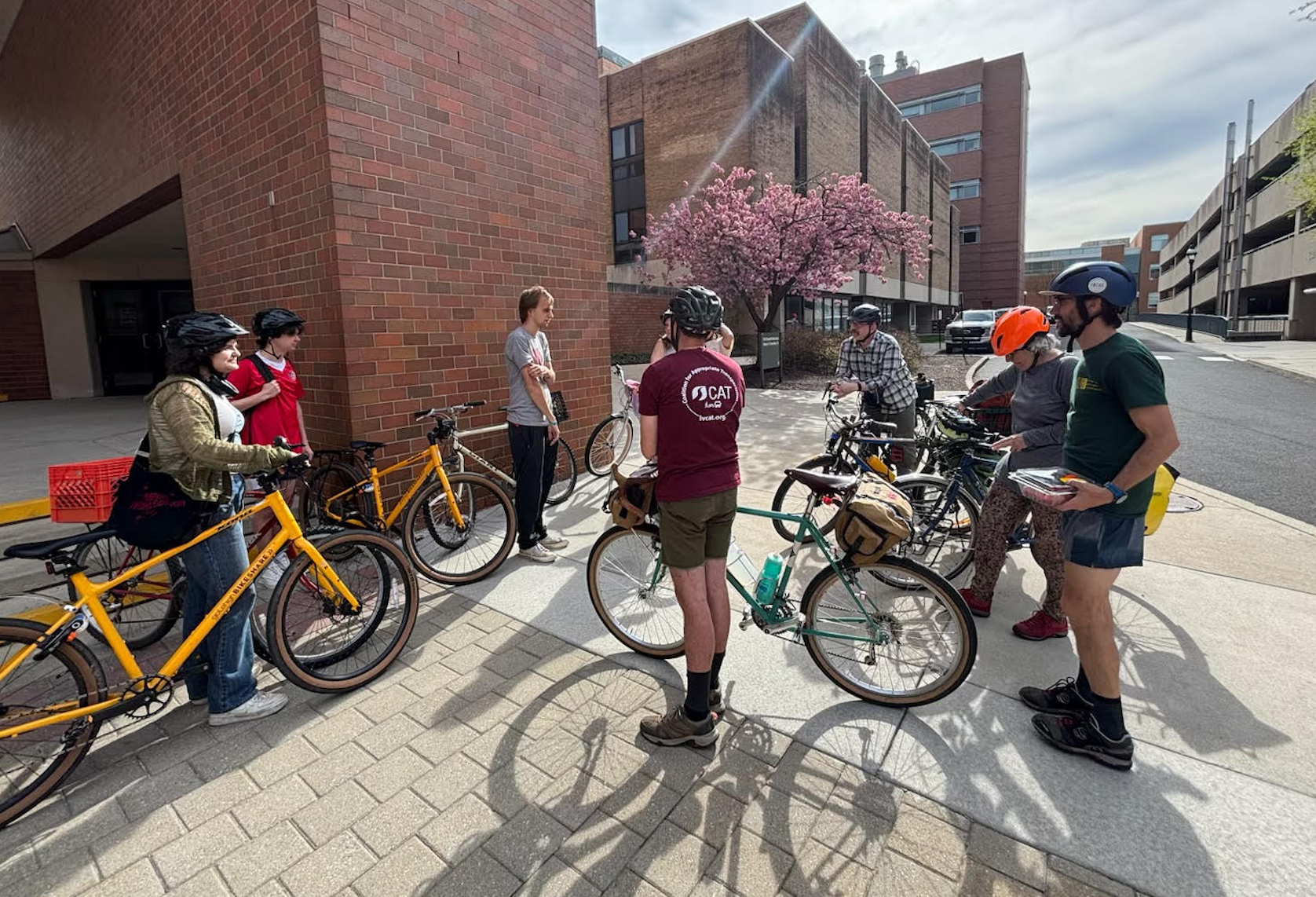
Through bike rides, trips to farmers’ markets, professional workshops and other events, the club provides students with opportunities on and off campus.
Growing up in New York City, Club President Atticus Bregman, ‘27, said his childhood sparked his interest in urban studies and the ways infrastructure can influence people’s everyday lives.
“I am always mesmerized walking down the street (in New York City) and thinking about all the deliberate decisions that went into it,” Bregman said.
He also said the club aims to make urban planning accessible to students regardless of their major. Urban planning can intersect with engineering, health, politics, architecture and other fields, giving students different ways to connect their academic interests to the concept.
The club hosts career-focused events where professors and professionals introduce students to opportunities within urban planning.
Other events include a 5×10 session teaching first-year students how to navigate Bethlehem without a car, and workshops introducing students to geographic information systems: a computer mapping system.
Blaise Richburg, ‘26, ‘27G, founded the Urban Planning Club and served as its president for about a year and a half. Richburg said his interest in urban planning began about six years ago, and eventually, it connected him with Karen Pooley, professor of political science.
Richburg built the club around three primary goals: creating a social space for conversations about urban planning, providing networking opportunities and developing a community-centered approach to planning in Bethlehem.
“I wanted a social place where people who were interested in this could just gather and talk,” Richburg said.
Bregman learned about the Urban Planning Club through his roommate and joined during its early stages. After serving as vice president for two years, he became president last November.
Those goals have influenced the club’s biweekly meetings, which range from discussions and games to professional workshops.
Although leadership positions are reserved for undergraduate students, Richburg said graduate students and faculty members can continue participating in meetings and events.
Richburg remains involved with the organization and recently attended a meeting alongside other graduate students and faculty.
With a background in teaching urban planning courses, Pooley offers advice as the faculty adviser, as well as resources and professional connections.
“Anybody can put the skills they’ve learned to work on whatever neighborhood or city they’re a part of,” said Pooley.
Bethlehem itself is a resource for the organization.
Pooley said urban planning is broad and can incorporate law, policy, design, architecture and other disciplines. Exploring these ideas outside the classroom allows students to see how they affect actual communities.
The redevelopment of the former Bethlehem Steel site is one local example students can use to understand how places change over time.
“The best way to learn about how communities work is to just get out and walk around and be in the middle of them,” Pooley said.
The club has connected with local organizations, including Community Action and the Coalition for Appropriate Transportation, giving students opportunities to learn about work already happening within the community.
For Richburg, understanding the individual characteristics and needs of a place is an important part of thinking about how it can be improved.
“There’s something to learn everywhere you go, and that’s why I love cities so much,” Richburg said. “Every corner you turn, there’s something new to see. There are new people to meet.”
Looking ahead, Bregman hopes to expand those opportunities. Potential plans include surveying students about the design of Lehigh’s campus and Bethlehem, hosting a geographic information system mapathon, touring urban planning organizations and visiting construction sites.
Pooley said she hopes students will become involved in spaces where local planning decisions happen, such as city council meetings, commission meetings and neighborhood organizations.
Whether students are interested in engineering, politics, health or design, Bregman said there’s likely some way urban planning connects to their lives.
For club members, discovering that connection can begin simply by walking and paying attention to the community around them.
“Everybody lives in some kind of built environment, and no matter what you’re doing, it applies to you in some way,” Bregman said.
Comment Policy
Comments posted to The Brown and White website are reviewed by a moderator before being approved. Incendiary speech or harassing language, including comments targeted at individuals, may be deemed unacceptable and not published. Spam and other soliciting will also be declined.
The Brown and White also reserves the right to refuse the publication of entirely anonymous comments.