



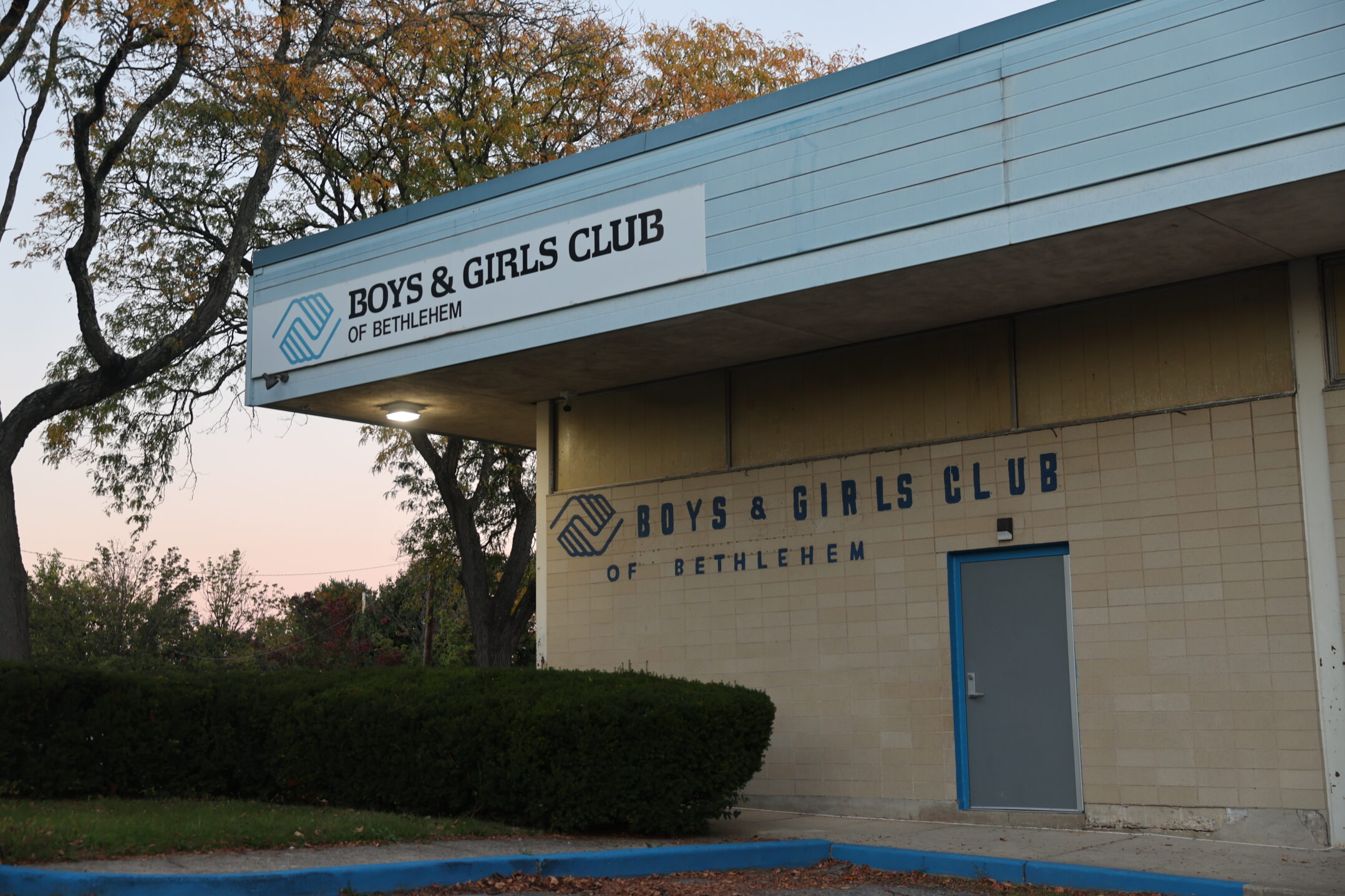
Basketballs bounce in uneven rhythm, laughter spills down the hall from the art room, and the hum of after-school chaos fills every corner of the Boys & Girls Club in Bethlehem. In the middle of it all stands CEO Winston Alozie, watching as a handful of kids run by, shouting, “Hey, Mr. Winston!”
He waves back — a steady and familiar presence. Around here, everyone knows Mr. Winston.
To the kids, he’s the person who remembers their stories and their siblings’ names. To his staff, he’s a leader who brings partnerships and opportunities that help the club thrive. To the community, he’s the man who once walked through the door as a shy eighth grader — and never really left.
Before he became Mr. Winston, he was just Winston, a 13-year-old kid trying to find his footing in a new place. Born in Shreveport, Louisiana, his family moved to Bethlehem in January 2001 to be closer to relatives in the northeast.
The transition wasn’t easy for Alozie.
“Culturally, it was a big shift,” he said. “I remember calling my teachers ‘sir’ and ‘ma’am,’ and they’d be like, ‘Y’all hear this kid?’”
Alozie approached the change the only way he knew how: by being kind, open and curious.
His younger brother Chisom was the first to discover the Boys & Girls Club. One afternoon, Winston went to pick him up and decided to take a look inside.
The decision changed everything.
“I remember walking in and just feeling the warmth,” Alozie said. “It was the first place I didn’t have to try to fit in. They accepted me for who I was.”
The club became a second home, where Alozie did homework, made friends and learned to play Connect Four — eventually becoming “unbeatable.”.
It was around that time Scott Perry, now the club’s program director, first met Alozie. Perry remembers seeing a polite, curious teenager selling “ice sticks” in the park to help his father’s small business.
“I saw him out there trying to help his dad, and the next day he came up to me asking about the club — what we did and how to join,” Perry said. “Even back then, you could tell he cared about people. That hasn’t changed.”
Alozie became a regular soon after, drawn in by the sense of belonging the club provided. Perry watched him grow from a reserved teen into a confident leader — one who, years later, would step into the same mentor role that once shaped him.
“He’s just a great person to have here at the club,” Perry said. “He knows the neighborhood, he knows the people, and he’s genuinely kind to everybody.”
That kindness would define Alozie’s leadership, but it was Cameron Alford who inspired it.
Alford was a young member with developmental delays who often struggled to fit in at the Boys & Girls Club.
Alozie spent time with Alford, helping him manage his emotions and build confidence. It wasn’t a formal mentorship, just quiet moments of consistency and care. Over time, Alford’s confidence grew.
“If a kid like Cameron could benefit from an adult being a positive role model, I think my neighborhood would be a better place,” Alozie said. “That inspired me.”
When Alozie became chief executive officer and executive director in October 2016, it was a full-circle moment. He was now responsible for the same club that shaped his youth. But instead of recreating what it once was, he focused on carrying its spirit forward.
Most afternoons, Alozie is on the floor with staff, greeting kids at the door or helping with homework.
“Always put the kids first,” he said.
Under his guidance, the club runs like a heartbeat — steady and dependable.
Each weekday starts with homework help and tutoring, followed by activities that keep both minds and bodies moving: sports in the gym, art projects, cooking lessons and science experiments.
The club now serves between 60 and 80 children every day. For many, it’s not just an after-school program, but a sanctuary. Through partnerships with ShopRite and local donors, no child leaves hungry.
Lehigh students also volunteer through initiatives like “Feel Good Fridays” and STEM mentoring programs, a partnership that dates back to the 1950s.
“The partnerships are vital,” Alozie said. “We can’t do what we do without them.”
One of his favorite projects is the club’s community garden, where children plant, water and harvest vegetables used for cooking classes or donated to families.
“For a lot of our kids, when you ask where vegetables come from, they say the grocery store or the freezer,” Alozie said. “We teach them to understand that we as human beings have always grown our food.”
Bethlehem has changed dramatically since Alozie’s childhood, with many working families moving from the club’s original location. When the organization sold its old building in 2015, attendance dropped as accessibility became an issue.
Alozie and his team worked to rebuild attendance and strengthen partnerships. Collaborations with AmeriHealth, the Bethlehem police department and local businesses helped provide new resources and stability.
Lisa Ramos, the club’s unit director and a longtime employee, has witnessed that transformation firsthand.
“His job isn’t easy, but he knows what he’s doing and it’s all for the kids who come here,” Ramos said.
Through all the changes, Alozie has kept one goal: to make the club feel like home. Whether it’s a child transitioning from homeschooling, a teen looking for guidance or a family in need of support, he ensures everyone who walks through the door feels the same warmth he once did.
Now, as the Boys & Girls Club of Bethlehem approaches its 95th anniversary, Alozie finds himself both reflecting and looking ahead.
“I feel like a big brother to this community,” he said.
He measures success not in numbers, but in moments — the laughter echoing down the hallway, the hugs from alumni who stop by and the look of pride when a student finishes their homework.
At the end of the day, when the last basketball stops bouncing and the final student waves goodbye, Alozie stands by the door, the same way he once entered it as a kid.
“Not everybody has children, but everybody’s been a child,” he said. “You can relate to the needs of kids. Even if you don’t like kids, you still want a good future.”
Comment Policy
Comments posted to The Brown and White website are reviewed by a moderator before being approved. Incendiary speech or harassing language, including comments targeted at individuals, may be deemed unacceptable and not published. Spam and other soliciting will also be declined.
The Brown and White also reserves the right to refuse the publication of entirely anonymous comments.