



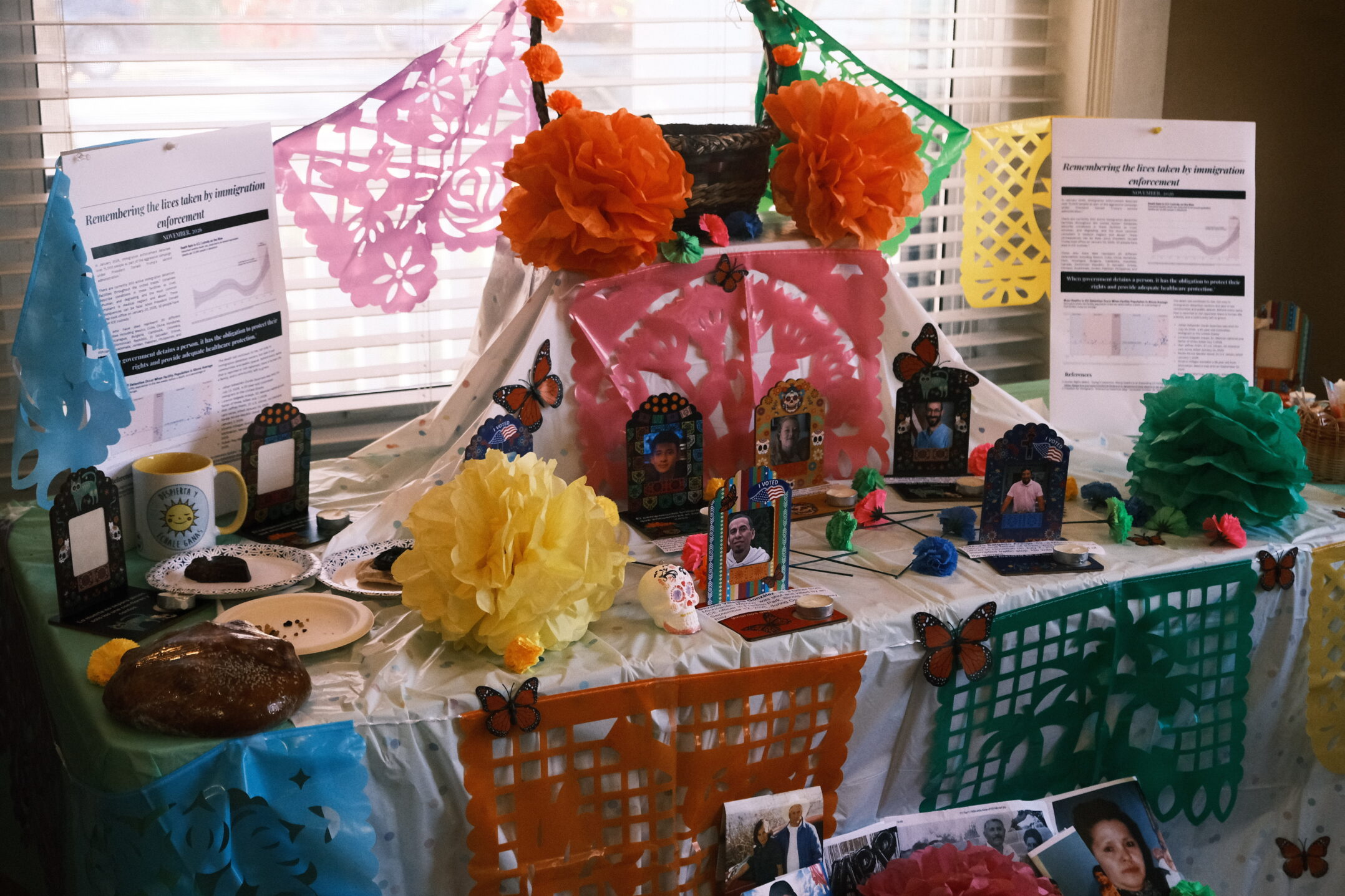
Lehigh’s Graduate College of Health Club hosted a two-day Día de Muertos event on Nov. 2 and 3 to commemorate lives lost to ICE and immigration enforcement, as well as raise awareness surrounding isolation in the Lehigh community.
Día de Muertos, Day of the Dead in English, is a traditional Mexican festival to honor and welcome back the souls of deceased friends, family members and ancestors.
The two-day event aimed to create a space to remember, reflect and connect.
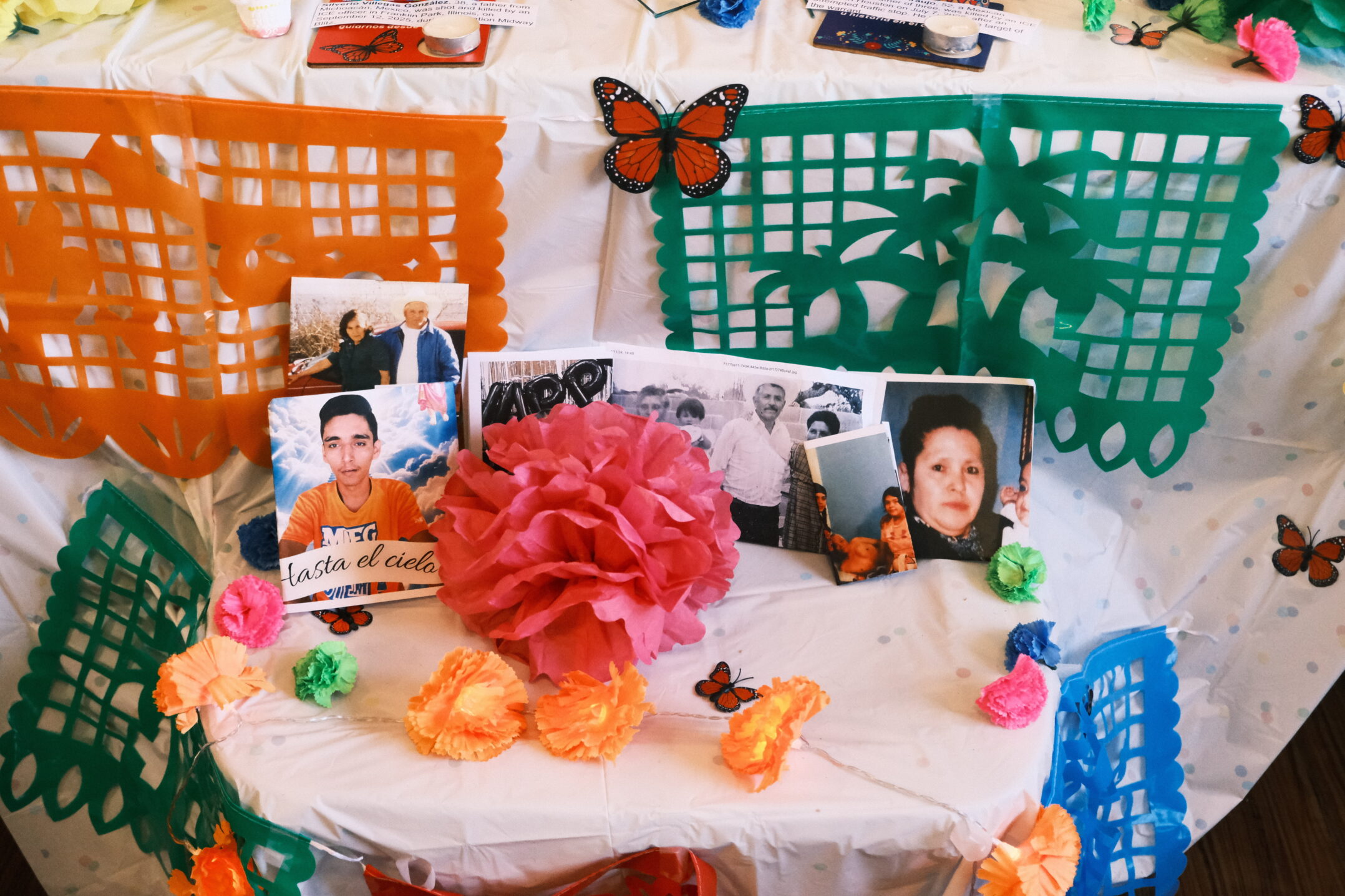
A community altar was set up, holding images of loved ones and decorated with orange flowers and colorful papel picados, which are paper banners. Visitors were encouraged to bring a photo, flower or written remembrance to add to the altar.
Dasy Resendiz, treasurer of the Graduate College of Health Club and born in Mexico, said she celebrates Día de Muertos annually at this time of the year on her own. Thinking of the theme of commemoration, Resendiz connected the ICE violence in recent years to the long-lasting Mexican tradition, inspiring the event.
“I wanted to bring a little bit of me and share with others,” Resendiz said.
Laura Porto, president of the Graduate College of Health Club, said the community altar was a great opportunity to bring people together and talk about issues happening, particularly among graduate and international students who may experience loneliness and isolation while living away from their families.
Porto said the altar, picture frames, food and hot chocolate were all meant to encourage participation and create a welcoming space for dialogue.
“We want people to come together and talk and share and start being part of a group because belonging to a group, to a club or to a culture protects you from having mental health issues,” Porto said.
Resendiz and Porto both said they think there are many spaces where students could connect as a community, but there’s a lack of participation in these events and spaces.
Some events and groups may not be well known to students, while busy schedules and academic pressures make students feel they have no time for involvement in activities.
Resendiz and Porto said undergraduate and graduate students may participate in separate campus communities, with students not necessarily attending events organized by the other group.
Few attendees visited the community altar despite the club’s efforts to encourage participation and foster a sense of belonging.
Rochelle Frounfelker, professor in the College of Health specializing in social and environmental determinants of health, said social isolation and loneliness are growing concerns.
Frounfelker said social media and social polarization are contributing factors to these concerns. She also said online interactions can sometimes limit in-person relationship building, while social polarization can reduce interaction with people who think differently, increasing feelings of disconnection.
She also said research suggests creating a sense of connectedness in a community leads to more positive health outcomes, both physically and mentally.
“A greater sense of cohesion, greater likelihood to support and look out for one another, and a greater sense of community can help a community as a whole respond to external stressors,” Frounfelker said.
Comment Policy
Comments posted to The Brown and White website are reviewed by a moderator before being approved. Incendiary speech or harassing language, including comments targeted at individuals, may be deemed unacceptable and not published. Spam and other soliciting will also be declined.
The Brown and White also reserves the right to refuse the publication of entirely anonymous comments.