



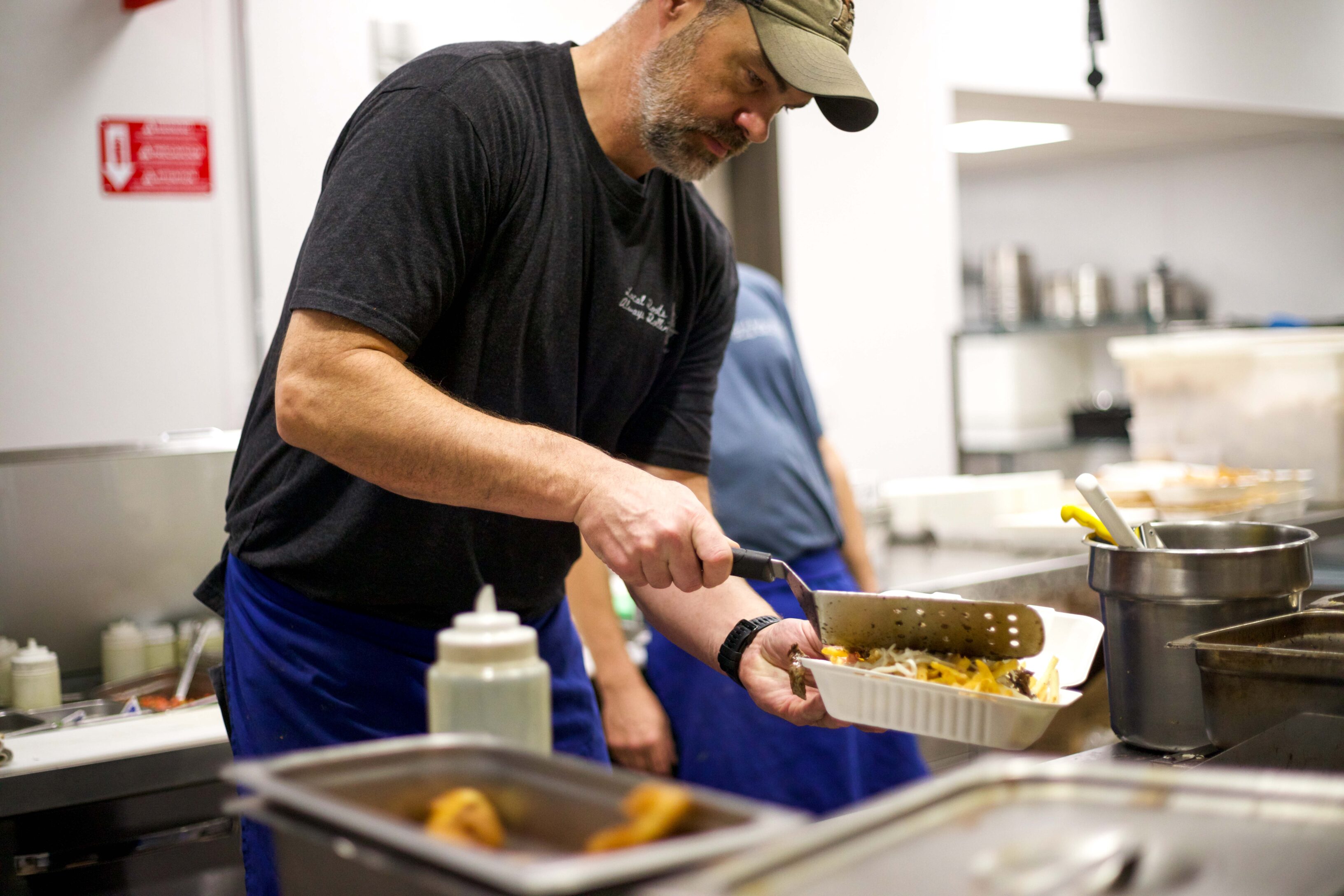
Elizabeth Ortiz, ’25G, one of Cactus Blue’s founders, said nothing is more community-oriented than food.
As a Lehigh alumna and former professor at Cedar Crest College, Ortiz has spent a majority of her life surrounded by students and academia, and said she knows firsthand the importance of food in bringing people together.
Cactus Blue, an Emmaus-based Puebla-style Mexican restaurant, is one of six local restaurants hosted by the Lehigh University Center’s Ghost Kitchen. The program brings local restaurant pop-ups to Lehigh’s campus, operating as a takeout location without the presence of a typical storefront.
Cactus Blue first arrived at Lehigh’s campus from Oct. 19 to Oct. 23 and is scheduled to return from Nov. 2 to Nov. 6 as part of the ghost kitchen program.
For restaurants, the pop-up is a chance to reach a new audience and promote their business.
Erin Yorgey, Lehigh Dining’s marketing manager, said the ghost kitchens started small, with in-house concepts like a bake shop.
However, Lehigh Dining has now shifted its focus to local restaurants.
“We not only went for community partners or alumni like Chiddy’s Cheesesteaks and Cactus Blue, but also different types of foods that students don’t necessarily see on campus,” said Marayna Dorsey, Lehigh Dining’s sustainability coordinator.
Lehigh Dining works closely with featured restaurants on availability, staffing and marketing. Hours and menus are based on what each restaurant can accommodate with its existing resources rather than a strict timeline, offering more flexibility to participants.
Dorsey said some previous ghost kitchen restaurants, like Orizaba, a Bethlehem-based Mexican and Costa Rican restaurant, operate for shorter hours so employees can return to their own storefronts, which allows businesses to staff the pop-up without disrupting their regular operations.
Communication with restaurants, Sodexo Dining Services, students and the Lehigh community is another important part of the program because the ghost kitchen offers limited face-to-face interaction between chefs and customers.
“It’s a little different for them, but that’s just where you know the marketing and the communication really comes back to, you know, making the Lehigh community aware of the great restaurants we have,” Dorsey said.
For Ortiz, participating in the ghost kitchen is about more than promoting her restaurant. It’s also a chance to connect with the Lehigh community.
“My whole life has been centered around students, so if we get to feed students, that’s the best,” Ortiz said. “That was always such a great way to come together. So how cool that we get to do that at my alma mater.”
Ortiz and her husband, Adam Gangewere, opened Cactus Blue in 2004 as a Puebla-style Mexican restaurant. Popular menu items include fish tacos with Baja sauce, enchiladas, mole and chile relleño.
Authenticity is essential to Ortiz and Cactus Blue, which is why they prioritized having their head chef understand the food well. Milo Linares-Sanchez grew up in Puebla with the region’s flavors and dishes.
For the ghost kitchen, Cactus Blue’s menu features several types of tacos, burritos, chips with pico de gallo and queso, the walking taco and churros with caramel dipping sauce.
Ortiz said another part of building community is ensuring students with dietary restrictions have options.
“Food is community,” Ortiz said. “When you can’t meet those needs, what happens then? That person is out of the mix.”
That’s why nearly everything on the menu can be modified as vegetarian, vegan or gluten-free.
The restaurant industry is challenging, especially for small, family-owned businesses like Cactus Blue.
After navigating both the COVID-19 pandemic and two major recessions, Ortiz and her family realized they needed to make a change.
“It’s our livelihood, and it’s also our love,” Ortiz said.
After moving to Emmaus in 2023, Cactus Blue shifted from full-service dining to a takeout system.
Still, Ortiz struggled with how the restaurant could reach the local community without its previous full-service model.
Cactus Blue’s answer was to diversify.
Ortiz said the restaurant began offering family meals, curbside pickup and contactless delivery, services it hadn’t previously provided.
Its first food truck, purchased in 2015, proved crucial during the COVID-19 pandemic, offering customers a socially distanced option to pick up food outdoors.
The restaurant purchased a second truck in 2023.
Today, the restaurant operates two food trucks, participates and caters events across the Lehigh Valley.
Ortiz said when she arrives at a kitchen, or with a food truck, people are happy.
“Nobody’s mad when you pull up with tacos,” she said.
For students, the Ghost Kitchen offers a break from the usual campus dining options and a taste of the local food scene without leaving campus.
“I think it tastes different than anything else on campus,” Lauren Vertuli, ‘27, said.
She said the ghost kitchen’s offerings taste more like home, reminding her of her grandma’s chicken.
For participating restaurants, reaching Lehigh’s student population also provides an opportunity to build recognition as the Ghost Kitchen program grows.
“I actually think it was one of the best ideas Lehigh Dining has had in a while,” Tesu Beavers, ‘29, said. “I think it was a great marketing idea.”
Students can also help shape which restaurants appear in future ghost kitchen rotations.
When asked what they’d like to see added to the rotation, students expressed interest in Asian cuisines. Vertuli suggested a local Chinese restaurant, while Beavers mentioned sushi.
The future of the ghost kitchen system relies on student feedback, and Lehigh Dining encourages student outreach when it comes to sourcing new restaurants. Students with local restaurant knowledge can reach out to Lehigh Dining at their email, [email protected].
Comment Policy
Comments posted to The Brown and White website are reviewed by a moderator before being approved. Incendiary speech or harassing language, including comments targeted at individuals, may be deemed unacceptable and not published. Spam and other soliciting will also be declined.
The Brown and White also reserves the right to refuse the publication of entirely anonymous comments.