



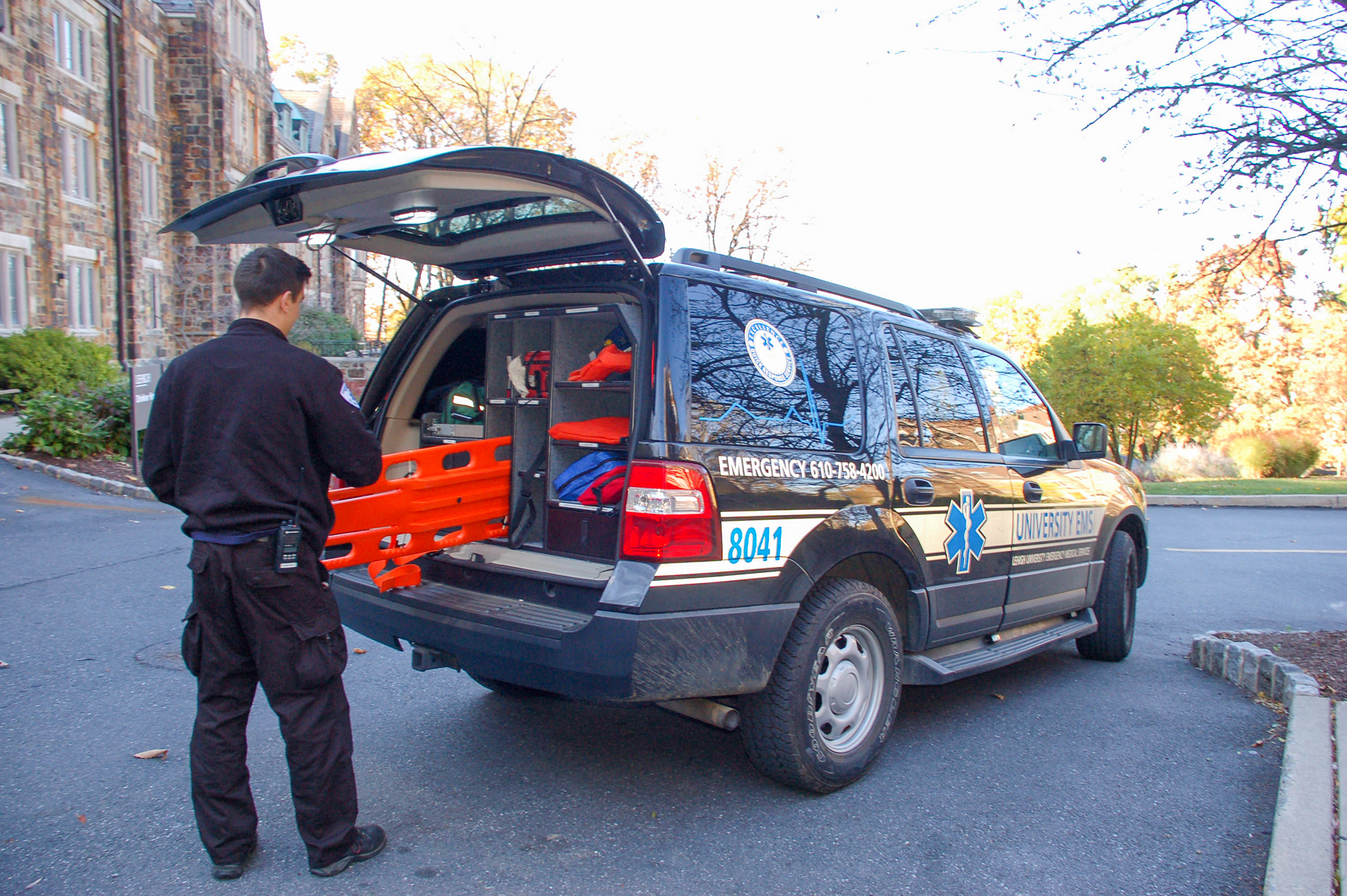
In the wake of the alcohol-related deaths of Penn State student Timothy Piazza and Lafayette student McCrae Williams, Lehigh Student Senate, the Peer Health Advisers and members of the administration are working to improve how Lehigh’s medical amnesty policy is communicated to the student body.
“Given the climate surrounding not just our school, but our sister institutions, including Penn State and Lafayette, medical amnesty and bystander intervention are more important than ever,” Student Senate president Matt Rothberg, ’18, said.
Lehigh’s medical amnesty policy states that students who seek emergency medical attention for themselves as a result of drugs or alcohol will not be charged with violations of the Lehigh University Code of Conduct related to that consumption, provided they complete an evaluation and recommended treatment. Similarly, students seeking emergency medical attention for someone else will not be charged with violation of the Code of Conduct.
Chris Mulvihill, the interim associate dean of student conduct and community expectations, said if a student were to call for help for a friend who was in need of emergency medical assistance, both students would avoid repercussions with the university’s conduct system.
However, Mulvihill said the students may still have to interact with local law enforcement, and this is not under the university’s control.
In the state of Pennsylvania, Good Samaritan laws protect individuals who call to seek medical assistance for someone experiencing the effects of alcohol poisoning, provided they meet a number of requirements, such as supplying their name and staying with the individual who needs help until first responders arrive.
However, Pennsylvania’s laws do not protect the person who needs medical attention from being charged, and Mulvihill said this might be a reason students are afraid to make the call.
“I think most students know they’re not going to get in trouble through the university,” Mulvihill said. “I think students don’t want to get in trouble with the police, and therefore they put their friends at risk by not calling.”
Rothberg agreed with Mulvihill.
“Calling for help is critical and if people aren’t calling for help, then something needs to get done,” Rothberg said.
Nikki Nester, ’18, the president of Peer Health Advisers, said she thinks one reason students might hesitate to call is because they don’t want to be the reason for another student’s poor standing with the university if the policy does not apply.
However, Mulvihill said the number of cases where medical amnesty is applied vastly overrides the number of cases where it is not. He added that for every 20 cases where the policy does pertain, he generally finds only one case where it does not.
Mulvihill said students might not call for help because they simply do not know that someone needs help. He said the bar for when students assume someone needs medical help is too high.
A study published by Cornell University in 2006 cited that while the fear of punishment deterred students from seeking medical help for friends, the most frequently cited reason students did not call for help was that they were not sure if the student was sick enough.
Nester said another reason students might not want to call for help is out of fear the call will put their organization, such as a Greek chapter, at risk for possible disciplinary action.
Lehigh’s policy states that a student organization that seeks immediate assistance will not be charged with violations of the Lehigh social policy or the Code of Conduct related to providing alcohol. However, the policy is not intended to shield or protect students or organizations that repeatedly violate the Code of Conduct.
Mulvihill said student organization violations are evaluated on a case-by-case basis. There is no specific number of violations of the Code of Conduct that stipulates that organizations will no longer be protected by the amnesty policy.
Nester said students could also be hesitant to use the medical amnesty policy because of a lack of education surrounding the policy itself. She said while students receive formal education during first-year orientation or during new member recruitment from the Office of Fraternity and Sorority Affairs, upperclassmen experience a “gap” in education during their junior and senior years.
“I don’t think that there are problems with how (the policy) is communicated, but I do feel that the student body needs to be re-educated about the policy throughout the course of their time at Lehigh so that they will be more likely to (use it to) their advantage,” Nester said. “If you have a very good understanding of how the policy works and you’re educated about it, then you (will) be more likely to use the policy and to call.”
Nester said the negative stigma surrounding the policy is due to the fact that students might not understand the policy. She said the policy could be worded in a way that is catered more to its audience — the students.
Mulvihill said he is not expecting any changes to the meat of the policy, only to the way it’s communicated.
He said he would like to stray away from communicating the message in policy language and will eventually create focus groups with students who are not well-versed in the medical amnesty policy.
“We want to get students where they’re most connected — that’s why we do social host training from fraternities and sororities,” Mulvihill said. “That’s why we reach out to the athlete council for athletes. The problem could be the students who aren’t tied into the bigger social groups on campus, and that’s probably where we have a gap that we could close up through council student presidents, through Senate or something like that.”
Rothberg said Senate and Peer Health Advisers will work together this semester to implement bystander intervention programs.
He said at the end of the day, education is not necessarily enough and students must learn to act on their knowledge. Rothberg and Nester agreed bystander intervention programs will be movement in the right direction.
“I think at this point, anything is worth a shot to try to make sure that we don’t get to the place that those other college campuses were when it comes to losing a life,” Nester said. “Nothing really would be more devastating than the loss of a life on our campus.”
Comment Policy
Comments posted to The Brown and White website are reviewed by a moderator before being approved. Incendiary speech or harassing language, including comments targeted at individuals, may be deemed unacceptable and not published. Spam and other soliciting will also be declined.
The Brown and White also reserves the right to refuse the publication of entirely anonymous comments.