



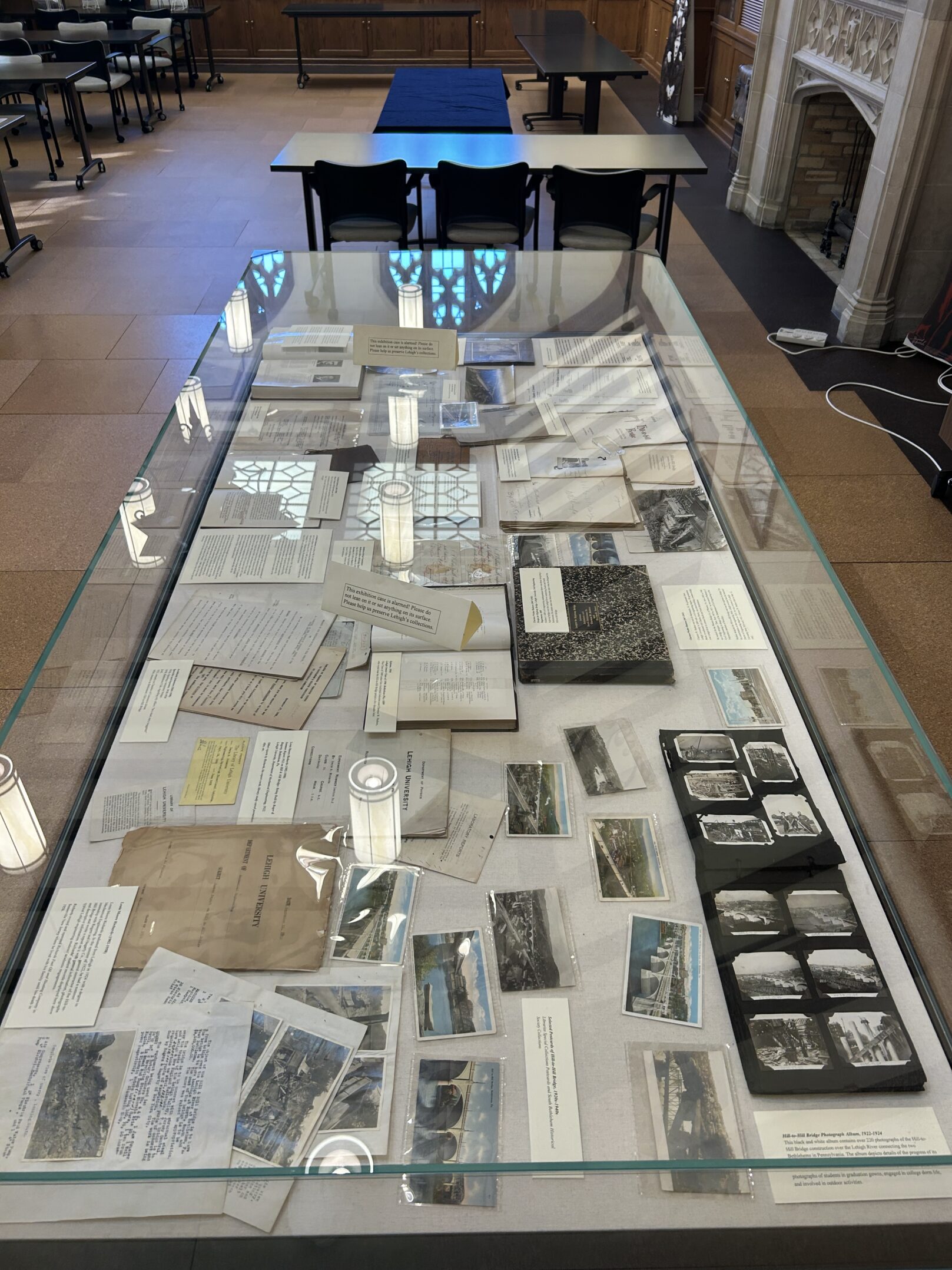
On the third floor of Linderman Library is an archive that quietly preserves centuries of history — from rare books to course syllabi from the 1950s.
While many students may pass by or study in Linderman without taking notice of it, the Special Collections is designated to support the curriculum at Lehigh. It’s a curated archive of rare materials and historical documents that serve as a time capsule for the university and a space to conduct research.
Ilhan Citak, the director of archives and special collections, said the archives include “historically high documents,” such as Board of Trustees meeting minutes and campus collections.
Citak said Lehigh’s founder Asa Packer provided funding in support of library resources. When his daughter, Lucy Packer Linderman, died in 1878, he donated $500,000 to Lehigh to construct Linderman Library, naming the building in her honor.
He said the university only spent around $100,000 to build the library, and the remaining $400,000 was kept in an endowment for the Special Collections.
“Since then, the university library has grown to today’s state, from buildings to staff,” Citak said. “You know, you start with three or four staff, but today, (Library and Technology Services) has hundreds of staff members.”
Four people work in the Special Collections department, with Citak overseeing the archives, collections and manuscripts.
He said his background isn’t typical of a librarian, as he graduated with degrees in Turkish studies and Middle Eastern studies. But since 1999, he’s been a part of the faculty at Linderman.
“While working at Lehigh, I earned my master’s in library and information science with the archival focus from the University of Pittsburgh,” Citak said. “Then I became the library archivist here for the first time; it has always been my first position.”
There’s a reason Citak has stayed. He said the Special Collections’ purpose goes beyond preservation — it allows students and faculty to understand Lehigh’s mission and recognize their role in its history.
“Your class assignments, projects and equipment can be a part of this room and history,” Citak said.
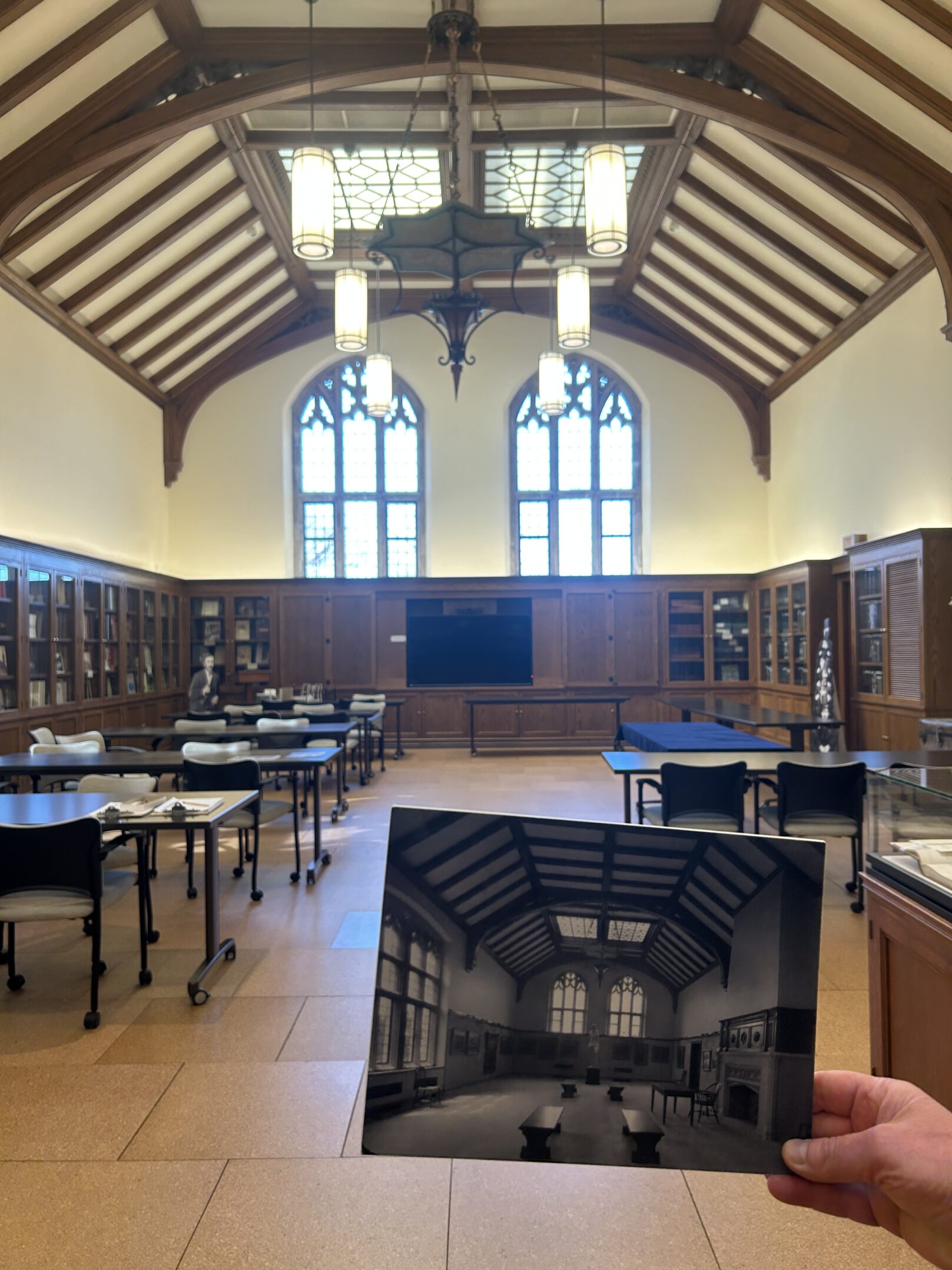
He said he knows outreach is essential for the community to learn about the Special Collections’ services.
Citak also said if one is looking for any evidence, they will find it in the archives. The department tracks its reach by collecting data — including the number of people, references, classes and visitors — for university reports.
This data is then presented to the university monthly and annually, which he said ensures the collection is supporting academic activity.
Still, some students are unaware of the collection materials available for research.
Katherine Spada, ’28, said she believes a larger effort should be made to inform students that the Special Collections isn’t just a space for conservation but a research facility.
“Linderman Library and the school should do a better job advertising that and letting students know that these rooms are an option for us to use,” Spada said. “I wrote an essay about Linderman Library for my writing course. (The Special Collections) would have been a great resource for me to use while writing the essay.”
Spada said she’d find it helpful to find materials online through the Library Guides, but sometimes, looking for things in person helps students find more information they weren’t necessarily looking for.
“I would definitely utilize the (Library and Technology Services) site as research to write essays, but I would also go and look at the archives to learn more about my school and appreciate it,” she said.
Though often overlooked by students, some professors at Lehigh are passionate about the department.
Christa Neu, an adjunct professor and photographer, said she combines her photography work with teaching. In fall 2024, she said she took her visual communications class on a field trip to the Special Collections.
Neu said it was all of her students’ first visits to the archives, and they were curious as they explored the reserved section.
“Most of my students were unaware of the archives’ presence,” Neu said. “The weird thing about that class field trip is that despite believing my students wouldn’t be as engaged as they were, all of them made some of their most creative work in the archives.”
She said the project involved having students create vertical videos of their experiences. She also said two or three students went back to the Special Collections after the class trip for other projects.
The archives show what people have valued throughout history — from old artifacts to new donations — and how those choices reflect society today. Neu said a takeaway from the Special Collections field trip is that Lehigh is not isolated, but part of a broader regional history.
“We used to have people who would pass things down from family to family to family prior to the pandemic,” Neu said. “Today, we seem to be in a cultural shift of minimalism, downsizing. So I asked (Citak) if that changed what people donated to the collection, and he said it did.”
She said societal changes have affected the amount of materials available for the archive’s acquisition. For example, items from Miles Rock, a Lehigh graduate from 1869, highlight the interests and values of his era.
“I think these societal changes are how the Miles Rock stuff came to the library,” Neu said. “I believe the only thing the family kept was maybe the Civil War hat. Yet, they have trunks and trunks of Miles’ stuff that just had been handed down in people’s attics.”
Neu said her field trip was a success, offering students a hands-on learning experience about how the Special Collections support a variety of research and academic work at Lehigh, as well as a deeper understanding of the Bethlehem community.
She also said other classes similarly benefit from the archives, as some English majors conduct research there, and a few art and environmental engineering science professors take their classes to the space.
“The archives have no shortage of stuff, and they’re ready to tell you how Lehigh ties into that,” Neu said. “It’s all worthwhile to start by asking a question.”
She said everyone working in the Special Collections is eager to guide students, especially the “memory keeper,” Citak.
“Ilhan can guide you into connections that you might not have known about,” Neu said. “Yes, it’s so easy to walk by a display case of book covers, yet he takes you into that world. He’s observant yet really funny. I think when he uses his humor, he can draw both students and people from the community in.”
Citak said students, faculty and community members visit the archives to answer the obvious questions, but also to piece together deeper research.
“Our goal here is to be the memory keeper of the university while making sure that when Lehigh creates a vision for the future or the past, our understanding is clear,” Citak said. “The goal is incentivizing the need to communicate the university’s history to the listeners or the audience.”
2 Comments
Excellent story. Special Collections is a Lehigh gem. So many opportunities there for storytelling!
Thank you Professor! I am in 100% agreement with you. There’s so much to unearth within the Special Collections.
Comment Policy
Comments posted to The Brown and White website are reviewed by a moderator before being approved. Incendiary speech or harassing language, including comments targeted at individuals, may be deemed unacceptable and not published. Spam and other soliciting will also be declined.
The Brown and White also reserves the right to refuse the publication of entirely anonymous comments.