



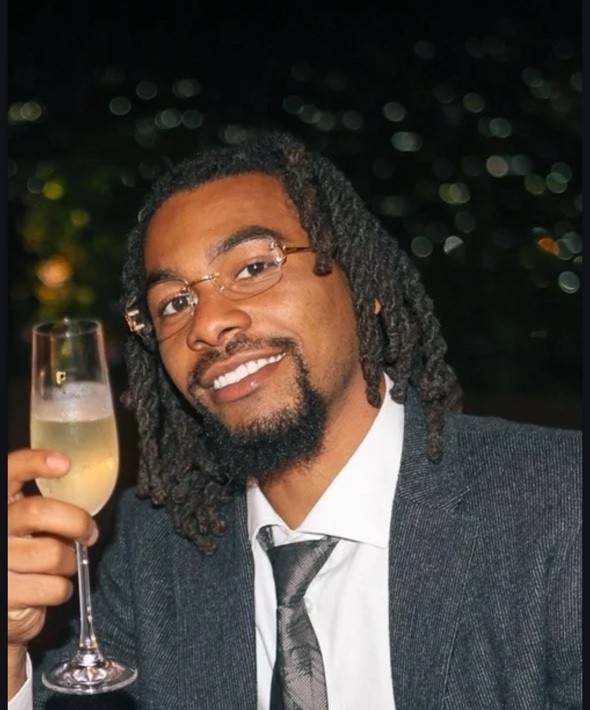
When Jalin Sinclair, ‘24, suffered a knee injury during his first year on the Lehigh men’s basketball team, he said it was eye-opening how quickly the game can be taken away.
During the 2020-21 season, Sinclair said he underwent knee surgery and appeared in only eight games. The following year, he didn’t play at all after another offseason surgery required a full year of recovery.
Sinclair said those two years forced him to reflect on his interests beyond basketball. By his junior year, he returned to the court and said he had two strong seasons.
As his basketball career came to an end, he said he knew he had to make a decision about his future.
“I had to make the decision of if I wanted to be a 24-year-old senior playing and taking spots from these younger guys, or get on with it,” Sinclair said. “I decided to get on with it.”
He’s now the co-founder of Syndicate of Leaders Sports — formerly Syndicate Sports Group — a company designed to help collegiate athletes navigate name, image and likeness deals through strategy and partnerships. Sinclair said he and Michael Carter-Williams, the 2014 NBA Rookie of the Year, officially launched SOL Sports Group eight months ago after assembling the necessary resources.
Within weeks, Sinclair said the company gained about 24,000 Instagram followers and began building traction on LinkedIn. He said they’ve received outreach from investors, collaborators, students seeking internships and athletes looking to sign. Over the past eight months, Sinclair said he’s been “pushing it” by building his team and completing certification processes.
SOL focuses on both on-court and off-court development, including training, diet, routines, mental health and personal development. Sinclair said the goal is to help athletes navigate the college experience, excel in their sport and prepare for careers, whether in professional basketball, overseas leagues or other paths.
“No pun intended, but that’s the sole purpose of why we created it,” Sinclair said.
Sinclair, who grew up in New York City, left home at 14 to attend boarding school in New Hampshire before transferring to high school in Connecticut. He said both experiences expanded his athletic opportunities.
Although he initially prioritized baseball, Sinclair said he developed a passion for basketball and ultimately chose to pursue it in college. He committed to Lehigh during his junior year of high school and later majored in sociology.
After graduating, Sinclair attended the University of California, Berkeley in 2024 for a master’s program while serving as a graduate assistant with the basketball team. He said the experience helped him build connections on the West Coast, adding to networks he’d already developed in New England and New York’s tri-state area.
“Us two together, from me having the blueprint in the collegiate space and then (Carter-Williams) taking it to the pinnacle of becoming an NBA icon, gives us both that mentorship and allows us to create this ecosystem in the NIL space,” Sinclair said. “If you haven’t experienced it before as an athlete, it is pretty overwhelming.”
As his time at Berkeley ended, he said he continued training players while exploring his next career step.
“I was a gym rat myself, so I told players that anytime (they) wanted to get in the gym, they could find me,” he said. “I built really strong relationships with other gym rats who respected the craft and understood what it takes to excel.”
One of those players was Jeremiah Wilkinson, a sophomore transfer at the University of Georgia. Sinclair began training him last year while Wilkinson was at Berkeley, where he played limited minutes early in the season and considered redshirting.
Sinclair said he provided mentorship during that period, drawing from his own experiences with injuries and setbacks.
“I was reinforcing (Wilkinson) to keep the things that you can control, under control, which was getting in the gym, staying ready and working on the craft all the time,” Sinclair said.
Wilkinson went on to win Sixth Man of the Year in the Atlantic Coast Conference — an annual honor given to the league’s best-performing basketball player coming off the bench as a substitute — as a first-year player. Sinclair said he believes Wilkinson would’ve won Freshman of the Year if not for Cooper Flagg.
Now at Georgia, Wilkinson is the team’s leading scorer and competed in March Madness this year, where the team fell to Saint Louis University. He’s currently a client of SOL Sports, where Sinclair said the team supports both his development and brand partnerships.
Sinclair said the NIL space is complex, making it important for athletes to have strong guidance. He pointed to Carter-Williams’ career trajectory as an example of the perspective they bring.
“I think the value we’ll be able to have in this space is not easily replicated,” Sinclair said. “With (Carter-William’s) experience playing in the NBA and understanding the ins and outs of that process, that’s something I would have valued from as an athlete.”
Ryan Arney, SOL’s attorney, has 26 years of experience working with professional and collegiate athletes. He said his role in the company is helping young athletes navigate contracts with corporations and universities.
“(SOL is) a fun group and I love their mission because they definitely put the athletes and their futures as the center point,” Arney said. “Let them be the CEO of their own enterprise and SOL just comes alongside them to help them navigate.”
Arney said NIL opportunities allow athletes to earn income directly from Division I programs and through third-party sponsorships.
“Young players probably would not have had to deal with legal contracts well into their adulthood,” Arney said. “Now, we are seeing young athletes starting in high school having to address these big decisions and legal contracts.”
Sinclair said understanding an athlete’s personal background is central to building their brand. He begins by asking questions about family, upbringing and personal goals to develop authentic relationships.
He said his sociology studies reinforced the importance of connection, helping him relate to players and tailoring opportunities to their needs.
After establishing that foundation, Sinclair said the team works with athletes to evaluate existing NIL deals or secure new ones, create content plans and expand their visibility.
“There’s a wide spectrum of deals, whether it be a post for money or a product exchange,” Sinclair said. “You don’t want to be a walking (advertisement). You want to search for alignment and long-term benefits.”
Sinclair said SOL also focuses on planning logistics, including content planning and production, so athletes can concentrate primarily on basketball.
He emphasized the importance of athletes controlling their own narrative, especially as public perception often reflects only performance and statistics.
“Someone might have passed in your family and you had to play through, but people wouldn’t understand that,” Sinclair said. “These athletes are people, so being able to exchange that with their core fan base is an integral part of what we are trying to do.”
Sinclair said he’s also been meeting with brands such as Ethika to build partnerships and create opportunities for clients.
Kim Soth, who manages operations for SOL, said her role focuses on maintaining organization across partnerships and onboarding. She said she was introduced to Sinclair through Carter-Williams about seven months ago.
Soth said her background in marketing and her family’s involvement in basketball have shaped her approach to the role.
“There are only so many kids that make a basketball career post-college, but now the big deal or opportunity is college itself,” Soth said.
While the company is still new, Soth said its leadership brings significant experience, and interest from athletes continues to grow. She added that representing female athletes is also a priority.
Ultimately, Sinclair said the company’s mission is to empower athletes and maximize their opportunities.
“These players are the CEOs of their own brand, and we are merely assistants to them,” Sinclair said.
Comment Policy
Comments posted to The Brown and White website are reviewed by a moderator before being approved. Incendiary speech or harassing language, including comments targeted at individuals, may be deemed unacceptable and not published. Spam and other soliciting will also be declined.
The Brown and White also reserves the right to refuse the publication of entirely anonymous comments.