



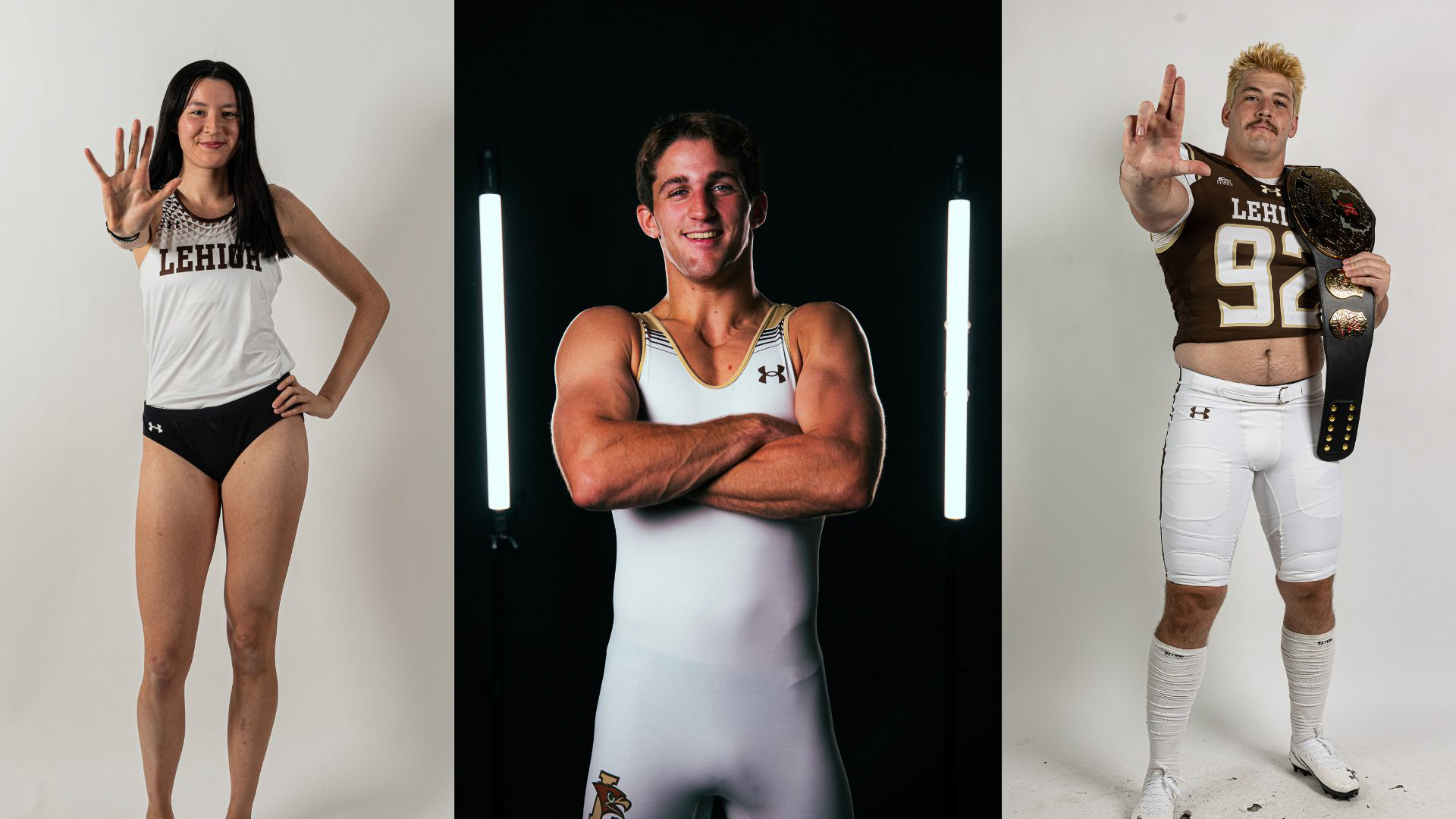
Graduate student track and field runner Lauryn Heskin, senior men’s wrestler Owen Reinsel and graduate student football Dillon Sheehan spoke with The Brown and White about their decisions to take a fifth year of eligibility, how they came to that decision and how it impacted their lives.
How did fifth-year eligibility become available to you?
Lauryn Heskin: It was my junior year. I tore my labrum in my hip, so I was out for the whole season. I was able to get a medical redshirt after applying through the NCAA.
Owen Reinsel: I knew I was going to redshirt coming (into) my (first) year. It’s a very recommended thing that wrestlers do in order to get more experience before competing at such a high level. But then, in my sophomore year, I broke my elbow and had to get surgery early on in the year. So I was able to medically get another extra year.
Dillon Sheehan: My sophomore year, I tore my labrum in my shoulder, and I ended up missing that entire season because of it.
How did you learn about the opportunity? What was your initial reaction?
LH: Once the doctor told me I would be out for the entire season, I wasn’t necessarily excited at first — just because it was due to a big injury — but once I went through the application process, I realized it was a good decision. Before my injury, I was having my best season ever. I was getting personal records in all my races, and I was on the winning 4×800-meter relay at the Patriot League Championships. Getting that injury right after was very difficult, and it heightened my motivation during this fifth year.
OR: In order to redshirt and get an extra year, you have to participate in fewer than five competitions wearing a Lehigh singlet. That’s something I was expecting coming in, so it was normal for me and most of my teammates. Even though season-ending injuries are common in wrestling, it still sucked to learn that I would be out for the entire season. That was a harder pill to swallow.
DS: It’s usually common knowledge that if you miss an entire season, the NCAA will let you retain your eligibility. I knew once I was told I couldn’t play that I would be eligible for that extra time. We also have a lot of fifth-years on the football team, so I’ve been exposed to the idea for a while. It was always a running joke that I would never take a fifth year, but here I am.
Did you know you wanted to accept a fifth year, or was it a difficult decision?
LH: During that season — when I wasn’t running because of my injury — I wasn’t even thinking about taking a fifth year yet because I tried to focus on getting better. But going into my senior year, I started thinking about applying for the extra year. I struggled because I didn’t know what master’s program I wanted to (pursue) while I stayed at Lehigh.
OR: I definitely knew I was taking a fifth year at Lehigh, but I had to think more about medical redshirting for a sixth year. I haven’t officially decided (if) I will take that sixth year, but this situation is also not uncommon, so my teammates and coaches are able to help me with that decision. I want to make it through my senior year and next year before I prepare for that.
DS: I didn’t come into college with the plan of staying an extra year, but once it was something I realized I could do after my injury, I gravitated toward that decision. Being able to play college football with my best friends has been the best experience of my life, so I knew I wanted to do it another year.
What did you study during your undergraduate years? What are you studying during your graduate year?
LH: In my first four years, I was a marketing and psychology major. Now, (in) my fifth year, I’m pursuing a master’s in business analytics.
OR: I’m currently finishing my major in environmental science, and I have a minor in real estate and environmental studies. I’m not sure what I’ll study during my graduate year yet, but it will likely be geotechnical engineering or hydrology.
DS: I studied accounting during my (undergraduate education) in the (Rauch) College of Business, and during my extra year, I’m working on getting 150 credits for my (Certified Public Accountant) exam.
How did this extra year change your career trajectory?
LH: This extra year has broadened my horizons of what career I want to pursue. My master’s degree has made me focus on more data-oriented business instead of just marketing, and now I’m looking at more analyst jobs I wouldn’t have felt comfortable applying for a year ago.
OR: With this extra time (and) having an internship in environmental consulting, continuing my education will add a lot to my resume. I’m hoping to stay with the company I’m interning with this summer. So boosting my experience with more environmental classes will hopefully make that happen.
DS: (Getting) 150 credits is hard in just four years of college, so this extra year has given me more leniency in my class schedule. This definitely gave me the time to prepare for the accounting exam better than I could’ve in just the four years of undergraduate.
What’s the biggest difference between being an undergraduate athlete and a graduate-level athlete?
LH: There’s two parts I think are the biggest differences. First, definitely having the upperclassmen look up to me. I’ve had a lot of them ask for advice (about) the transition from high school to collegiate-level racing. From a practice standpoint, my class schedule being a graduate student has been a lot different, and some of my classes are during practice times. It was a little harder to balance that in the fall, but my schedule has cleared up with my classes now that I’m racing in this outdoor season.
OR: I’m hoping to not see many differences between my (undergraduate years) and my fifth year, because it’s so common for wrestlers to do (so), but I think a big difference will be the development that I’ll get from that extra time spent training.
DS: It’s more natural to be a leader on the team the older you are, and I think the younger guys look up to the fifth-years. I also think that having accomplished my goals already, I have more of an appreciation for getting the opportunity to play and (enjoy) the fun side of things.
Why stay at Lehigh? Why not transfer for your fifth year?
LH: I did initially look at other schools in the transfer portal, and I talked to other coaches, but the more I thought about it, the more it made sense to stay at Lehigh because I’m only competing in the outdoor season. I only have fifth-year eligibility for the spring season, so it felt more natural to stay at Lehigh and get to train with my coaches and teammates before competing.
OR: I definitely want to stay at Lehigh the whole time, whether I only do one extra year or two. It’s hard to get a better education than this, and you can’t transfer into the Ivy League. There’s no reason for me to leave such awesome coaches and teammates.
DS: I just love the coaches, the staff and the environment here at Lehigh. I’ve been in Bethlehem for five years now, and it’s been a great time. I don’t see why I would want to go anywhere else. The grass isn’t always greener on the other side.
Do you have a goal you wanted to achieve in your first four years that you felt you could do with a fifth-year?
LH: My main event is the 1500 (meters), and I’ve always wanted to get that time down to the 4 minute, 20 second mark. I actually already accomplished this goal in the first race of the outdoor season, so I definitely want to test my limits and see just how short I can get that time and how close to the school record I can get. In terms of the Patriot League, I really want to be able to make a final for my race at our championship meet, and I think that’s definitely realistic for me in this last season.
OR: The ultimate goal is to be an All-American or a national champion throughout my whole career.
DS: My goal was to win a Patriot League Championship — and I’d accomplished that in my fourth year — but after that, my motivation became just wanting to come back because I love this sport and I love the people I play with.
What comes after this? Coaching? Working?
LH: I’ll definitely keep running recreationally, but I want to give my body a break from competing because I’ve been doing it since I was 7 years old. I’m hoping to still be involved in the sport somehow, but I know the rest after this season will help me.
OR: I would love to stay involved with wrestling somehow, whether that’s coaching or competing a little bit here and there. I would love to give back to the wrestling community, but this sport is so demanding, and I definitely want to focus on my career first when I get out of college.
DS: I don’t see myself going down the coaching route unless it’s for my kid’s fifth-grade football team or something recreational. As much as I love playing the sport, coaching is a heavy commitment, and I want to focus on my career in accounting.
Comment Policy
Comments posted to The Brown and White website are reviewed by a moderator before being approved. Incendiary speech or harassing language, including comments targeted at individuals, may be deemed unacceptable and not published. Spam and other soliciting will also be declined.
The Brown and White also reserves the right to refuse the publication of entirely anonymous comments.