



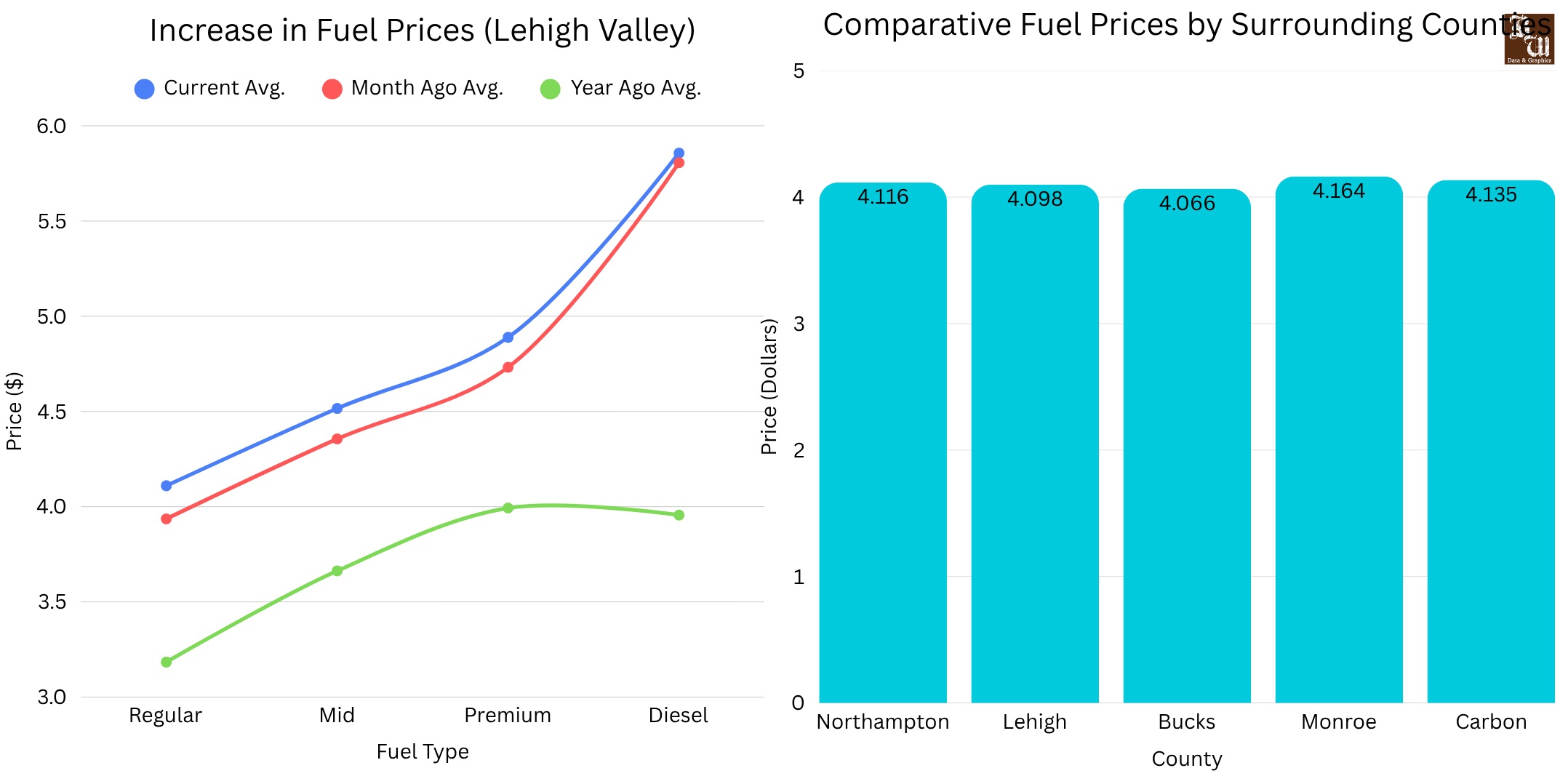
People rely on oil for transportation, industrial production, agriculture and everyday products. As fuel prices rise, the economic strain is becoming harder to ignore — especially for residents in the South Side and other low-income communities.
Because oil operates in an interconnected global market, disruptions abroad are felt locally. Alberto Lamadrid, a professor of economics and member of the Integrated Networks for Electricity Research Cluster, said any cut in the oil supply’s accessibility has widespread consequences.
“The increase in the oil prices is most likely linked to the war in Iran,” he said. “The volumes (of oil) that come from Iran and all of the countries in the Persian Gulf are around 15% to 20% of the volume here in the U.S., we don’t use that much of it.”
Lamadrid said the U.S. is one of the largest oil-producing countries, but still imports oil from the Persian Gulf, primarily to the West Coast.
Economics professor Luis Brunstein said the conflict is driving prices up in several ways, starting with supply chain disruption.
“(One of the ways the conflict drives prices up) is because we actually have a restriction in the supply chain in the Strait of Hormuz,” he said.
He added that while some economists argue ships can reroute around Africa, that alternative is complicated by instability in other regions, including conflict near the Red Sea and Suez Canal that’s made those routes less viable.
Brunstein said political conflict also shapes expectations in the market, prompting suppliers to raise prices in anticipation of future instability.
“(On April 6), Iran rejected the deadline for Tuesday to reopen the Strait, and their negotiations don’t seem to be going anywhere,” Brunstein said. “I think everybody is expecting that, at least in the short term, for the next couple months, maybe prices might go up.”
Lamadrid said the loss of roughly one-fifth of global oil capacity would affect markets worldwide. He added that price increases at the crude level quickly translate to higher gas prices with even a small rise in oil costs leading to a noticeably larger increase at the pump, especially once fuel taxes are included.
He said oil prices rose from about $65 per barrel at the start of the conflict to around $110 per barrel on April 4, a jump that continues to drive up gas prices.
Lamadrid said economists analyze these trends in both the short and long term.
“In the short run, we’re having this kind of squeeze in terms of the supply, right?” Lamadrid said. “So that is going to be driving prices of oil over $100…”
Brunstein said prices may eventually stabilize, but markets can be slow to adjust. Lamadrid estimated it could take up to eight months for prices to decline.
He also said escalation in the conflict could worsen the situation.
Brunstein said further military action could damage refineries and create broader supply issues. He emphasized that the crisis is driven more by political instability than by resource scarcity.
If the conflict continues, he said reduced Middle Eastern supply could push prices higher and incentivize increased production in North America, including expansion into shale oil, which is more expensive and time-consuming to produce.
While the issue is a global issue, Lamadrid said its effects are felt most at the local level, particularly among low-income communities.
He said rising gas prices disproportionately affect these communities that rely on commuting and own less fuel-efficient vehicles.
Jaida Onyango, ‘29, lives off campus, said she has already changed her habits.
She said she doesn’t drive as much anymore and instead relies on others for rides or walks when possible.
Onyango said her job is close to Bethlehem, limiting her need to drive, but her family in Northampton is visiting less often because of gas prices.
“(The rising gas prices) have definitely made everything harder,” Onyango said. “Having enough money for groceries for my house has made it harder because I budget myself.”
Lamadrid said gasoline prices are highly visible and affect even those who don’t drive regularly.
Brunstein said oil shocks — often referred to as negative supply shocks — tend to hit lower-income individuals the hardest.
He said rising fuel costs affect workers such as Uber drivers, who must either absorb the cost or raise prices, and can also force companies, particularly in trucking, to cut jobs due to high diesel prices.
Brunstein added that when oil prices rise, the cost of nearly everything follows.
He said residents in eastern Allentown may face compounded challenges, including rising fuel costs alongside cuts to government support programs.
Low-income communities, Brunstein said, are facing pressure from multiple directions at once, including federal policies, immigration enforcement and rising costs of food and energy. He added that they’re more likely to struggle than the middle class because prices continue to increase while their wages remain relatively stagnant, especially for those not working under stable contracts.
In cities like Allentown and Bethlehem, many essentials remain within walking distance, but Onyango worries about long-term effects.
“It’s just going to be one of those things where people have to make a choice if they’re going to try and find other ways of travel and accept what we’re going through, or if they’re gonna go the worst way and take from others and once again just cause more violence,” Onyango said.
She also expressed concern about broader community impacts, including environmental strain and increased tension. Onyango said she believes rising gas prices could serve as a warning about the country’s dependence on a single resource, adding that competition over money and resources may increase conflict and contribute to greater social unrest.
Lamadrid said historically, high gas prices create political pressure for those in power.
“Republicans are very concerned right now,” Brunstein said.
Brunstein said there’s pressure within the Republican Party to end the war and lower prices ahead of midterm elections in November.
Lamadrid said federal officials have limited tools to directly control gas prices but suggested targeted tax relief for lower-income households.
He added that many families have few immediate alternatives, and switching to options like electric vehicles requires high upfront costs and access to charging infrastructure access. This can be especially difficult for those who don’t live in single-family homes, even though long-term operating costs are typically lower.
Lamadrid said new charging stations are planned near Route 412 and Interstate 78, which may offer cheaper options than some national networks, though still more expensive than at-home charging.
He said in the meantime, people may need to rely more on public transportation or carpooling to offset rising costs.
Comment Policy
Comments posted to The Brown and White website are reviewed by a moderator before being approved. Incendiary speech or harassing language, including comments targeted at individuals, may be deemed unacceptable and not published. Spam and other soliciting will also be declined.
The Brown and White also reserves the right to refuse the publication of entirely anonymous comments.