



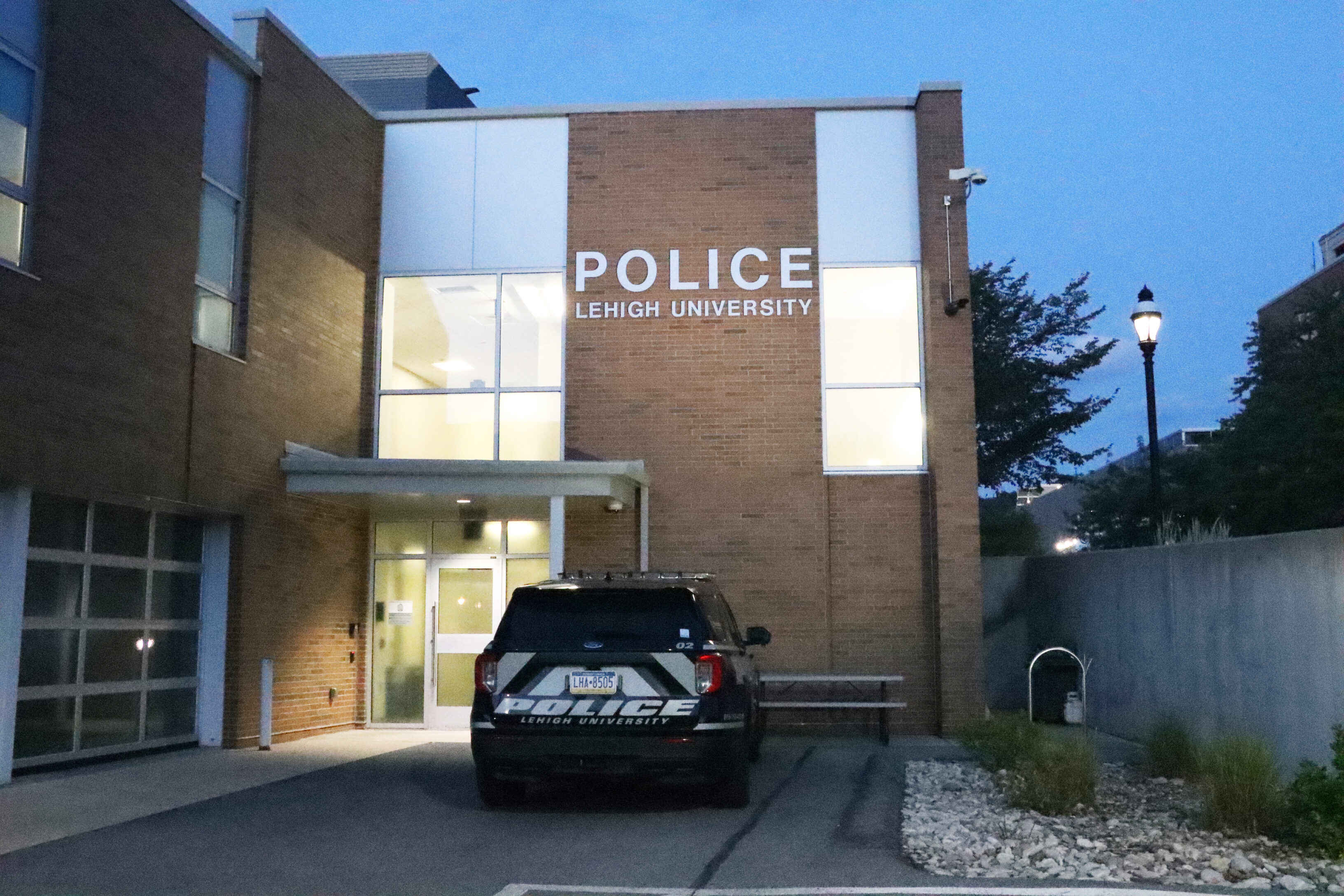
The investigation into Lehigh’s compliance with the Jeanne Clery Campus Safety Act is still under review nearly six years later.
On June 12, 2020, Lehigh announced it was under review for Clery compliance in a statement from Lehigh’s Board of Trustees and leadership.
The announcement, addressed to members of Lehigh’s Black Student Union, responded to a request for action to eliminate racist behaviors on campus. But within the message, it also stated the U.S. Department of Education “initiated a separate review” of the university’s compliance with the Clery Act.
The Brown and White received a Freedom of Information Act request filed with the ED asking for Lehigh’s Clery Act-related Final Program Review Determination. The response stated no records were located because “the investigation is still pending and under review.”
The Brown and White spoke with the Lehigh University Policy Department and a Clery Act compliance expert to discuss the status of the ED’s investigation and whether this six-year timeline is typical for Clery reviews.
History of Lehigh’s Clery compliance
The Clery Act is a right-to-know law that requires postsecondary institutions participating in financial aid programs to “disclose campus crime statistics and other security information to students and the public.” It also requires institutions to develop crime prevention policies and procedures, according to the ED.
The law was named in honor of Jeanne Clery, a Lehigh student who was raped and killed in her Lower Centennial dorm room in 1986. Her death sparked the law’s enactment to improve campus safety.
The ED conducts reviews to evaluate institutions’ compliance with the Clery Act. Reviews are initiated “when a complaint is received, a media event raises certain concerns, the school’s independent audit identifies serious non compliance,” or coincide with state reviews performed by the FBI’s Audit Unit.
The ED notified Lehigh it was under review in a letter sent to former president John Simon on June 10, 2020. The letter stated Lehigh was to submit Clery Act reports dated from 2017 to 2019 by June 26, 2020, and “audit trails” with 24 deliverables — including crime logs and incident reports — by July 10, 2020.
The letter stated the ED received complaints alleging Lehigh violated the Clery Act as the reason for the review.
“As part of our oversight activities, the Department also monitors media coverage of incidents of crime on campus,” according to the letter. “Taken together, the complaints and media accounts raise serious concerns about Lehigh’s compliance and the effects that any violations may have on victims of crime and the accuracy and completeness of the university’s crime statistics and other campus safety information.”
The ED also asked Lehigh to provide a list of all reports related to alleged misconduct by any faculty, including former professor James Peterson, who resigned in January 2018, and former health center director Thomas Novak, who was released in October 2019. Both were involved in investigations of sexual misconduct and harassment involving members of the Lehigh community.
In The Brown and White’s reporting when the university first announced the Clery review in June 2020, two official complaints against Lehigh sent to the Clery Branch of the ED were verified. Both complaints referred to Lehigh’s handling of the allegations against Peterson. But The Brown and White couldn’t confirm whether either complaint specifically sparked Lehigh’s Clery review.
Where the investigation stands now
Lehigh Police Chief Jason Schiffer said, as far as he knows, the investigation remains open.
Since the review began in 2020, he said Lehigh has fully cooperated with the investigation, including immediately providing all documentation requested by the ED in the letter to Simon. Lehigh requested an extension beyond the July 10,2020 deadline, which the ED approved, to gather the necessary materials. The university met the extended deadline.
Schiffer said through 2021, there were follow-up requests for information from the ED that Lehigh also complied with. In 2022, he said a representative from the ED’s Clery Branch visited campus to interview him and other Lehigh employees with responsibilities related to Clery Act compliance.
Schiffer said the last time Lehigh heard from the ED was in spring 2024, when it made a follow-up request for additional information that’s since been provided.
There’s been no communication from the ED since then.
“From our perspective, we would believe the investigation remains open, but they haven’t asked us for any more information,” he said. “They’re not waiting for us, so I don’t know officially where it stands other than that.”
The ED’s press office didn’t respond to The Brown and White’s request for comment regarding the status of the investigation. Additionally, the ED’s information office said it was “down” when called.
Schiffer said Lehigh was told there wasn’t a specific incident that caused the Clery review. Rather, the reasoning provided was that the ED reviews a number of schools each year in response to complaints and monitors news coverage that may draw attention.
He also said he couldn’t confirm whether the Peterson scandal, which occurred before he started working at Lehigh, triggered the review.
“(Investigators) indicated to me that this was an ordinary program review,” Schiffer said. “I can’t say for sure if one triggered the other, but they told us it was a regular program review, not in response to a specific thing.”
Schiffer said the ED hasn’t provided any update on the investigation or a timeline for when Lehigh might hear from officials again.
How this compares to other investigations
The timeline of Lehigh’s investigation is unusually long compared with other universities, according to Clery compliance experts and published data.
President of SAFE Campuses, LLC S. Daniel Carter, who shared the FOIA request with The Brown and White, said a communication gap of more than two years with the ED is “highly unusual.” SAFE Campuses is a consulting firm that provides institutional support in Clery Act compliance, Title IX policies and hazing prevention, among other services.
He also confirmed the investigation wasn’t due to a randomly selected review, but rather in response to “complaints that allege that the university engaged in a pattern of conduct” that violated the act, as stated in the letter sent to Simon.
Carter said the ED typically won’t conduct a program review without evidence of substantial issues warranting an investigation, especially because program reviews are intensive and time-consuming.
Usually, after an institution submits the required documents to the ED following notification of investigation, he said the ED will then issue a preliminary program review report.
The university then has a chance to respond within an allotted time frame before the Final Program Review Determination is issued. The ED then determines whether a fine is appropriate.
Schiffer said Lehigh hasn’t received a preliminary program review report from the ED.
According to the Federal Student Aid website, the most recent Clery investigation listed was for Liberty University. The university was ultimately fined $14 million and required to put $2 million toward Clery Act operations during a two-year period of post-review.
Liberty’s review found multiple categories of noncompliance, including failure to provide accurate informational disclosures and failure to uphold the Violence Against Women Act. The university was first notified in 2022 that it was under review, with a preliminary program report issued in 2023 and a final determination made in 2024 — far shorter than Lehigh’s six-year pending investigation.
Carter said there’s a possibility the ED’s delay could be due to the Clery Branch’s review of Liberty taking place from 2022 to 2024. Additionally, restructuring and dismantling of the ED by President Donald Trump could hinder the timeliness of the process.
But he said this is no excuse for a two-year gap in communication, which underscores the importance of the Clery Act and compliance investigations in the first place.
“The complainants deserve better,” Carter said. “The institution deserves better. The students that the law is intended to protect deserve better. The Clery Act does not work properly when an investigation sits idle for two years.”
He also said a five-year statute of limitations applies to Clery Act fines imposed by federal law, creating an incentive to resolve enforcement matters within that time frame. This makes the fact that Lehigh’s review has exceeded five years even more atypical.
Representatives from the Clery Center declined to comment on Lehigh’s timeline because they’re not the enforcement authority for the Clery Act. They shared that it’s common for Clery program reviews to take multiple years, often in the range of two to four years.
Why this matters
Carter said allowing an investigation to exceed five years makes it impossible to impose civil penalties for any underlying violations that prompted it. This is detrimental to overall enforcement of the act.
“Nobody should have this being held over their heads for five years, especially if there’s been no communication for two years,” he said. “That’s just not fair. That’s not right. And there needs to be some resolution.”
Schiffer said the process can be frustrating, especially because compiling the reports required by the ED takes significant time and effort.
He also said LUPD has a strong relationship with the Clery Center. By working with the organization, he’s learned significantly about Clery and the importance of remembering that Clery investigations were precipitated by the tragedy of her death, and that it’s critical to uphold her legacy by keeping campus safe.
“As a university, I think we should be doing our best to be the best at Clery action plans to honor Jeanne and her legacy,” Schiffer said.
1 Comment
I worked with Connie and Howard Clery after my own daughter was raped on a college campus. People often forget that the Clery Act was not created out of bureaucracy — it was born from unimaginable grief and from families demanding that colleges stop hiding safety failures from students and parents.
Reading that Lehigh’s investigation remains open six years later is deeply troubling. Transparency delayed is accountability denied. Campus safety laws only matter if institutions take them seriously and if enforcement is timely and meaningful.
Families send their children to college believing they will be protected, informed, and treated honestly when danger exists. That trust should never be secondary to institutional reputation management.
Comment Policy
Comments posted to The Brown and White website are reviewed by a moderator before being approved. Incendiary speech or harassing language, including comments targeted at individuals, may be deemed unacceptable and not published. Spam and other soliciting will also be declined.
The Brown and White also reserves the right to refuse the publication of entirely anonymous comments.