



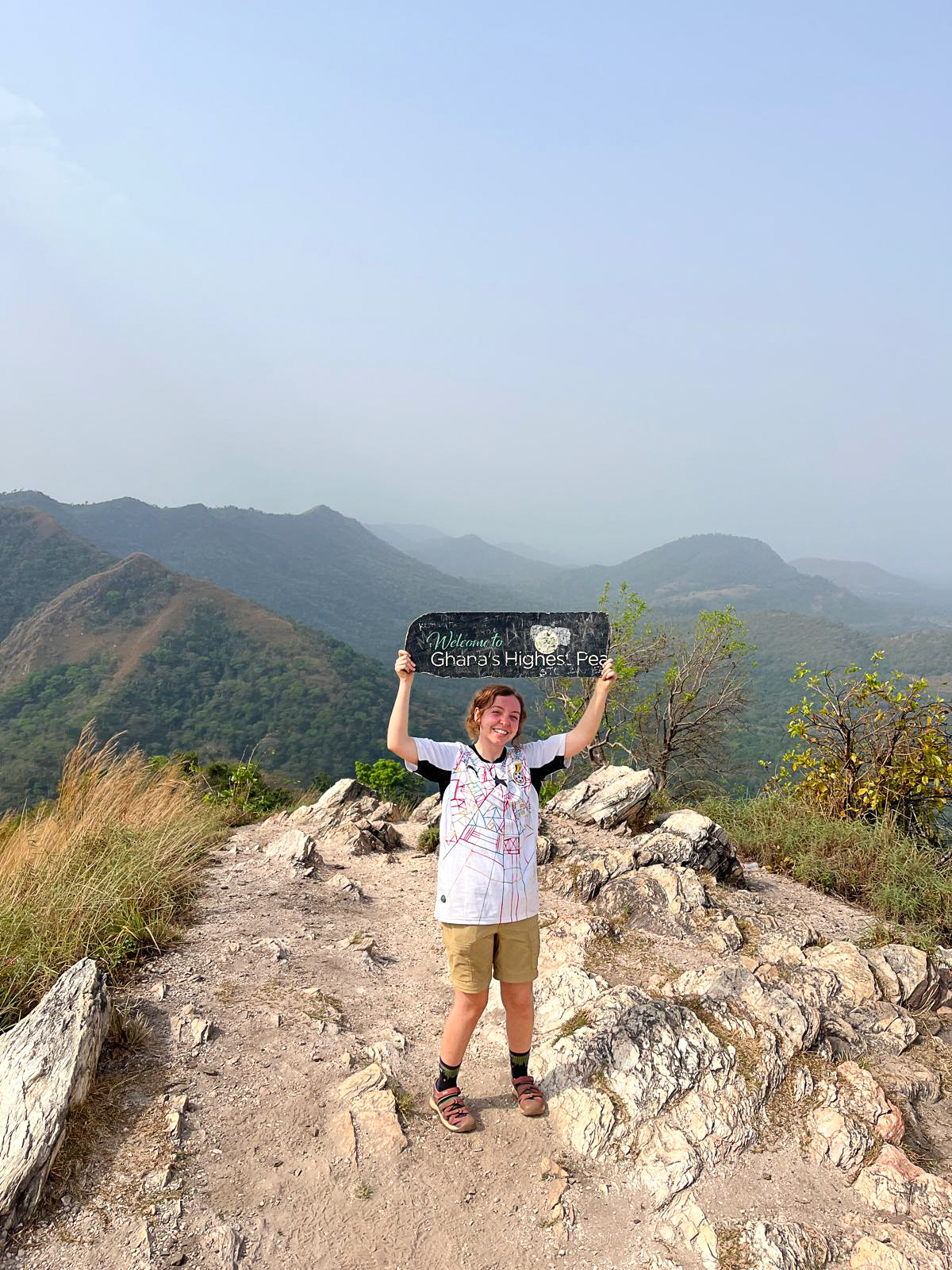
In 2013, Liz Matthews, ‘26, visited the Eastern State Penitentiary in Philadelphia with her sister and father around Halloween. Too afraid to walk through the prison’s haunted corridors, she stayed behind with her father to enjoy ice cream while her sister went ahead.
But as they began to wrap up the trip, Matthews realized something was wrong: her sister was roaming the Penitentiary alone. She was scared, wandering around costumed strangers, calling for her dad. Her father had left her alone in the night.
Shortly after, her father was diagnosed with frontotemporal dementia.
By 12, Matthews had lost her father. He died in 2016 at 52 years old. In the years that followed, she turned her loss into action, pursuing research and advocacy surrounding frontotemporal dementia.
According to the National Institute on Aging, frontotemporal dementia is a rare type of dementia that typically affects younger individuals compared to other forms of dementia. There’s currently no cure.
Matthews said younger-onset dementia affects families differently than diagnoses later in life, when individuals may struggle to hold a job or care for children.
“I was a young child when my dad was experiencing (frontotemporal dementia), and in his case, his entire personality changed, which became a very scary situation for us,” she said. “It’s not just memory loss or being confused. You really become a different person.”
Matthews said her father was always her role model because he overcame a difficult childhood to become a successful dentist, start a family and live life to the fullest. She said he actively pursued his life passions — even joining a band and learning to fly a plane.
“The idea of going through something traumatic and turning it into a way to help other people and creating good in the world is something I try to take forward from him,” she said.
In the field of dementia, Matthews said younger-onset cases are often left out of research because many studies exclude participants under 65, which she called an arbitrary cutoff.
Because the disease is rare, Matthews said she often felt alone, not knowing other families who shared her experience. That isolation motivated her to support others facing similar challenges.
Her mother said Matthews has been committed to doing the right thing from an early age.
“Everything she does is about making a difference, especially for those affected by dementia,” her mother said. “Watching her grow into someone who not only believes in something, but actually does something about it, has been incredible.”
Matthews said she volunteers for the Association for Frontotemporal Degeneration and has raised about $7,000 for the organization since 2020. She also founded the National Young Adults Support Group in September 2024, which supports children of parents with the disease.
Sandra Gonzalez-Morett, an ambassador for the Association for Frontotemporal Degeneration, said she was one of the first people Matthews met who also had a parent with the disease. Matthews said Gonzalez-Morett has been an important mentor over the years.
Gonzalez-Morett said she’s always been impressed by Matthews’ compassion and perseverance, adding she’s seen her grow in confidence over the last four years.
“I was blown away by (Matthews’) passion for the science around (frontotemporal dementia), as well as her passion for the caregivers, because of her own experience with her father’s (frontotemporal dementia),” Gonzalez-Morett said. “It has been a passion of hers to make other families’ experiences better than her own — better than mine — (and) just improving the system in any way she can.”
Matthews said her interest in frontotemporal dementia shaped her academic path, leading her to pursue research in neurodegenerative disease. She worked in the Babcock Lab at Lehigh for two years, studying neurodegeneration using fruit fly models, and was a summer research intern at Thomas Jefferson University, where she researched frontotemporal dementia/amyotrophic lateral sclerosis.
While those experiences were valuable, she said some of her most formative moments occurred outside the classroom, particularly through study abroad.
Matthews was part of the first cohort of Lehigh Launch in Ecuador, spending her first semester abroad. She said the experience ignited her passion for international learning.
“(Study abroad) taught me to be really open-minded and willing to engage with different people and cultures, which I think is a really important quality to have, especially today in our current political climate,” she said.
Though she had enough credits to graduate a year early, Matthews chose to spend her senior year abroad through the School for International Training. In the fall, she participated in a biodiversity and resource management program.
Over the past two semesters, she’s studied in Madagascar, Ghana and Mexico, and attended dementia-related conferences in Seattle and Lyon, France.
“I knew from Lehigh Launch that I really loved traveling, and I thought it was really good for me,” she said. “I figured I’d never have (a study abroad) opportunity again, so I decided to take advantage and explore what I was interested in.”
Currently, Matthews is studying in Indonesia through the School for International Training’s Death and Dying Program, which she said was inspired by her experience with her father’s younger-onset dementia.
“There’s no cure for any type of dementia right now, so it’s going to result in death for everyone,” Matthews said. “So I thought that would be an interesting perspective to bring into the (Death and Dying) program.”
While the program isn’t specifically centered on neurodegenerative diseases, she said she’s connected her interests through a project examining how dementia is experienced in different countries.
As she prepares to graduate in May with a degree in behavioral neuroscience, she plans to continue that work.
In the future, Matthews said she plans to attend graduate school after gaining work experience. She hopes to find a career that combines scientific research with lived experience.
Reflecting on her time at Lehigh, she encouraged students to pursue what matters most to them.
“Don’t be afraid to pursue your passions,” she said. “Go after something you really care about, not because everyone else is doing it or because it’s the easiest path. Follow the harder path, because it will be worth it in the long run.”
Comment Policy
Comments posted to The Brown and White website are reviewed by a moderator before being approved. Incendiary speech or harassing language, including comments targeted at individuals, may be deemed unacceptable and not published. Spam and other soliciting will also be declined.
The Brown and White also reserves the right to refuse the publication of entirely anonymous comments.