



Amid a nationwide resurgence, the Lehigh Valley reported its first measles cases since 2019 in August.
Lehigh students and staff received an email on Aug. 10, informing the campus community of two cases of measles found in the Lehigh Valley and reminding them of Lehigh’s vaccine requirements.
St. Luke’s Hospital Network reported the cases, both of which involved children.
These new reports come as Pennsylvania reported 115 new cases in the last week, and two deaths – including that of a newborn – were reported in Lancaster County in August, marking the first measles-related deaths in Pennsylvania in 35 years.
Pennsylvania’s total number of measles cases currently stands at 577, making it one of the most impacted states in the country in 2026.
According to the American Academy of Pediatrics, the community vaccination threshold for measles immunity is around 92 to-94%. The vaccination rate in Pennsylvania is around 88.9%.
These cases have drawn scrutiny from U.S. Secretary of Health and Human Services, Robert F. Kennedy Jr., who said they may have been “fabricated” by a staffer for Gov. Josh Shapiro. These claims have not been substantiated.
The two deaths are not currently included in the Center for Disease Control and Prevention’s national measles death tally.
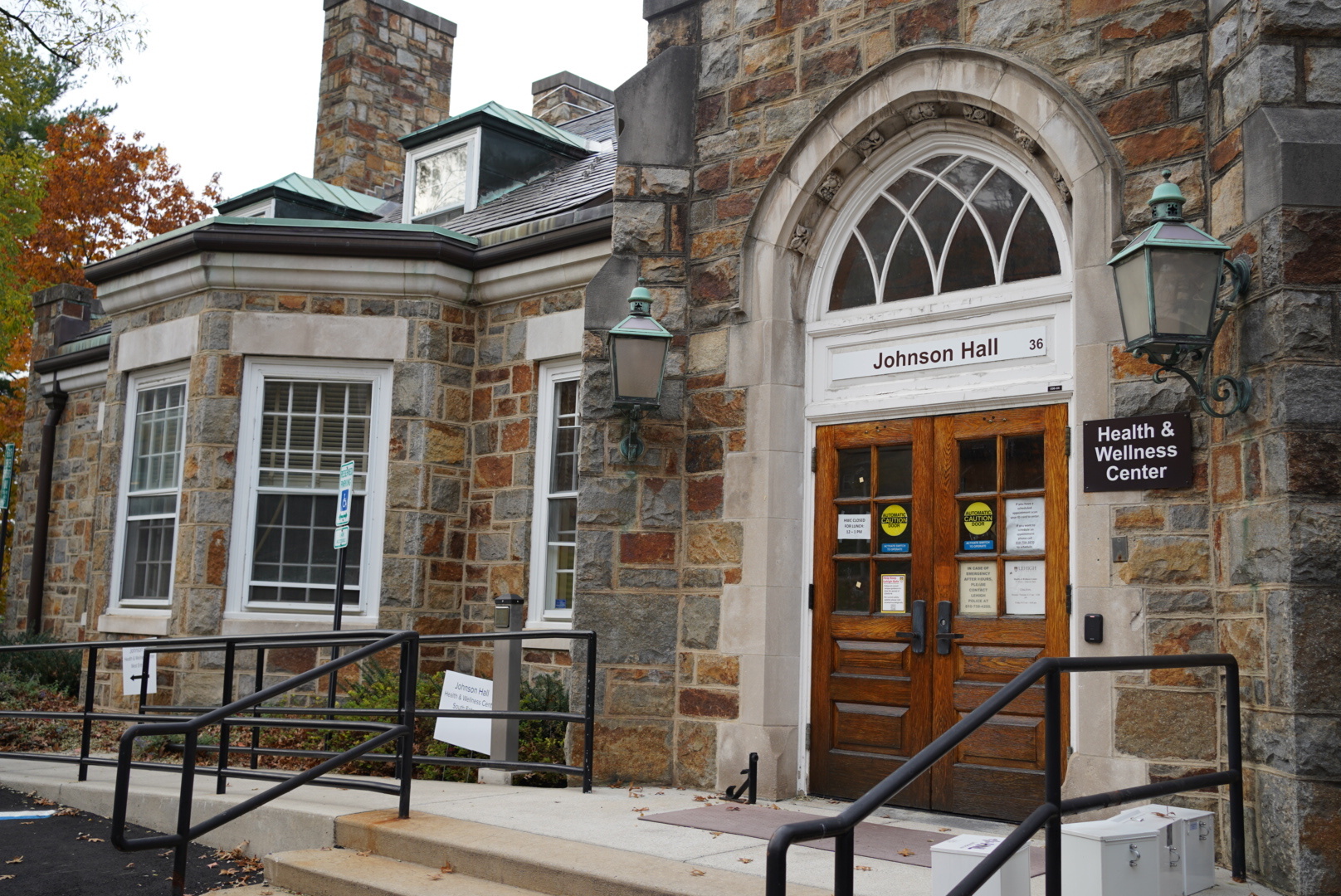
Margaret Renneisen, clinical director of Lehigh’s Health and Wellness Center, said measles can present like a common cold, with symptoms such as a cough, runny nose and fever. After a couple of days, a rash can develop.
Renneisen said the infectious disease is spread through respiratory pathways and can remain in a room for up to two hours after an infected person leaves it.
According to the CDC, nine out of 10 unvaccinated people who come in contact with the disease will become infected, one in five unvaccinated individuals will be hospitalized and one out of 20 children will develop pneumonia, the leading cause of death for children who get measles.
Although measles is commonly viewed as a disease that impacts children, Renneisen said it can pose significant health risks to anyone, including college students.
“Young children who have not been vaccinated are going to be heavily impacted, and elderly patients are going to be heavily impacted,” Renneisen said. “But it also really impacts young, healthy college students, young healthy adults and they are absolutely – if unvaccinated – still at a huge risk of being hospitalized and ultimately dying.”
A stand-alone measles vaccine was developed in the late 1950s, while the combined measles, mumps and rubella (MMR) vaccine was introduced in 1971 by Maurice Hilleman.
The recommendation from the Advisory Committee on Immunization Practices changed in 1979 from one dose to two for greater immunity.
According to the CDC, at least 95% of a community should be vaccinated against measles to prevent outbreaks. In 2025, Pennsylvania’s kindergarten vaccination rate dropped to 93.2% from 96.4% in 2019, falling below the CDC recommended threshold.
Renneisen said for younger physicians like herself, measles was considered eradicated in the years after the vaccine was introduced.
However, skepticism around the vaccine grew when a 1998 case series published in The Lancet and led by Andrew Wakefield claimed a connection between the MMR vaccine and autism in children.
It later was revealed that Wakefield was paid by lawyers working on a lawsuit related to MMR vaccines, and the study contained several ethical errors. The paper was retracted in February 2010, but Lehigh economics professor Shin-Yi Chou said the damage had already been done to the public’s perception of the vaccine’s reliability.
“We took a look at the figures, at the data, and the uptake rate (of the MMR vaccine) did not go up even after the paper was retracted,” she said.
In Chou’s following research with co-authors Mengcen Qian and Ernest Lai, the group discovered that highly-educated parents were most likely to refrain from vaccinating their children with MMR.
“It’s kind of counterintuitive because when you are highly-educated, you are more capable of finding information,” Chou said. “But you do not find information across the board. You tend to find the information (that) confirms what you have already believed.”
Renneisen said at this point, there are a lot of people who aren’t getting vaccinated and there are clusters in different parts of the country where there are larger groups not getting fully vaccinated.
“We really are starting to lose that herd immunity, which is making it a lot easier for these diseases to be spread,” she said.
Partly driving the mistrust in the MMR vaccine is messaging from RFK Jr., who has said that he believes there is a connection between vaccines and autism. These claims have not been substantiated.
Renneisen said this claim has been disproven multiple times and the best way to stay protected against measles is to get vaccinated, regardless of age. Losing herd immunity can be extremely dangerous for communities, she said.
Lehigh asks that all students receive both MMR vaccinations. Currently, there’s a very small percentage of students who are unvaccinated.
As the Health Center bolsters its measles response plan, Renneisen also said analyzing the percentage of students vaccinated with MMR is something the center is currently working on. The center plans to release more information in coming weeks.
Students at Lehigh can waive the vaccination by signing a form agreeing that they would leave the university for the necessary amount of time without reimbursement if there were an outbreak, Renneisen said.
Patti Florkowski, director of benefits at Lehigh, said there is no mandated vaccine policy for faculty and staff.
For those enrolled in Lehigh’s Medical Plan, several vaccines, including COVID-19 and the flu, are available at no cost.
Improving the measles response plan has mainly involved strengthening the Health and Wellness Center’s partnership with the Bethlehem Health Bureau, which drives the decision-making process in the case of a measles outbreak on campus, Renneisen said. An outbreak is considered to be three or more community members contracting measles.
Renneisen said the campus response following an outbreak would be situational, but any unvaccinated student would need to leave the school until at least 21 days after the last case on campus.
Mistrust regarding vaccination has existed since the beginning of vaccination, Farren Yero, history professor at Lehigh, said.
“When people are rejecting a vaccine, usually they are not rejecting a kind of chemical formula,” Yero said. “They’re expressing a profound distrust in the institutions that develop, regulate and mandate those vaccines.”
She also said rebuilding trust in relationships surrounding vaccination requires people to feel heard when expressing their opinion.
“I think there is this assumption, especially in our country, that when people are skeptical of a vaccine, that we (who are vaccinated) have some kind of intellectual superiority,” Yero said. “But (parents who are not vaccinated) don’t want their children to be sick, they also care about the well-being of their children too.”
When Lillian Hounsell, ‘29, heard about the measles cases in the Lehigh Valley, she asked her doctor about the potential impacts of the disease..
“It’s been on the news for a while now, but I didn’t think it would come here,” Hounsell said. “I was definitely a little nervous when I saw how fast it can spread. You never know where you could get it from.”
After learning about measles in the Lehigh Valley through a news alert as well, Izzy Esposito, ‘29, said she felt a similar anxiety and concern around not receiving much information on the cases.
“I don’t think I received enough information from the school,” Esposito said. “I probably saw that email too from the Lehigh alert but I feel like it’s kind of brushed over, and I haven’t heard anyone talking about it.”
Although Renneisen hopes there will be no further measles cases in the Lehigh Valley, she said the number of cases in Pennsylvania is concerning.
“Hearing about measles in the Lehigh Valley made me very nervous because I know that we have some people in the area that are more vulnerable,” Renneisen said. “Especially because it has been spreading a lot in the communities around us. I just hope that we don’t have to end up seeing people get sick and hospitalized.”
Comment Policy
Comments posted to The Brown and White website are reviewed by a moderator before being approved. Incendiary speech or harassing language, including comments targeted at individuals, may be deemed unacceptable and not published. Spam and other soliciting will also be declined.
The Brown and White also reserves the right to refuse the publication of entirely anonymous comments.