



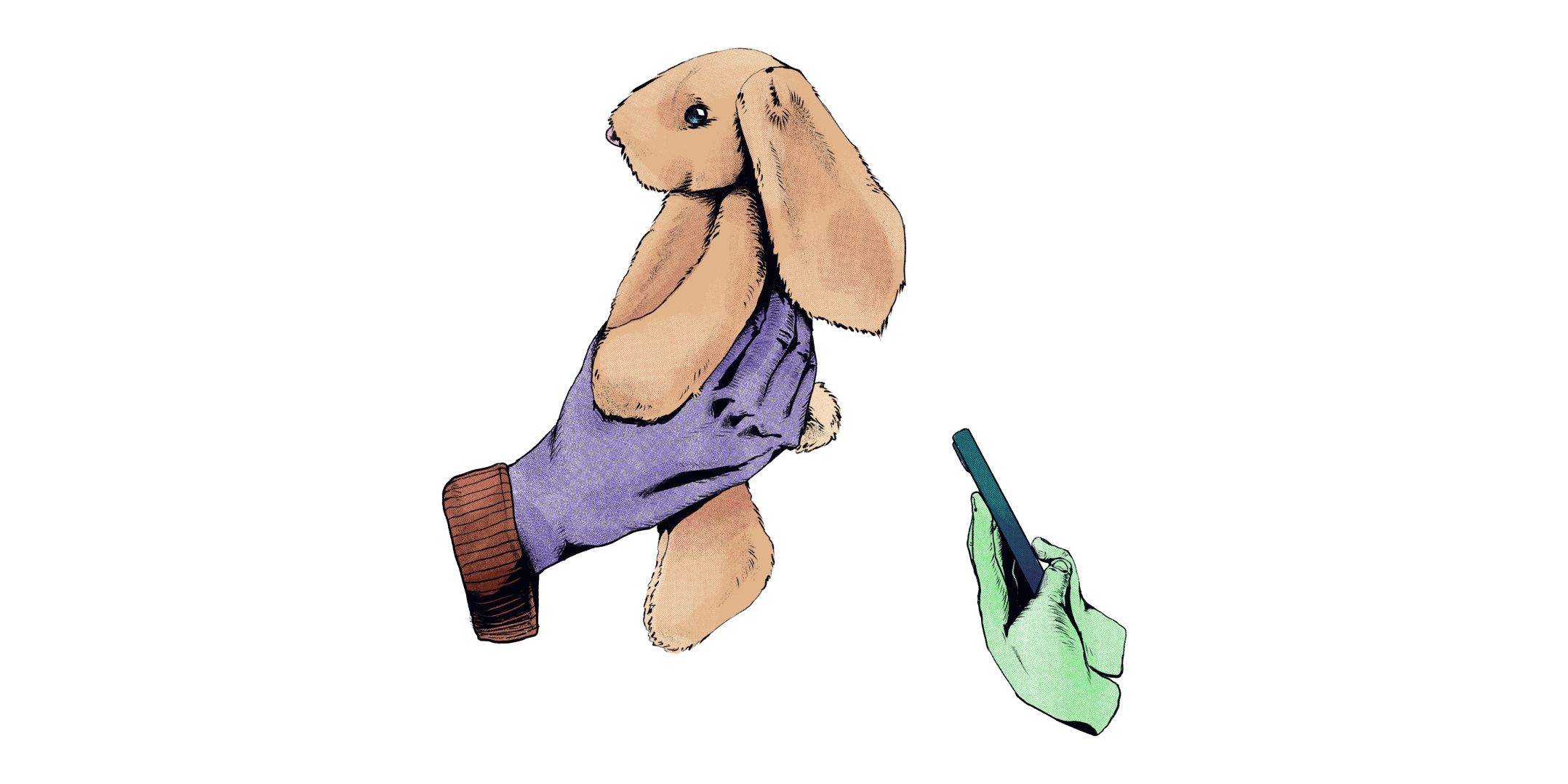
Somewhere in the world, a 5-year-old happily unboxes a Jellycat rabbit for their birthday. Fifteen years later, at 20 years old, you find yourself asking for the exact same thing.
Passing by Grandpa Joe’s Candy Shop on Main Street, you can’t help but take a peek inside.
It’s too easy to enter empty-handed and walk out with a new NeeDoh, a sensory fidget toy filled with a dough-like compound, perfect for squeezing through a crime documentary or accounting homework.
Down the hall, a friend films herself opening a “blind box” to reveal her latest Sonny Angel – a 3-inch cherub with wide eyes, themed headgear with no pants and wings – and then posts straight to her private Snapchat story.
Why are young adults obsessed with toys marketed for ages 3 and older?
Whether it’s the comfort of something familiar, the calm of something to squeeze or the thrill of not knowing what’s inside the box, these aren’t just toys, rather they act as emotional support objects, a way of holding onto the inner child as Generation Z abruptly enters adulthood.
For a vital part of our developmental years, Gen Z was stuck in the house during a global pandemic, tethered to our phones and watching the world seem to fall apart through a screen.
Some children downloaded social media as early as elementary school, curating an image of themselves before puberty. They went from making slime in their kitchen to posting edited photo dumps on Instagram.
Those children were pushed into adulthood with nothing but well-curated algorithms and little preparation for the human interaction or responsibility that came with it.
Instead of developing habits that hurt ourselves and others, we should turn to toys, and bring back the child-like wonder we’re missing.
NeeDohs come in over 50 different styles and are tangible, adaptable and personally satisfying. Jellycats provide the softness and comfort we crave while matching our “aesthetic.”
Sonny Angels and other mystery toys act as a companion and a game: the thrill of not knowing which tiny cherub you’ll get from the blind box mimics the same dopamine hit as a slot machine, dressed up as something innocent.
The leaflet inside labels each variant on a scale of common to rare, encouraging buyers to collect them all, and of course, purchase a convenient storage shelf for them to live on.
As toys come in and out of style, society will adapt to the ever-present need to follow trends.
The NeeDoh will live the rest of its life in the back of a desk drawer, while it’s replaced with another squishable companion that serves a different purpose.
We’ll get better at justifying it: a NeeDoh for stress relief, a Jellycat for the aesthetic, a Sonny Angel for the algorithm, until an influencer on our screens makes it cool enough to admit we just wanted the comfort all along.
But, maybe these micro trends aren’t so bad. It reminds us to be kids when our responsibilities are growing as we enter the “real world.”
The real question isn’t when young adults should outgrow toys, but whether outgrowing is the right goal. Collecting childhood toys isn’t regression — it’s reclaiming the childhood that was fast-forwarded.
Comment Policy
Comments posted to The Brown and White website are reviewed by a moderator before being approved. Incendiary speech or harassing language, including comments targeted at individuals, may be deemed unacceptable and not published. Spam and other soliciting will also be declined.
The Brown and White also reserves the right to refuse the publication of entirely anonymous comments.