



Some members of Lehigh faculty are questioning the university’s decision to cut several non-medical employee benefits, arguing that the changes don’t fully reflect recommendations made by the faculty and staff working group that spent months reviewing the university’s benefits.
The Benefits Review Working Group was created as part of a year-long review of Lehigh’s non-medical benefits. The group met last year to evaluate benefits, support employees, standardize offerings, preserve competitive advantage and manage costs, according to a report from the group.
The group recommended against reducing retirement contributions. The university’s final changes, however, will reduce retirement contributions for employees hired beginning Jan. 1, 2027.
The changes also replace the university’s $5,000 dependent tuition cash grant with the Tuition Exchange program, change dependent tuition remission and make changes to employees and dependent education benefits.
Disagreement over the recommendations
Jenna Lay, chair of Faculty Senate, said the working group’s recommendations were intended to provide the administration with faculty input.
Lay said, after the report was presented, the Faculty Senate said it considered the working group’s report reasonable and affirmed that it should be followed. The recommendations were published online on May 20.
She also said faculty senators recommended that if additional cuts were pursued, they should be accompanied by increased salary. Of the people spoken to by The Brown and White, employee aren’t receiving an accompanied salary increase to outweigh the benefits.
Some recommendations were incorporated into vacation benefit changes announced on May 1, Lay said.
The final benefit changes didn’t align with many of the working group’s recommendations, resulting in disagreement between faculty leaders and the administration over how the report was interpreted.
The working group didn’t support the cost-saving reductions to retirement contributions.
“I cannot explain why (the administration) chose to make those benefits cuts, despite the working group’s report,” Lay said. “It was very clear what (the working group) recommended. (The administration’s) choices weren’t made by the Faculty Senate, nor were they endorsed by the Faculty Senate.”
Christine Cook, senior vice president for finance and administration, said the administration didn’t disregard the group’s recommendations.
The group also provided deep research on alternatives, which Cook said she and Urban found valuable.
“We did take all of their recommendations (where the working group wanted) action,” Cook said.
She also said the group made a lot of recommendations to refrain from taking action on certain topics that the administration has chosen to act on.
Shared governance and faculty concerns
Lay said Faculty Senate strongly encouraged the administration to release the working group’s report to the full community.
“I’m not sure whether it would have been released to the full community, had the senate not articulated that very clearly in our response,” she said. “I’m glad that the report went out with full transparency.”
The Faculty Senate later created a forum for faculty to respond to the benefit changes at the all faculty meeting with Cook and Urban.
Lay said the process raised broader questions about how faculty expertise is incorporated into university decisions.
“I think there are some areas where we are making progress in developing a stronger voice for faculty and staff,” Lay said. “I think there are other areas where faculty and staff opinions are disregarded. I would really love to see more faculty expertise involved in these kinds of decisions.”
Where the impacts land
Lay expressed concern about how the effects of the benefit cuts are distributed, particularly because many of the changes will only affect employees hired after Jan. 1, 2027. She said the changes could disproportionally affect younger employees in an effort to shield current employees.
“Reducing the employer contribution to our incoming employees’ retirement benefits has harms that will continue throughout that employee’s career and into their retirement,” Lay said. “I’m especially concerned because I think that these cuts harm our most vulnerable employees, those who are making the least in salary.”
Angela Hicks, a mathematics professor at Lehigh and the vice chair of the Faculty Senate executive committee, was part of the working group. She said she worries for early-career employees who will receive fewer benefits, citing that retirement investments made early in one’s life have a disproportionate impact on an individual’s end savings.
For faculty members with dependents, the changes to tuition benefits could have a more immediate effect.
“I’m not in the same position as some of my colleagues that I worry about more for finding out when their kids may be going to college a year from now,” Hicks said. “That is particularly unfortunate.”
Mary Anne Madeira, a professor of international relations, has two children.
“Dependent tuition benefit feels like a huge loss to me because I have two children, so it feels like Lehigh just took $40,000 away from me that they promised me to help me with their educational costs,” Madeira said. “The benefit that they added as an alternative I don’t think is an equal substitute.”
She also said the changes have also created concerns about inequity not only between current and incoming employees, but between current employees themselves.
“Everyone is really upset about this, and (it) feels like it’s a significant cut,” Madeira said. “Some of my colleagues get to enjoy a benefit that I don’t, so it creates a lot of inequities that are hard to justify.”
Concerns about recruitment and retention
Madeira worries these benefit cuts will make it more difficult for the institution to recruit top new faculty.
“When (job candidates) ask me what it’s like working here, it’s hard for me to answer in good faith,” Madeira said.
She said she feels this way because she’s losing benefits that she was promised when she was hired.
Urban said Lehigh compared its benefits with those offered by other institutions.
“We recognize that when we’re trying to hire somebody, it’s competitive,” Urban said. “We’re trying to hire them, but if they’re a strong candidate for the position, they have other options. We believe that our benefits are competitive with the kind of places that our faculty and staff are also looking at.”
Faculty question broader issues
Madeira said she doesn’t feel that her voice was heard in the process.
“The benefits working group was supposed to be our voice in this process and their recommendations were totally ignored after a year of really hard work on those issues,” Madeira said. “It undermines my trust in the administration and makes me wonder what benefit is going to be cut next.”
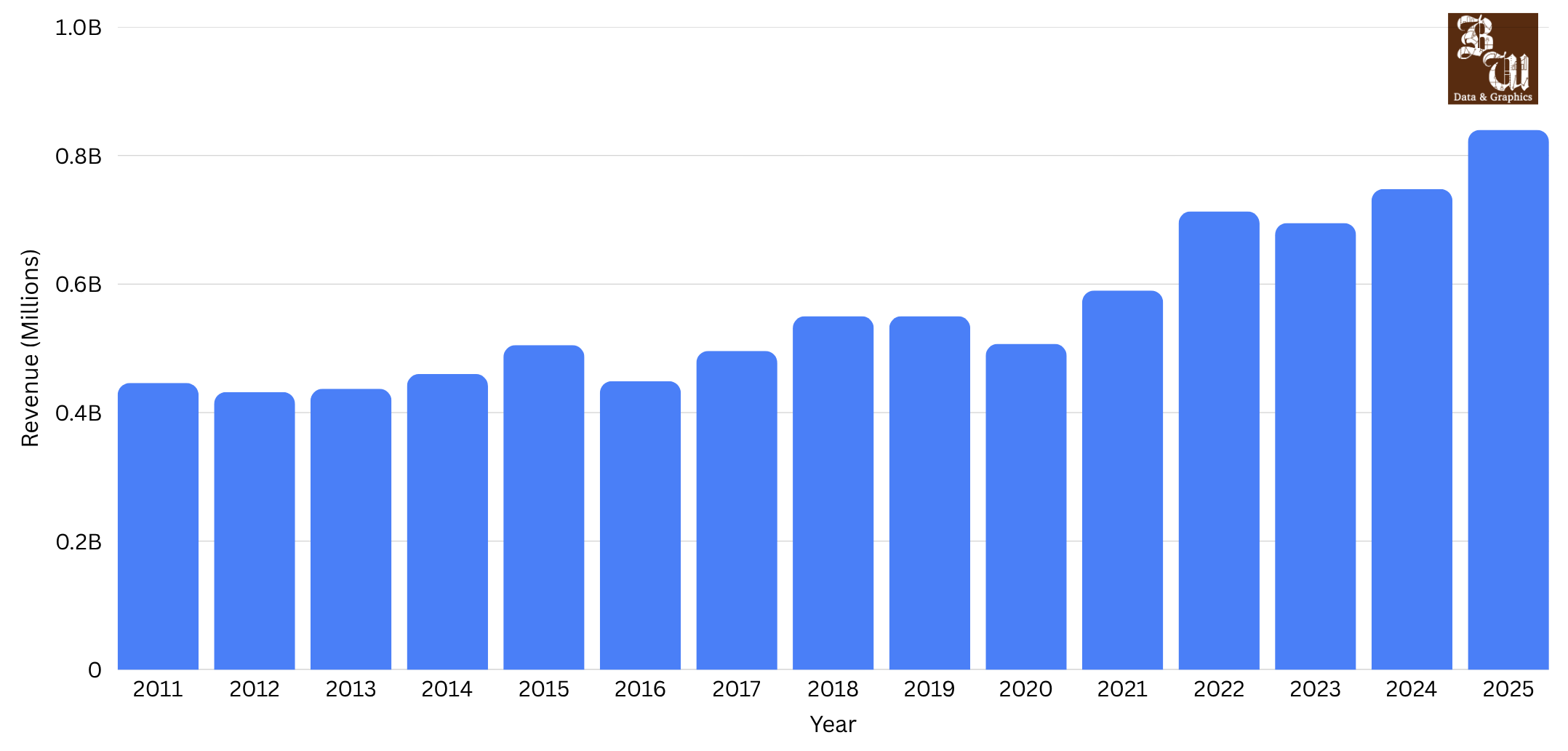
Madeira also questioned how Lehigh’s administrative costs have changed alongside these benefits changes, since she said salaries and benefits were rising faster than tuition revenue. However, she said she wasn’t told whether salaries and benefits are at a level comparable with peers universities.
“Because all the reports that I’ve seen is that we’re already at a lower salary and benefits level than our peers,” Madeira said. “So perhaps our salaries and benefits did need to rise faster than some other budget categories.”
Lay said the administration told the group that Lehigh’s non-medical benefit costs were too high.
But the working group found Lehigh’s total compensation was below the median of its peer institutions, Lay added. She said after analyzing the total compensation package, the working group found the university is actually underpaying faculty and staff, when it comes to baseline salary.
Looking at total compensation, that money should be going to faculty and staff to match competitive salaries of those at peer institutions, Lay said.
Madeira said the benefit changes have contributed to concerns about faculty morale.
“Faculty are really demoralized at a time when they’re asking us to double our research output as part of the strategic plan goal,” Madeira said. “That’s the key part of our job that we really want to do, but it’s hard to do that when we’re feeling really demoralized by working conditions in our lives and things like this that make our day-to-day lives harder and make us worse off economically.”
Lay expressed concern that benefit cuts are going to continue in the future. Faculty senators have shared this concern at faculty senate meetings, as well.
Lehigh’s upper administration salary information is freely available on Pro Publica.
In 2025, Urban’s compensation was $732,579. University President Joseph Helble’s compensation was $1,084,009.
“I look at those salaries and I think about coordinators who are making less than $50,000 a year,” Lay said. “I’m concerned about what that says about our institution’s values and how we are protecting our most vulnerable community members.”
Where the savings will be reallocated
Urban said, the administration does not expect the changes to produce significant savings in the short term because many of the changes are grandfathered.
Cook said the timing of the sunset allows people who are looking at college decisions for next fall to continue the tuition cash grant.
“We have heard that people are upset about (the tuition cash grant changes),” she said. “Change can be difficult. We understand that.”
She said the eventual savings will become part of the university’s ongoing resource allocation process.
Lay said faculty and staff haven’t received a satisfying answer about where the savings will go.
“We were told the cuts are necessary,” Lay said. “It’s not totally clear why. It’s not clear at all that there will be compensation increases to actually get us back to that total compensation that is on par with our peer institutions. I absolutely have concerns about that.”
Budget analysis working group formed
Following the most recent Faculty Senate meeting on Friday, Sept. 4, Faculty Senate created a new budget analysis working group made up of senators.
Lay said this group plans to work with publicly available information on Lehigh’s budget and finances to analyze compensation, merit increases and more, so the group can make recommendations based on this information and boost transparency with the community.
Hicks said she’s focused on looking at a broader financial picture of the university and benefit spending to ensure that decisions are contextualized as they are being made.
Lay sent an email after the Sept. 4 Faculty Senate meeting to Urban and Cook with recommendations and questions from the faculty senate and was awaiting a response at the time of the interview.
The Faculty Senate is also compiling faculty questions to send to Urban and Cook. Lay said the Faculty Senate will share the questions and responses to the community and will indicate if the administration doesn’t respond.
“We’re trying to make sure there is accountability here to the larger community,” Lay said. “We think that transparency is really important here. That’s something we’ve been trying to do throughout this process and we want to continue that.”
Lay also connected the debate over these benefit changes to President Joseph Helble’s stated strategic vision for Lehigh to be the “first, best or only.”
“I think a lot about President Helble saying that he wants Lehigh to be first, best and only,” Lay said. “We are neither the first, nor the only institution to cut faculty and staff benefits. (These cuts) don’t make us first or only. And it certainly doesn’t make us best when we are applying regressive cuts that harm our most vulnerable employees. We could be best if we took more innovative approaches to how we wanted to save money.”
The Brown and White reached out to Helble for comment on Sept. 8 regarding these benefit cuts and hasn’t received a response.
Comment Policy
Comments posted to The Brown and White website are reviewed by a moderator before being approved. Incendiary speech or harassing language, including comments targeted at individuals, may be deemed unacceptable and not published. Spam and other soliciting will also be declined.
The Brown and White also reserves the right to refuse the publication of entirely anonymous comments.