



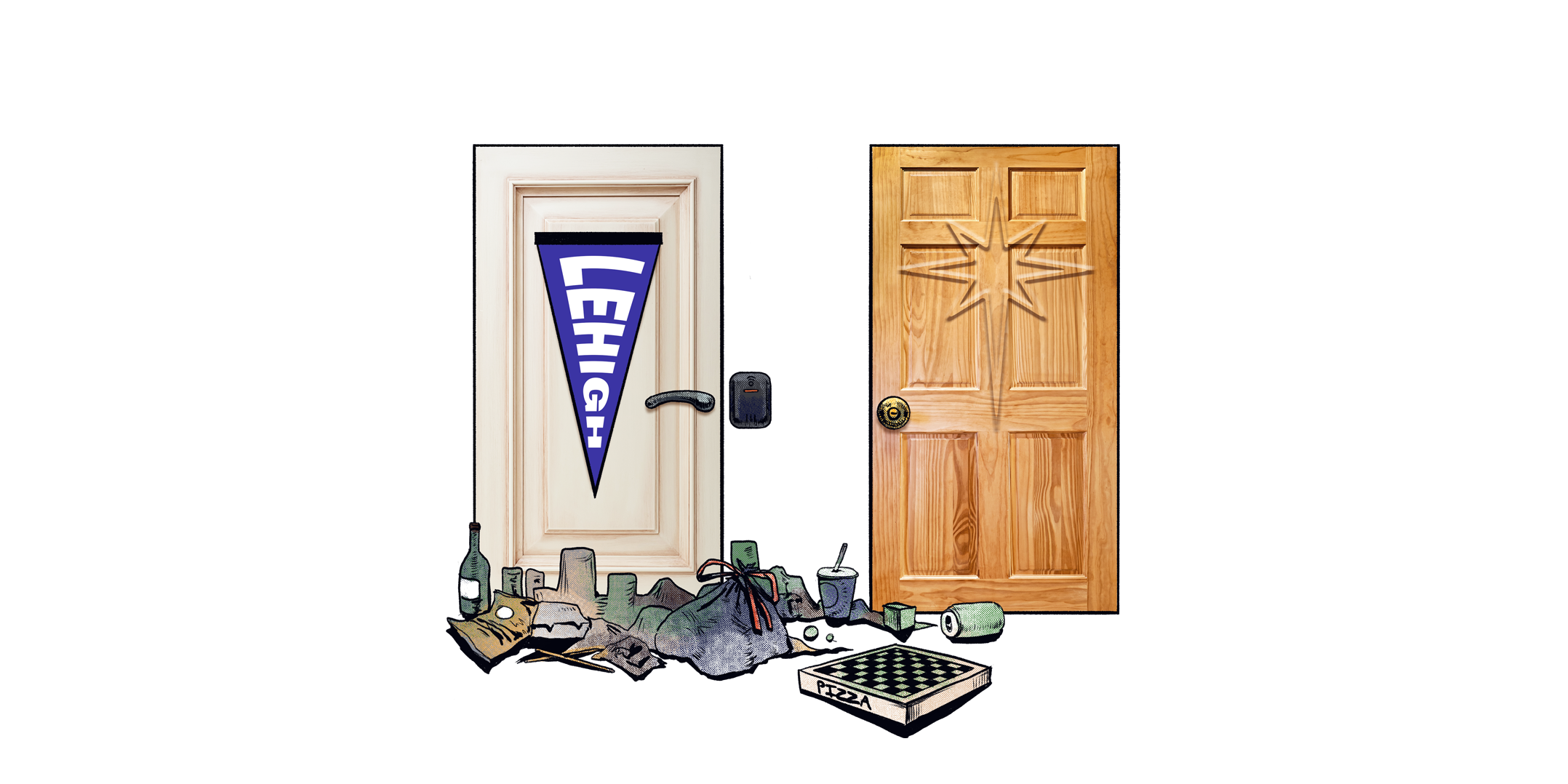
Tensions between the Bethlehem community and Lehigh students have existed for years.
There’s the typical college complaints that can divide a host city from its student population: noise violations during the weekends, parking issues and a general air of arrogance.
In a decade-old opinion piece, Anna Simoneau, ‘18, critiqued the terms used to refer to Bethlehem at the time, “Sketchlehem” and “Bethle-hell.” It wasn’t uncommon to hear “Dirty B(ethlehem)” circling around campus, either.
But it’s more than simple trash talk or drunk behavior in the street. Lehigh’s ever-growing student body and its urge for expansion has tangible effects on the South Side community.
Older residents recall the lost neighborhood between Packer Ave, Martel, Morton and Webster Streets before Lehigh acquired the land and tore it down in the 60s. For decades, working class residents have had their neighborhoods resold and gutted for university projects.
The issue doesn’t seem to slow down any time soon.
Lehigh’s Path to Prominence was introduced in 2016 as a plan to increase the undergraduate enrollment by 1,000 students. In the last 10 years, Lehigh’s full-time undergraduate enrollment increased by over 900.
The class of 2030 is Lehigh’s third consecutive highest enrollment, with 1,608 students.
This year, the surplus of first-years were placed in upperclassman housing in Singleton and Brodhead, displacing those students to off-campus housing.
The proposed new undergraduate housing, East Hill Resident Hall, is set to open in fall 2028 with 371 beds for first-year students. It’s unknown whether current first-year housing will remain the same or adapt for upperclassmen, so this raises the question of where these students will go after first year.
Junior and senior housing already operates through a lottery system. Increasing enrollment each year without adequate housing makes students go off campus for their junior and senior years.
Instead of independent landlords with community ties, outside landlord companies have taken over the properties.
Amicus Properties, an independent private real estate and property management company, provides off-campus housing to Lehigh students.
Amicus acquires residential homes and apartments in Bethlehem to lease to Lehigh students for an inflated price. As one of the only off campus options, Amicus can overcharge and profit off higher income students willing to pay for “luxury off-campus housing.”
With rent that can go above $1,000 per student, Amicus is set to make significantly more money than renting to families. This business model prices out South Side residents and takes these houses permanently off the market for families.
The University’s eagerness to grow has created a profit motive that is unreasonable for residents to compete with. The people of the South Side can’t afford to live in the city they’ve spent their entire lives in.
Lower income families with generations in the South Side have been forced to relocate, sometimes requiring their children to move out of the school district.
In 2024, the Bethlehem Area School District began implementing housing counselors in its schools for students facing homelessness, eviction or extreme housing instability.
Despite advertising, Amicus isn’t favorable among Lehigh students due to poor living conditions, expensive prices and administrative issues.
Without student demand, these houses go vacant.
Bethlehem Mayor J. William Reynolds said in a council meeting in August there could be up to 200 vacant homes and encouraged Amicus properties to sell their houses or rent them to non-students if they aren’t being used.
Although that is a minuscule solution, the history of Lehigh’s expansion has always affected the Bethlehem community and as long as they keep enrolling students, it’s not set to end.
For Lehigh students, finding affordable housing is a temporary issue. For Bethlehem residents, it can be a lifelong struggle.
That’s not the behavior of a friendly neighbor.
Comment Policy
Comments posted to The Brown and White website are reviewed by a moderator before being approved. Incendiary speech or harassing language, including comments targeted at individuals, may be deemed unacceptable and not published. Spam and other soliciting will also be declined.
The Brown and White also reserves the right to refuse the publication of entirely anonymous comments.