



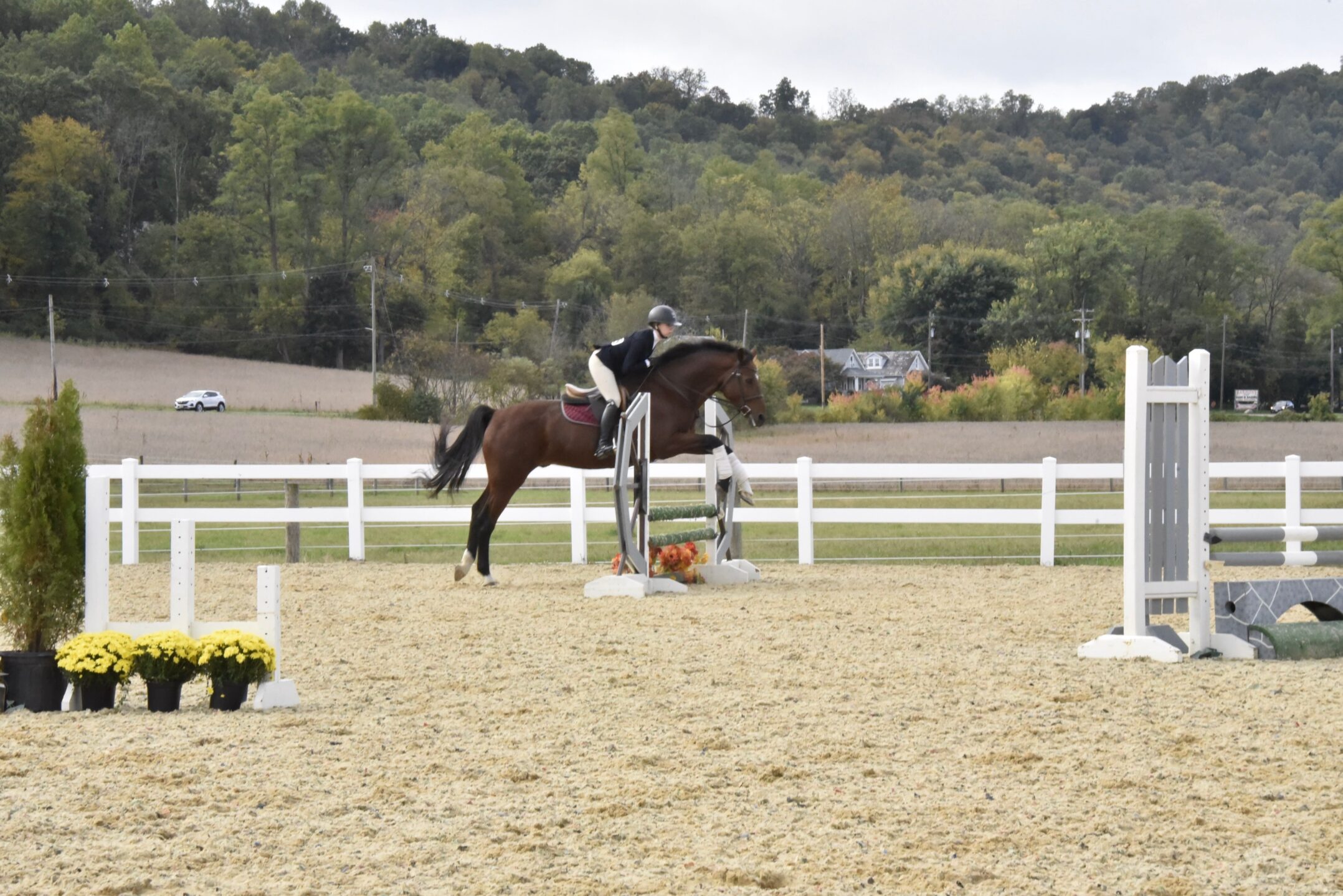
In less than thirty seconds, Eliza Taub, ‘27, must read the mind of her 1,000-pound partner she’s never met. There’s no practice run, no warm-up and no time to build trust.
Taub has never met the horse she’ll ride, but has to find the best way to communicate with the animal, trusting it will take her lead without hesitation or a misstep.
This type of high-stakes uncertainty is standard protocol for Taub at an Intercollegiate Horse Shows Association. Riders draw a name out of a hat, mount an unfamiliar horse and, soon after, trot into the judge’s view.
The competition format is designed to test a rider’s horsemanship by removing all advantages, such as the familiarity that comes with horse ownership, creating a high-pressure mental game where one wrong lead can ruin months of preparation.
Taub said this unpredictability is precisely what drives her as she steps into the role of captain for Lehigh’s club equestrian team for the 2026-2027 academic year.
Differing from most club sports at Lehigh, the equestrian team exists far from the student spotlight, as it carries an unexpected level of physical labor, financial commitment and mental intensity.
Lea Traola, ‘29, a current team member who’s shadowing the role of captain, said the team members’ obligations extend far beyond a typical practice and competition schedule.
“When working with horses, it’s such a huge expense – not just money, but also time,” Traola said. “A lot of people don’t realize how much time it takes up because you have weekly practices or competitions, cleanups and semester meetings.”
Between heavy behind-the-scenes work and low campus visibility, the team faces challenges when trying to gain the interest of their peers and club membership.
Much of their work happens out of sight from their peers, so Taub said she relies on an active social media presence and word-of-mouth to highlight the club and the team’s achievements.
“Most of our team are proud to be members, so they talk about it,” Taub said. “I even brought a horse to campus for one of my class’s final presentations.”
For Taub, the pride she holds for the sport and involvement on the team stems from a lifetime spent in the saddle.
She said she knows the commitment it takes, the importance of teamwork and how powerful positive team culture can be.
“After a challenging competition, the support of my group and the people around me helps me take it as a learning experience and be grateful for the opportunity instead of feeling defeated,” Taub said.
Taub said achieving equestrian success includes collective effort. At intercollegiate competitions, for instance, teammates tell one another about the quirks of different horses and cheer for each other once a showing begins.
“The team environment plays such an important role because maybe someone on your team has ridden the horse before, maybe someone on your team knows something about the way that horse likes to be ridden,” Taub said. “You can advise each other based on that, which is really helpful.”
For Taub, fostering a comfortable environment isn’t simply about boosting morale. She understands it to be a necessity for handling a mentally intense sport. One bad ride can feel isolating, which Taub has experienced herself.
When she was a sophomore, Taub made it to Zone Finals, one of the last competitions before nationals. Due to the importance of the competition, she said she felt immense amounts of pressure, pressure that only grew when she learned she was paired with a horse that was notoriously difficult.
As she awaited her turn, Taub said she fixated on a fundamental skill: picking up the correct leading hoof.
When the horse switches gaits from trotting to cantering, they should always lead with the inside leg. Sometimes, they incorrectly start with the outside.
Although this was a skill she knew herself to be good at, her anxiety overcame her, causing her to make the error she feared most.
“I was stressing about it so much that when I picked up the canter, I picked up the wrong lead and I was so mad at myself,” Taub said. “I didn’t want it to ruin the ride and ruin the experience of getting to be on such a nice, incredible horse. So I had to push through and keep going.”
While she felt disappointed with her performance, she said her teammates helped her turn her disappointment into a learning experience. They motivated her to keep going and work harder to make it to that point again.
That type of teamwork requires a strong, uplifting team culture, one that Taub said she experienced during her first years on the team and continues to implement as captain.
She also said the process of getting into the show ring takes a village.
As a captain, she emphasizes how important kindness and supporting one another is. Traola said she’s witnessed Taub’s efforts firsthand, noting how her leadership has directly shaped the atmosphere of the team.
“If you weren’t happy with how you did or whatever it may be, you can just talk to Eliza for five minutes and she really makes you feel supported,” Traola said. “She always has the most spirit, whenever we drive to a show, even if it’s 4 a.m., she’s blasting music, making sure everyone’s in a good mood.”
Comment Policy
Comments posted to The Brown and White website are reviewed by a moderator before being approved. Incendiary speech or harassing language, including comments targeted at individuals, may be deemed unacceptable and not published. Spam and other soliciting will also be declined.
The Brown and White also reserves the right to refuse the publication of entirely anonymous comments.