



Over the course of his campaign and presidency, President Donald Trump has said numerous negative comments and taken action against various minority groups.
Four percent of Lehigh students are black, 9 percent are Hispanic and another 9 percent are nonresident aliens.
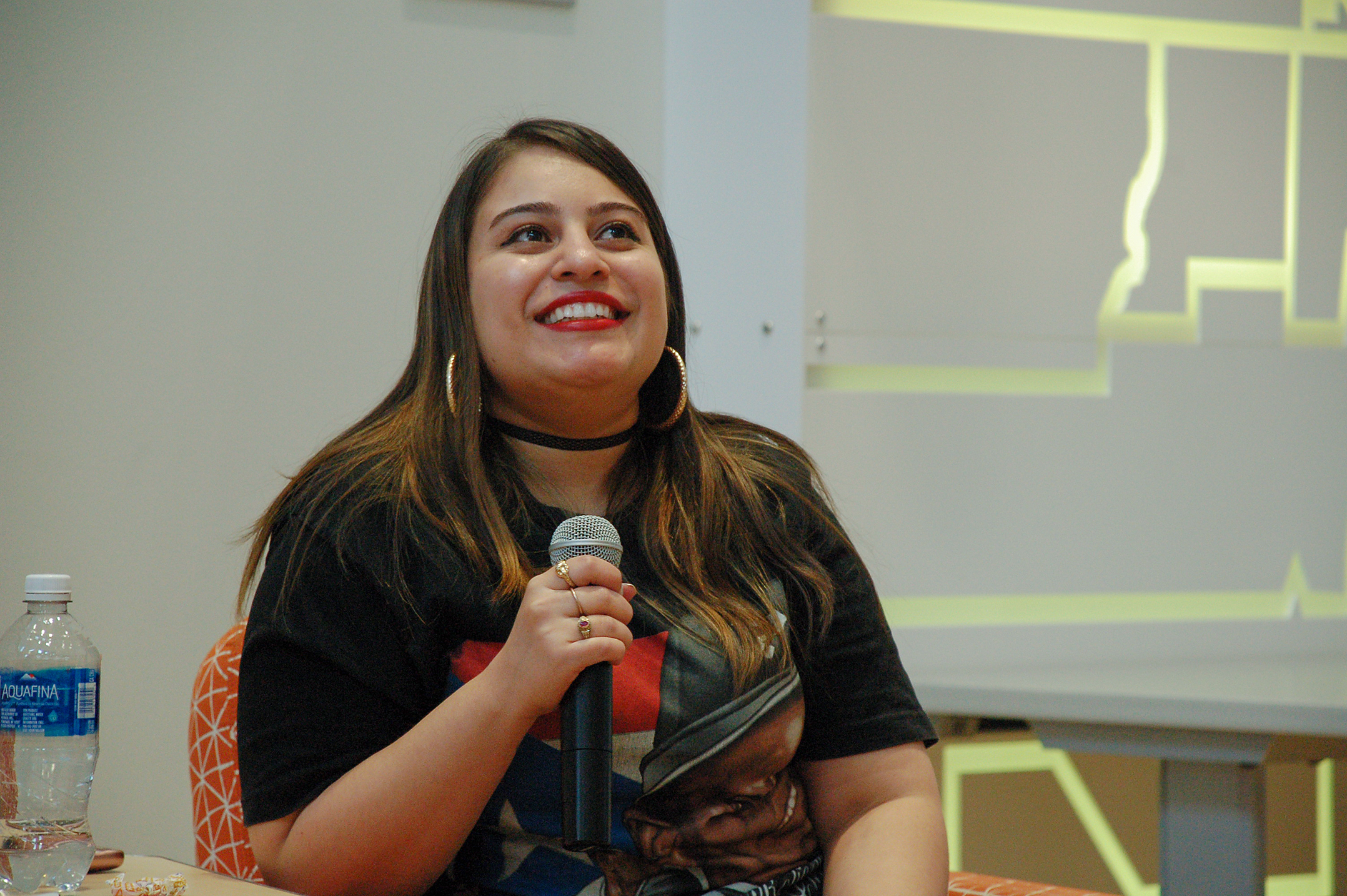
The English department held a Q&A with Raquel Reichard, the politics and culture editor for Latina magazine on Monday. She discussed her career and the importance of the work she contributes to the Latinx community.
Reichard focuses on advocacy journalism, a non-objective form of journalism that is used for a political or societal purpose. Stories are supported by facts and by experts, which differs from an editorial that may be solely opinion based.
“(Advocacy journalism) informs,” Reichard said. “It awakens people. It humanizes the people the story is talking about. It’s about understanding what’s happening and why it’s happening.”
Marilisa Jiménez, an assistant professor of English, said she believes advocacy journalism is using the role of a journalist to tell stories that aren’t being told. It emphasizes using different types of experts, mainly the people being discussed in the story, to give underrepresented voices a chance to be heard.
Both Jiménez and Reichard said the Trump administration is perpetuating stereotypes of Latinxs or assigning them negative labels. For example, Trump called all Mexican immigrants rapists during his presidential campaign.
Jiménez said countering the stereotypes perpetuated by the administration is an important piece of advocacy journalism in the current political climate. This does not apply only to those of Latin decent but all affected minority groups.
“A lot of my work aims to dispel myths of Latinx people,” Reichard said.
She gives the example of how Latinx families showed love after the Pulse nightclub attack to counter the myth that all Latinxs are homophobic. She also counters the myth that all Latinxs are inherently sexual beings by discussing asexual Latinxs.
Reichard is intentional with who she uses as sources for her articles and expands the definition of “expert” beyond someone with a doctorate. She believes it’s best to talk to members of the particular marginalized community she is writing about, as they provide the best insight.
“It’s affirming to see someone who looks like you overcoming a problem that you’re struggling with. It’s life-saving, it’s healing,” Reichard said.
Advocacy journalism also gives minority groups a chance to relate to their source of information.
A Latinx person might watch mainstream media and not fully understand a news segment that affects their community due to complex jargon. Reichard said they may feel like the news anchor is cold or uncaring when discussing a topic that could potentially cause them harm. She said working at Latina gives her the opportunity to pass information to her community in a way they relate to and understand.
“What’s in my purview as a Latina woman isn’t the same as someone coming from another purview,” Jiménez said. “That’s why diversity is so important. We need more diversity among journalists.”
Jamir Connelly, ’19, attended the Q&A and was impressed by the intersectionality presented.
“(Reichard) showed the importance of using ‘Latinx,’ as people may not fall under Latino or Latina,” Connelly said. “I think it’s also cool that she also pushed for using pictures of black or indigenous Latinas instead of those of whiter women.”
Reichard also hosted an activism journalism workshop to help students understand how to improve and promote their own work.
“You can chop a 20-page paper for class into 800 words and pitch it to a publication,” Reichard said.
A student can also use social media to post about a field they are interested in. Graphics or videos could be posted on Instagram, for example.
Connelly said while he is not involved in journalism, many of the tips Reichard gave could easily be translated into improving writing and communication skills as a whole.
Comment Policy
Comments posted to The Brown and White website are reviewed by a moderator before being approved. Incendiary speech or harassing language, including comments targeted at individuals, may be deemed unacceptable and not published. Spam and other soliciting will also be declined.
The Brown and White also reserves the right to refuse the publication of entirely anonymous comments.