



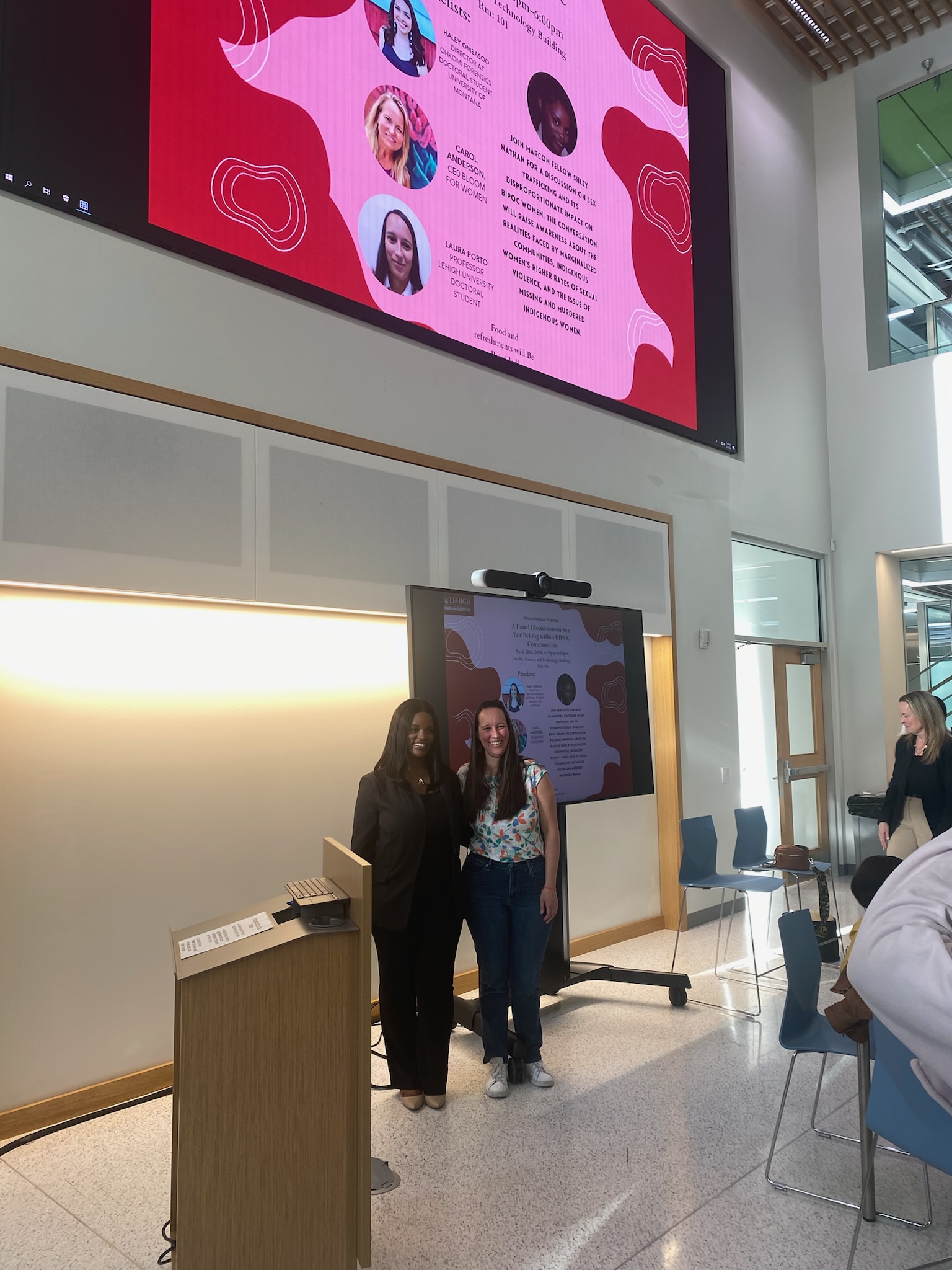
The Marcon Institute held a panel discussion on sex trafficking and the disproportionate impact it has on BIPOC women Apr. 26. Shley Nathan, ‘26, a Marcon Fellow, led the discussion.
Nathan said the event was to inform the public of statistical evidence and spread awareness about the reality of sex trafficking for BIPOC women today.
According to a Committee on Oversight and Accountability press release, 8% of the population in South Dakota are Native American, but they make up 40% of trafficking victims in the state.
Approximately 40% of domestic sex trafficking victims in the United States are Black women and girls.
According to the National Institute of Health, the total economic impact of domestic violence is over $3.6 trillion. This includes healthcare for injuries, lost wages and criminal justice costs.
Haley Omeasoo is a doctoral student at the University of Montana and the director of Ohkomi Forensics, an organization providing forensic services to Indigenous families and communities.
She said law enforcement often lacks the necessary resources to search for missing BIPOC women, leaving the victims’ families to investigate themselves.
“It is really hard and really sad that it does have to fall on us,” Omeasoo said. “It shouldn’t really be our responsibility, especially being a family member that has another family member that is missing or has been murdered.”
Laura Porto, a doctoral student at Lehigh, said historical marginalization sets a precedent where sex trafficking primarily targets BIPOC women.
She said BIPOC communities experience different generational traumas based on this history.
“We can’t forget slavery as a way of trafficking, and how that is also part of trauma related with Black women,” Porto said.
The Carlisle Indian School opened in Pennsylvania in 1879 as the first government-run boarding school for Native American children.
According to The National Sexual Violence Center, thousands of Native children from over 140 tribes were forced to attend, with many suffering physical, sexual, cultural and spiritual abuse. More than 180 children died while attending.
“From an indigenous person’s point of view, there’s the issue of the interventional schools and how our children were forced to go to these schools where they were sexually assaulted,” Omeasoo said.
Omeasoo said this intergenerational trauma continues to affect the self-worth and mental health of modern generations of women.
Porto said these trauma-related mental health issues can make BIPOC women more vulnerable to exploitative sex work.
“The truth is that those people involved in prostitution — we can call it OnlyFans, or street prostitution, or any form — they are doing that because they have a vulnerability,” Porto said.
Beza Geberesilassie, ‘26, said she wrote a paper last year about sex work as a labor force that impacts all women and attended the event to further her understanding of sexual exploitation.
“Although there are women who willingly do sex work, it’s important to emphasize women who are trafficked,” Geberesilassie said.
Bloom for Women, a women’s shelter operating five homes in the Lehigh Valley, provides exit services for women survivors of sex trafficking and sex exploitation.
The shelter also works to train law enforcement and medical professionals to screen for potential trafficking victims.
Carol Anderson, CEO of Bloom for Women, said trafficked women are often prosecuted for prostitution, which can make safely escaping a life of prostitution difficult.
She said she encourages people to get involved with Bloom for Women by donating or volunteering. They hold community outreach events weekly where anyone can participate.
“Having these conversations and talking about how you can use your influence, your time, talent and treasure to make some progress and kind of move the needle,” Anderson said. “We know we’re not going to end it, but we want to disrupt it.”
Comment Policy
Comments posted to The Brown and White website are reviewed by a moderator before being approved. Incendiary speech or harassing language, including comments targeted at individuals, may be deemed unacceptable and not published. Spam and other soliciting will also be declined.
The Brown and White also reserves the right to refuse the publication of entirely anonymous comments.