



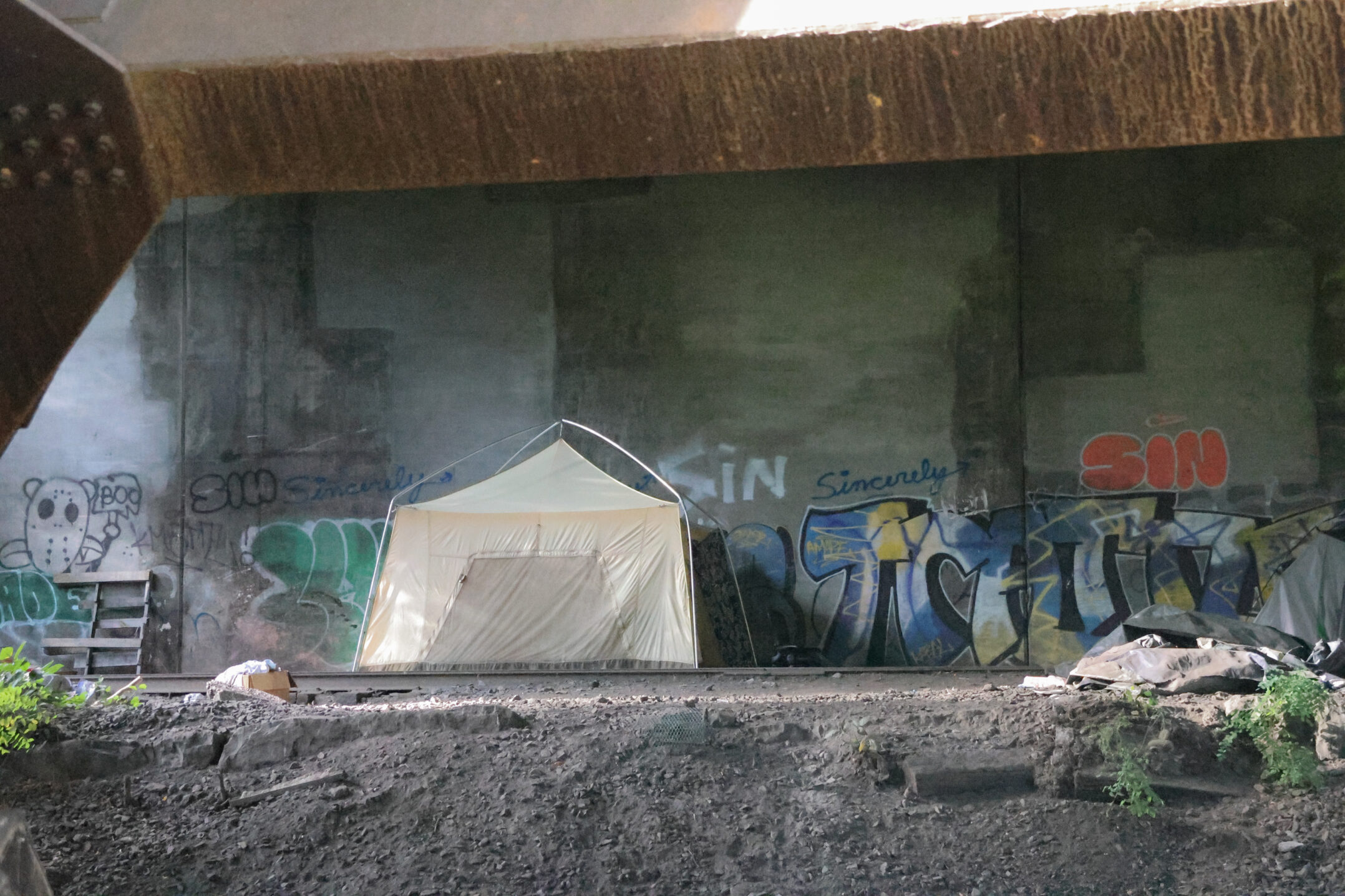
The Bethlehem Police Department and the Bethlehem Health Bureau are increasing efforts to relocate a homeless encampment from under the Hill-to-Hill bridge by Dec. 15.
For the first time in 21 years, the Bethlehem Police Department received a notice from Norfolk Southern railroad company to clear people from their property, citing health and safety concerns.
The deadline comes among long-standing efforts from the Bethlehem Health Bureau and city police to address the growing housing crisis, and has prompted them to take further action to support the unhoused community.
Starting Sept. 10, Norfolk Southern will post notices about deadlines for people to vacate the area owned by the railroad company.
The Bethlehem Police Department plans to provide geographic support such as determining the best places to post the notices, but the department won’t handle the postings because it is private property.
Kristen Wenrich, the health director of the Bethlehem Health Bureau since 2013, said the number of individuals experiencing homelessness increased during COVID.
Bethlehem Police Chief Michelle Kott said Norfolk Southern is receiving a growing number of complaints from community members about the size of the encampment, which likely prompted the notice of removal.
Bethlehem police visited the encampment last week and reported about 30 to 35 individuals living near the Fahy Bridge and the Hill-to-Hill Bridge, with an additional 19 individuals located around the Minsi Trail Bridge.
“I think a bunch of the individuals that are residing down there kind of had an idea something was coming down the road in regards to relocation,” Kott said.
In 2020, the Bethlehem Health Bureau launched “Community Connections,” a program created in response to growing concerns about mental health issues in the community. The program helps to coordinate resources for unsheltered individuals.
The project is a collaboration between the police department, the Bethlehem Emergency Shelter, and nonprofits including New Bethany Ministries, the Conference of Churches, Valley Health Partners Street Medicine and Serving To Aid & Restore, all working together to support community needs.
“We go to the encampments on a weekly basis,” Wenrich said. “As part of that, we’ve given the responsibility to one of the Community Connections’ employees to really manage the homeless, conducting outreach and service provider coordination.”
The Health Bureau has also organized a “care event” through the Community Connections program, bringing a wide range of services on-site for a day. At these events, individuals can receive mental health and drug and alcohol assessments, Medicaid enrollment assistance, housing support and medical services.
Wenrich said 47 unhoused individuals attended the two care events held so far. The initiative has already shown signs of success, with participants being connected to housing, intensive case management and employment opportunities.
While serving the unhoused population comes with challenges, Wenrich said many individuals want help, and with time and trust, progress is possible.
Wenrich said the bureau is exploring ways to build on its current successes. In addition to the existing programs, she said a new emergency shelter is planned to open soon in Bethlehem.
Kott said the police are working with community partners to find housing for individuals, whether short-term or long-term, with the goal of getting people off the streets before winter.
Beyond working with community partners, Kott said the department is collaborating with Bethlehem’s Community and Economic Development team, looking to provide temporary hotel stays.
Wenrich said having resources in place prior to the notice has been beneficial, but challenges remain.
She said some individuals are hesitant to join a shelter or temporary housing because they don’t want to leave their animals behind, prompting the bureau to develop contingency plans.
“So (there are) just a lot of different moving parts,” Wenrich said. “We’re not necessarily a direct service provider, so we’re trying to be the convener and making sure that services are coordinated and not duplicated.”
Marc Rittle, the executive director of New Bethany, said he works closely with those in these encampments.
He said he hasn’t heard of any development plans for the bordering railroad tracks and believes the company’s main goal is to remove the people from the area.
“I really just think that there is not a single solution to homelessness,” Rittle said. “We can’t pretend that we can just make people move, and now we’re not homeless.”
Rittle said his focus is on strengthening the housing system and connecting people with the help they need.
“My hope is that we can get to the point where we have a structure in place that helps people faster that gets people where they need to be,” Rittle said.
Comment Policy
Comments posted to The Brown and White website are reviewed by a moderator before being approved. Incendiary speech or harassing language, including comments targeted at individuals, may be deemed unacceptable and not published. Spam and other soliciting will also be declined.
The Brown and White also reserves the right to refuse the publication of entirely anonymous comments.