



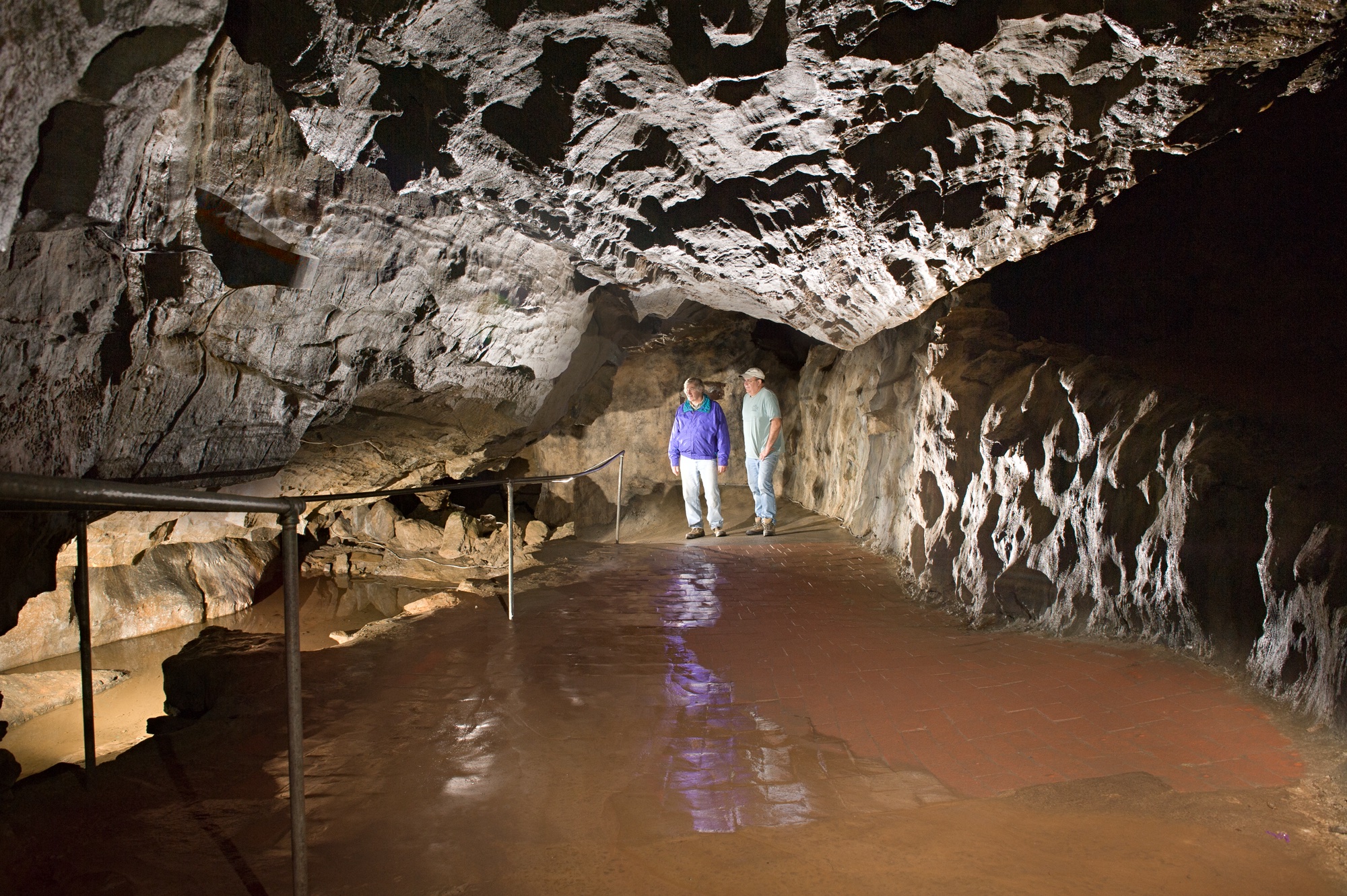
Just 15 minutes from Lehigh University’s campus, the Lost River Caverns offer a glimpse into local history and nearly a century of family tradition.
The caverns’ Lost River gets its name from the water that winds through the chambers. Fed by surface precipitation, the clear stream eventually disappears underground, its destination still unknown.
The caverns were first discovered by accident in 1883 through limestone mining. In 1930, the Gilman family purchased the site, and ownership has been passed down the family ever since. Today, 95 years later, siblings Bob Gilman and Beverly Rozewicz continue to operate the caverns.
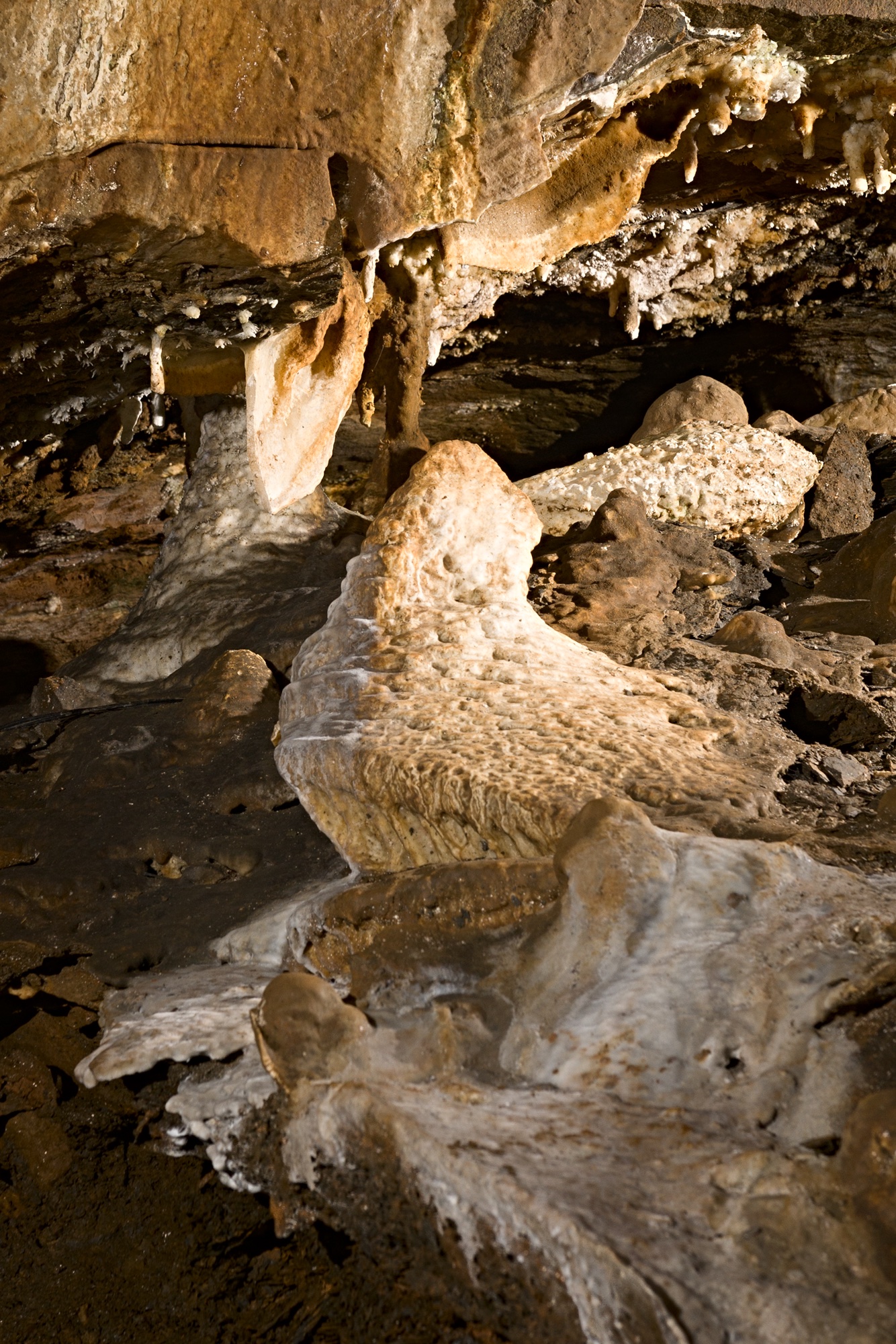
The caverns mainly of limestone chambers in varying sizes. In the chamber known as the Crystal Chapel, walls are coated with multicolored minerals that appear to cascade from the ceilings.
Visitors can tour the caverns’ five main chambers before browsing the gift shop, which features a mix of gemstones, jewelry supplies and merchandise.

Oliva Lundquist, ‘26, said she finally stopped at the site after years of passing the bold black-and-yellow signs pointing to the caverns while driving to school.
“It was really interesting to see all the different rock formations and have a tour guide explain to you how everything has formed over millions of years,” she said
Lundquist said the tours consist of a mix of fun jokes and informative facts.
Guides complete two weeks of training before leading groups through the caverns. One of them is 21-year-old Abigail Zloty, a student at Bucks County Community College who has worked at the caverns for almost a year and a half.
“A lot of companies say ‘Oh, we’re like a family’ and that’s just not true at all, but it does actually feel like a family,” Zloty said.
She said she calls her fellow co-worker Patti Edgar her “honorary grandmother.”
Edgar, who works at the caverns part-time after retiring from nursing, said she first visited the cavern gift shop 38 years ago with her mother to buy jewelry supplies.
Zloty said a sense of community extends to visitors
“That’s one of my favorite parts of the job,” Zloty said. “If I have a group of total strangers, at the end of the tour they’re not as much strangers, even friends sometimes.”
For Beverly Rozewicz, who grew up at the caverns, that interaction with visitors remains her favorite part of the job. Her parents were the previous owners, and she began working there full time in 1972 when she was 22.
Zloty said the caverns have an eccentric history. She said they were used as a hiding place for alcohol during the Prohibition era, a venue for square dances in the 1800s and, more recently, a wedding venue. Today, they offer both a visual record of environmental history and a glimpse into the community built around them.
Though weddings are no longer held at the caverns because of staffing shortages, Rozewicz said they’re some of her favorite memories.
“We usually lit candles, and there was a professional photographer for one, and he used a special lens,” Rozewicz said, “It came out really beautifully, like starlight.”
While the Gilman legacy is still uncertain, Rozewicz said they are still reviewing and exploring a variety and exit strategies. She also encourages Lehigh students to visit, noting that the caves and trails above them offer a unique break from their studies and a chance to connect with local history.
Comment Policy
Comments posted to The Brown and White website are reviewed by a moderator before being approved. Incendiary speech or harassing language, including comments targeted at individuals, may be deemed unacceptable and not published. Spam and other soliciting will also be declined.
The Brown and White also reserves the right to refuse the publication of entirely anonymous comments.