



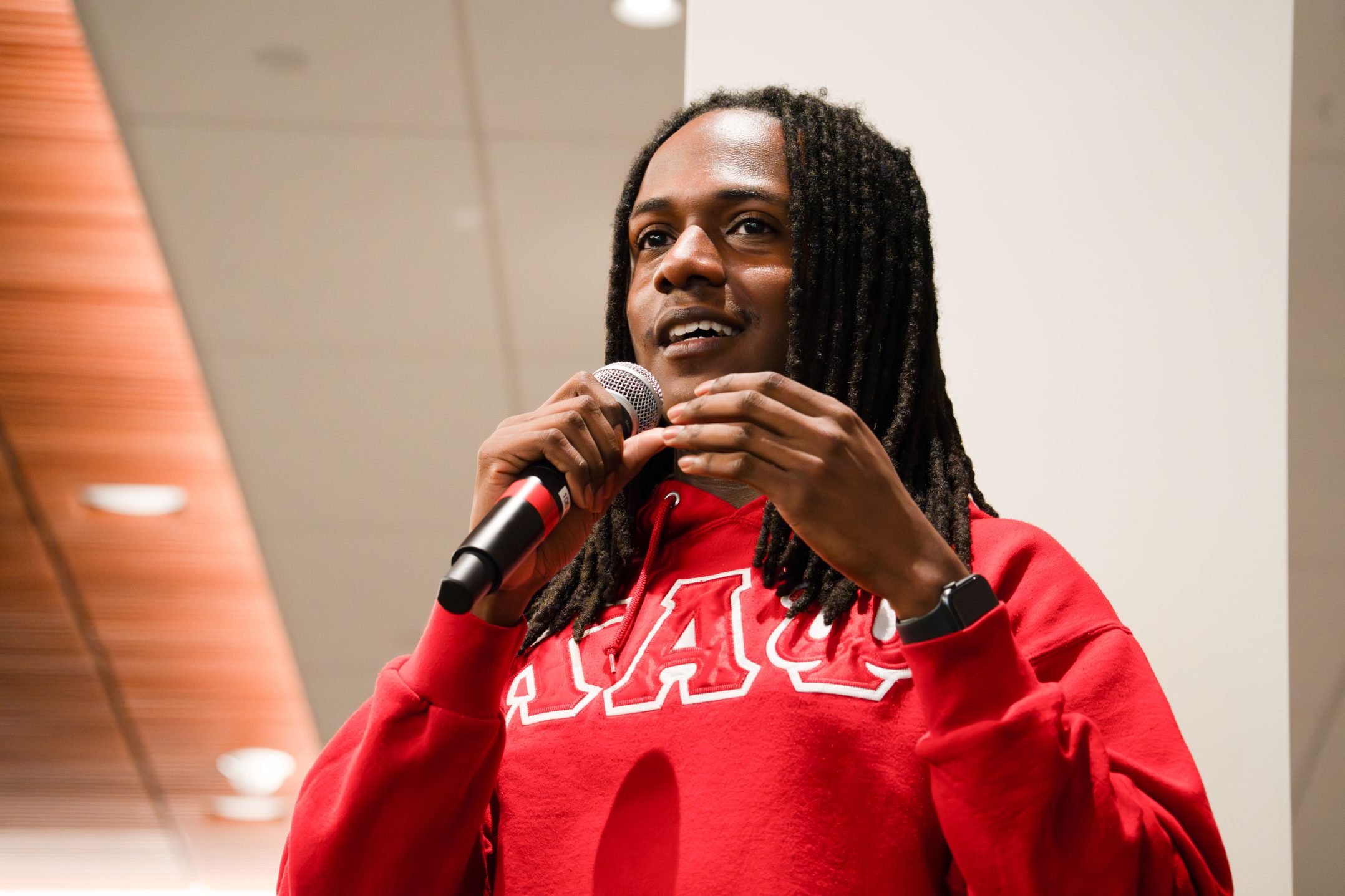
Representatives from Lehigh’s Black Student Union say changes are needed on campus following a racist image of George Floyd on a BORG that circulated on Yik Yak.
Aminata Coulibaly, ‘25, graduate advisor for the union, said racist incidents have occurred on campus for years, often in Greek life spaces, and have negatively affected campus culture.
Mariana Roldán, ‘28, is the Student Senate chair of the Diversity and Inclusion committee and said she was unsettled by the responses on Yik Yak that dismissed the incident and students’ experiences of racism.
“My perception of campus was a bit shattered,” she said. “I felt like maybe not everyone wants me to be a part of this campus, or maybe not everyone wants people like me to be a part of this campus.”
In her first year at Lehigh, Coulibaly said she had a similar experience when it came to light that a fraternity on campus had a photo album of members in blackface. By Coulibaly’s senior year, she said she still hadn’t learned what repercussions the students or the fraternity faced.
T’Anna Gooden, ‘29, a representative for the Black Student Union, said even though she hasn’t been at Lehigh long, she’s also heard and witnessed several racist incidents.
These included Gooden’s friend being called the N-word at random, an Uber driver driving around campus with offensive statements on his car, and the racial harassment of a University Center dining worker.
Gooden said she worries that protections surrounding private student information sometimes goes too far and prevents students from facing meaningful discipline.
Student discipline and education records are protected under the Federal Education Rights and Privacy Act, which keeps certain student information private unless those over 18 consent to share it. In most cases, schools that receive funding from the U.S. Department of Education must obtain consent from students to share their educational record.
“At the end of the day, (the U.S. Department of Education) only have this privacy to protect them from being held accountable,” Gooden said. “It’s not to protect their safety or anything, it’s just to stop them from having actual repercussions to their actions.”
In a Student Senate statement responding to the incident, Greek organizations were identified as spaces where troubling racist incidents have occurred.
Roldán said the decision to mention Greek life in the statement upset some senators who are involved in it and felt that the incident wasn’t reflective of Greek life as a whole.
“It’s an underlying issue of a certain culture of racism within Greek life, even if they’re not aware of it,” she said. “Even if there was racism going on around you, you might have not picked up on that, because you were not at the receiving end of that racism.”
On March 6, Lehigh’s Panhellenic Council released a statement on its Instagram page outlining a plan of action in response to the incident, including a town hall-style meeting scheduled for March 18 with Panhellenic members.
Roldán said she’s been involved in organizing the town hall meetings and sees them as an important step forward, though she believes additional discussions will be needed.
“It’s not an issue that’s going to be solved by a single town hall, and there’s no reason as to why we should limit ourselves to one,” she said. “We can have different spaces to acknowledge different themes and topics of conversation that we need to address.”
She also said she’s been speaking with members of cultural organizations on campus to understand what changes students would like to see.
Roldán said students have called for concrete solutions from Greek life, greater accountability when racist incidents occur and more transparency from the administration and Greek organizations about consequences for students involved.
Roldán said one change many students have proposed is a clear policy outlining how racist incidents in Greek life or other campus spaces should be addressed, similar to policies that exist for sexual assault or hazing.
“It’s a decision that involves a lot of different offices and a lot of different people, so there are still things that need to be negotiated, but it’s what a lot of people want to see, and it’s something I’m definitely going to advocate for,” she said.
Gooden said she would also like to see expanded anti-racism training for students, particularly within Greek life, where hazing and sexual assault education are required but anti-racism training is not.
She said anti-racism education will begin to be incorporated into the orientation process, similar to the Break the Silence presentations on sexual assault and consent.
Although Gooden views this as progress, she said the incident shouldn’t have been necessary for these changes to be implemented.
“There doesn’t have to be an incident for a lot of the students on campus to feel unsafe and for them to have to respond now,” she said. “Now it feels like they’re only doing it because they have to.”
Roldán said much of the advocacy work around racism on campus often falls on students rather than administrators.
“We don’t want to have to continue going to Greek life and tell them why what happened was wrong,” she said. “They know that it was wrong, and we don’t want to have to tell the administration why what happened was wrong. We know our stories, and we know our lived experiences, and we don’t have to explain ourselves. They have to learn and observe and see why what they’re doing is wrong.”
Gooden said some students were disappointed with President Jospeh J. Helble’s responses to questions at a Feb. 26 fireside chat hosted by Student Senate, describing his answers as “PR.”
Roldán said she has an upcoming meeting with Helble and representatives from several groups.
Although she believes Greek life should have more anti-racism education, Roldán said racism on campus extends beyond those organizations.
“It’s not a culture that’s isolated within Greek life,” Roldán said. “It’s indicative of an underlying campus culture that just so happened to be highlighted through Greek life. And the people who need to hear this are not just in Greek life, but I hope that they attend some of these days and hear these conversations, and realize why certain things are wrong and how they need to change.”
Comment Policy
Comments posted to The Brown and White website are reviewed by a moderator before being approved. Incendiary speech or harassing language, including comments targeted at individuals, may be deemed unacceptable and not published. Spam and other soliciting will also be declined.
The Brown and White also reserves the right to refuse the publication of entirely anonymous comments.