



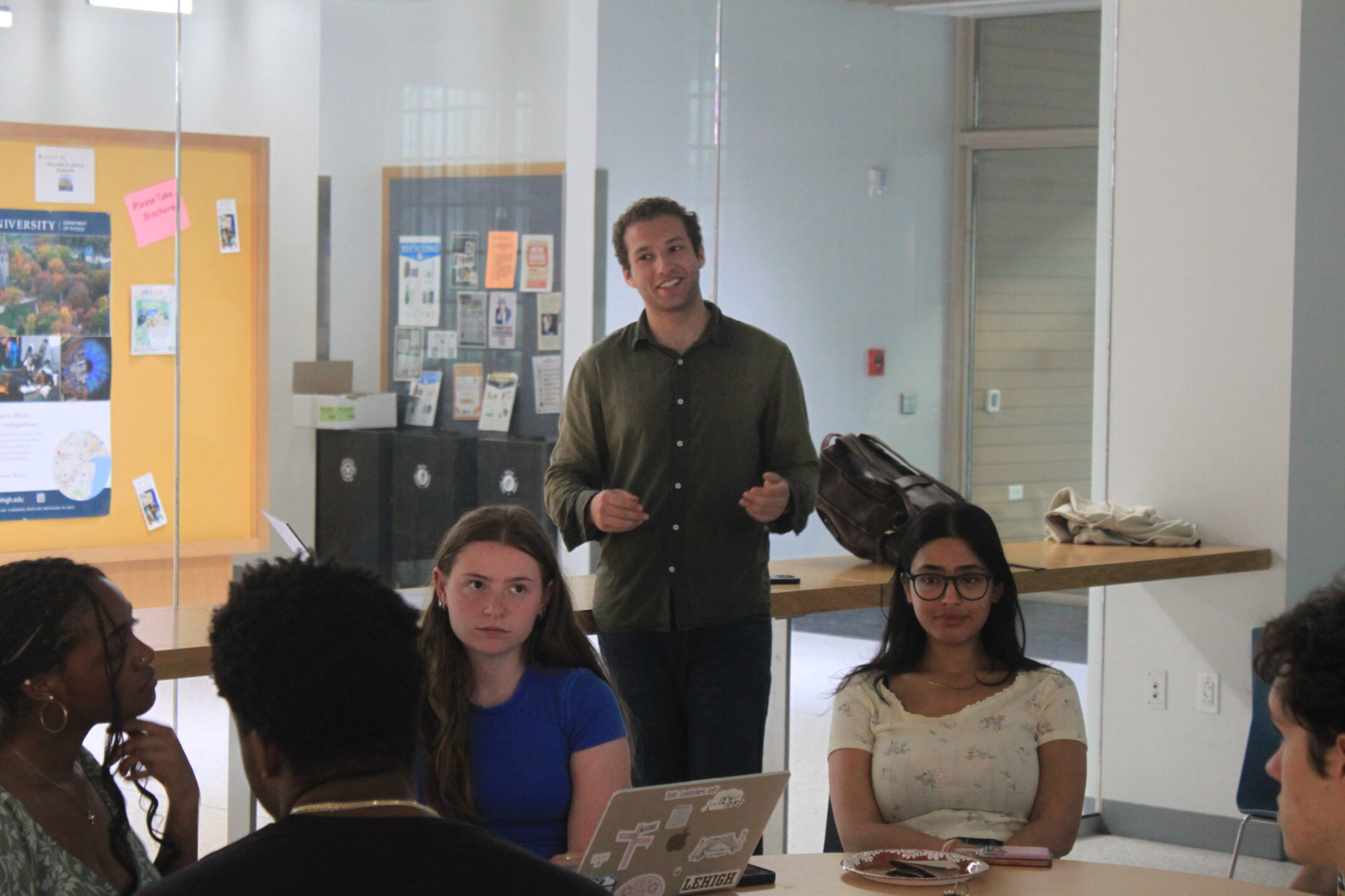
Drew Smith, ‘27, newly elected Student Senate president, and 10 other senators discussed proposed structural changes, including consolidated committees and a revised club allocations system, during an open Q&A session Friday in the Health, Science and Technology building.
The event was intended for students not involved in the Student Senate to ask questions. Although only two students unaffiliated with the Senate or The Brown and White attended, the session proceeded as planned, with senators and attendees asking questions of one another.
Noe Kourtzidis, ‘27, chair of the Student Outreach Committee and organizer of the event, said he was disappointed with the student turnout but believed the session was still productive. He attributed the low attendance to the timing — a Friday near the end of the semester.
Kourtzidis said uncertainty surrounding proposed changes to the Senate made it more difficult for the Student Outreach Committee to connect with students this semester.
“This spring there were a lot of talks of new structure or dissolution, and there were a lot of things essentially holding us back on true changes,” he said.
The proposed changes include consolidating nine Senate committees into six, restructuring the executive board positions and revising club funding allocations. Smith also previously proposed dissolving the Senate and rewriting its constitution.
Previously, the Senate had nine committees: Student Outreach, Diversity & Inclusion, Sustainable Development Goals, Facilities and Services, Club Affairs, Bethlehem Outreach, Health, Safety & Wellness, Public Relations and Allocations.
Kourtzidis said the Senate plans to consolidate these into six committees: Club Affairs, Academic Affairs, Student Rights, Student Outreach and Facilities and Services.
Bethlehem Outreach will be combined with Diversity & Inclusion to form Student Rights, Public Relations will be added to Student Outreach and Sustainable Development Goals will be incorporated across all committees.
Jazeera Avila, ‘29, incoming chair of Student Rights, said the decision to combine Bethlehem Outreach with Diversity & Inclusion was based on their shared mission.
“(The combination is) definitely a bigger job, but I think we have a touch of it already,” Avila said. “We have a lot of good resources already with people and nonprofits in the area, and just working on tactics and making sure people living here feel safe is my main goal right now.”
New committee chairs were elected at the last two meetings and will become official during the Senate’s transfer of power meeting on April 28.
During the session, each committee presented a slide outlining its goals. Representatives in attendance spoke about their roles and priorities.
Ryan Hatfield, ‘26, chair of the Club Affairs Committee, discussed the committee’s processes, including a new club review policy and efforts to incorporate sustainable development goals.
He said approved clubs will now undergo a review every five years, rather than not being formally evaluated after approval.
“This just gives us a chance to make sure they’re still doing well,” Hatfield said.
He also said the Senate will review executive boards, attendance and initiatives as part of the process.
To support sustainable development efforts, Hatfield said the committee has worked to increase access to reusable products and partner with The Source to expand sustainable resources for clubs.
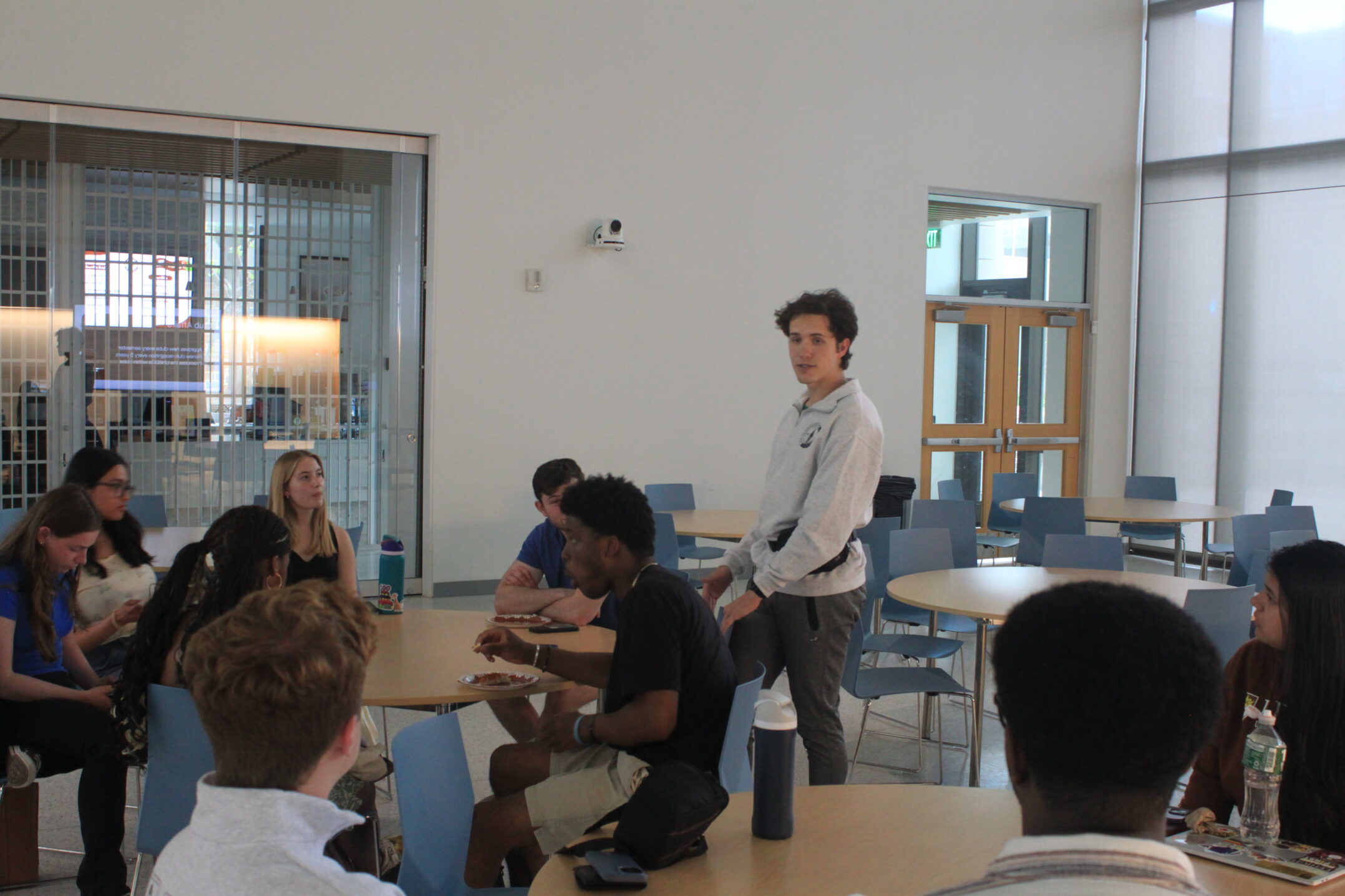
After committee presentations, senators discussed changes to the executive board structure. The number of positions will decrease from six to five: president, vice president, treasurer, parliamentarian and secretary.
Smith, who currently serves as bylaws committee chair and vice president of internal affairs, proposed the changes.
He said the adjustments are intended to improve efficiency.
The roles of vice president of internal affairs and vice president of leadership will be combined into the parliamentarian position.
In response to a question about potential downsides of reducing leadership positions, Smith said the change reflects a balance between efficiency and representation.
When discussing allocations, Smith said the funding process will incorporate factors such as club membership, event attendance and demand-based data to determine funding levels.
He said this updated system won’t require a vote to be implemented, but Avery Eskin, ‘28, incoming treasurer, will seek broad Senate support.
Smith also said the changes will be clearly communicated to students, including through coordinating outreach efforts and presentations at events such as LeadU, a required summit for club presidents and treasures hosted by the Office of Student Involvement in partnership with Student Senate and the Club Affairs committee.
Eskin said some aspects of the new system, including how attendance will be tracked, are still being developed.
“There’s no perfect way to start it off since this is going to be a new thing,” Eskin said. “We’re just going to figure it out as we go. The way I see it is we try different things and if they don’t work, I’ll say we tried it, it didn’t work and then I’ll ask for more opinions, try to figure something out and keep going.”
Eddie Grinnan, ‘29, incoming chair of the Student Outreach Committee and an organizer of the event, asked about funding for organizations such as Debate Club and a capella groups, which may have lower attendance but still play an important role on campus.
Eskin said those considerations are important but no specific plan has been finalized.
Nic Fountaine, ‘29, who asked several questions about the allocations process, said he attended to learn more about the proposed changes.
He said he supports a data-driven funding model but has concerns about relying on limited metrics.
“I think backing funding off of statistics rather than just feelings definitely makes sense, but there might be some challenges if you just take attendance and then base funding off of that,” Fountaine said.
One of the final slides highlighted changes the Senate has made over roughly the past 15 years, including securing free New York Times subscriptions, rescinding President Donald Trump’s honorary degree and allowing alcohol at events.
Kourtzidis said increasing student engagement begins with helping students understand the Senate’s role and encouraging attendance at meetings.
“We hope to have a majority of the student body know what the Student Senate does, that (we’re) not just giving out money to clubs,” Kourtzidis said. “(Students should) see that we can make a change for the students against the administration, or with the administration.”
Comment Policy
Comments posted to The Brown and White website are reviewed by a moderator before being approved. Incendiary speech or harassing language, including comments targeted at individuals, may be deemed unacceptable and not published. Spam and other soliciting will also be declined.
The Brown and White also reserves the right to refuse the publication of entirely anonymous comments.