



The smell hits before the door opens.
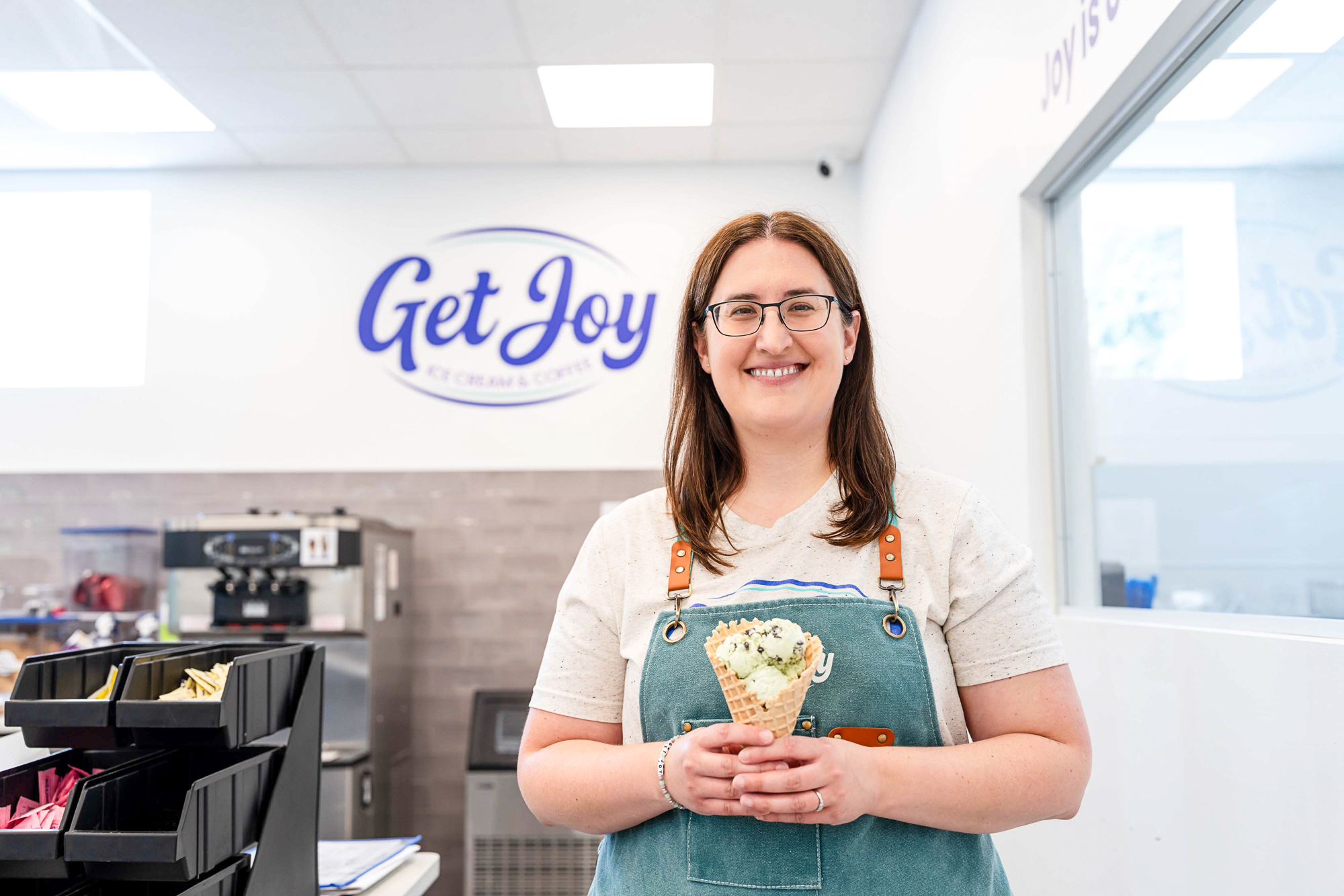
Waffle cones fresh off the iron curl into shape behind the counter at Get Joy, an ice cream and coffee shop at 3592 Route 378 in Bethlehem.
It’s not quite 7 a.m., and Nicole Frick is already elbows-deep in her morning routine: brewing coffee, sweeping floors, checking temperatures and cooling the day’s first batch of cones on a rack.
“When you walk in, and the waffle cones are cooking, the smell is insane,” Frick said. “Everybody loves it.”
Frick, a retired special education teacher of 32 years, is one of Get Joy’s mentors — a role built for aspiring, current and retired educators who help train the shop’s employees, known internally as Joy Makers.
Joy Makers are individuals with different abilities employed at Get Joy, where they’re trained to make ice cream and coffee, serve customers and run daily operations with support from mentors like Frick.
The business opened in June. Sara Heintzelman, a technology integration specialist and affiliated faculty member at Lehigh’s College of Education, along with her husband, Michael, founded the shop to give people with disabilities a job and training ground most workplaces don’t offer.
“What if I could take everything that I’ve learned about education and building systems that help students to be successful and flip it into a business model?” Heintzelman said.
The idea had been forming for roughly a decade.
As a teacher at Lehigh’s Centennial School, which provides elementary, middle and high school programs, Heintzelman kept watching her students land jobs, then lose them within weeks, she said.
“A lot of them were not successful because they didn’t have the support that we had in place at school,” Heintzelman said.
She chose ice cream because she wanted a business with roles simple enough for employees to grow into multiple positions, and customers who’d come in already happy.
After training at Penn State’s ice cream school and experimenting with a small batch freezer in her home kitchen, she started handing out samples. The reaction convinced her she had something.
When she and Michael later added coffee, partly to keep the shop busy through slower winter months, and partly to extend the hours they could offer employees shifts, Get Joy’s two-part identity was established.
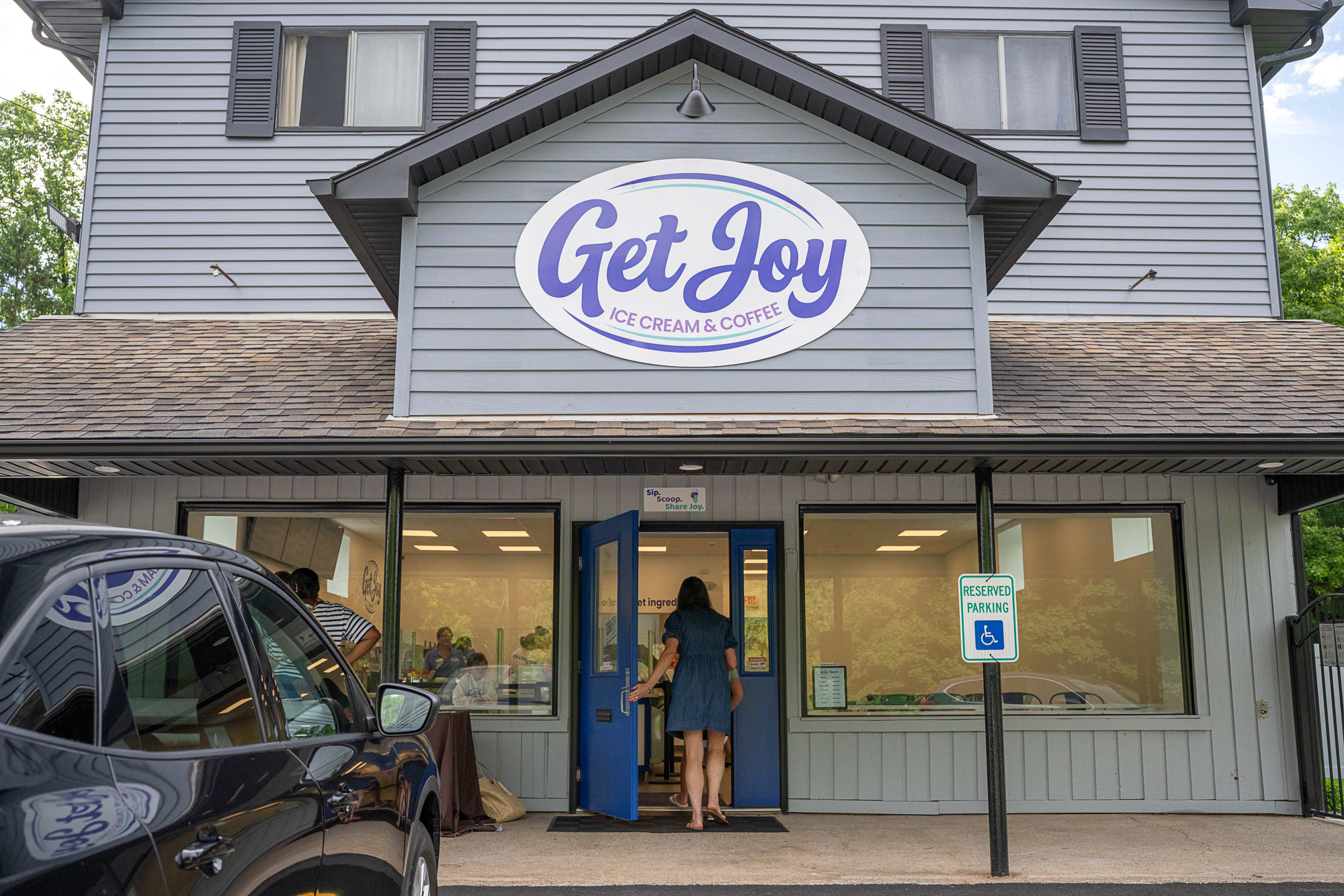
She said the hardest part wasn’t the recipes — it was the building itself: making a space accessible for both customers and employees meant redesigning nearly everything from scratch.
Each design choice was meant to make the shop somewhere employees and customers could navigate on their own, not just accommodate.
Their deliberate design shows up in small choices throughout the shop: door handles at accessible heights, doors that open easily, numbered visual checklists behind the counter that guide employees through preparing drinks and tasks step by step.
“The entire reason why this business needs to exist is because everyone else isn’t doing what we’re trying to do,” Heintzelman said.
She said she pushed back on contractors who said the standard design would be cheaper and easier to build, rather than providing accessible accommodations.
Every countertop sits at wheelchair height, lower than a typical shop, but standard equipment wouldn’t fit underneath. The ice machine had to be replaced entirely. Casters were stripped off refrigeration units just to make them fit.
A job coach brings special education students from a nearby school each week, specifically because Get Joy is one of the only places fully accessible enough for them to navigate independently.
The bathroom includes an adult-sized changing table, built after Heintzelman and her husband were moved by a video from Bethlehem native Shane Burcaw, who has spinal muscular atrophy, describing the indignity of having no safe option but the floor of a public restroom when he’s outside the comfort of his own home.
“We are giving people a space that they can navigate safely and appropriately,” Heintzelman said.
An equal amount of thought was put into the shop’s hiring.
Two Facebook posts advertising job opportunities at Get Joy brought in far more interest than Heintzelman expected, leading the shop to hire 42 people prior to opening.
For the first round of new hires, Sara and Michael drove to each person’s house to deliver the news in person, with a balloon, a T-shirt and a water bottle. The second round got a party.
Both groups went through an orientation covering Get Joy’s mission and values, followed by training and a series of soft launch shifts before the doors opened to the public.
Some Joy Makers need step-by-step instruction guides only a few times before they can work independently. Others lean on it daily, with help from a mentor, like Frick, or one of the shop’s Junior Joy Mentors, high school students interested in education who train alongside the Joy Makers and model the roles themselves.
Mackenzie Shoemaker, a high school sophomore and junior mentor, found the job through a Facebook post her mother shared, at an age when few employers would take a chance on her.
“There are a lot of challenges with helping people with disabilities and people with different needs,” Shoemaker said. “It’s been a very big learning opportunity to learn how to help these people.”
Shoemaker already had her sights on teaching. Working at Get Joy, she said, has only confirmed this.
Frick arrived at Get Joy from the opposite direction. She was 32 years into a classroom career and considered retirement when a colleague’s wife sent her a Facebook post about a new shop looking for mentors — she put in her retirement notice from her teaching career that March.
“I can still be a part of something that I so firmly believe in, and I feel so strongly that it is needed,” Frick said.
Now her mornings start at 6:30 a.m., earlier than her teaching days ever did, making coffee and setting up before the first customers arrive by 7 a.m.
What keeps her there, she said, are the small, visible signs of progress. A Joy Maker mastering a drink recipe without the checklist, remembering a regular’s order or greeting a customer by name.
“When you see them doing it, it’s what it’s all about,” Frick said.
Heintzelman measures the shop’s success, not in sales figures, but in relationships.
“It’s not something that’s measured in a specific metric,” Heintzelman said.
For Frick, the relationships and joy showed up almost immediately.
“My cheeks hurt from smiling,” Frick said, speaking about her first week. “Everybody embraced us.”
Comment Policy
Comments posted to The Brown and White website are reviewed by a moderator before being approved. Incendiary speech or harassing language, including comments targeted at individuals, may be deemed unacceptable and not published. Spam and other soliciting will also be declined.
The Brown and White also reserves the right to refuse the publication of entirely anonymous comments.