



As students arrived on campus for the spring 2022 semester, Lehigh’s method of COVID-19 arrival testing differed from those used in previous semesters.
Upon arrival to campus, students were provided with an InteliSwab™ COVID-19 rapid antigen test kit to take in their residences. Each kit contained two rapid antigen tests, which were instructed to be taken about one day apart.
Provost Nathan Urban said the university chose to use InteliSwab™ tests this year so students could receive their test results faster.
“Earlier in January, it was sometimes taking four or five days to get a result from Vault or any of the PCR based tests that were available in the community,” Urban said. “And quite frankly, having students arrive to take a test and only knowing the results four days later would have been completely unhelpful.”
After completing their InteliSwab™ tests, students were not required to report their test results to the university unless they tested positive.
Because of this, some students have expressed concerns about people failing to report positive test results or not taking the tests at all.
Daniel Bramah, ‘23, said that by not monitoring arrival testing, the university is sending a message to students that arrival tests were optional.
“Either mandate them with supervision or just don’t mandate them at all,” Bramah said.
Nicole Guarino, ‘23, said her fear with the InteliSwab™ tests is that since students don’t have to report a negative test, even if students test positive, they won’t upload their test results.
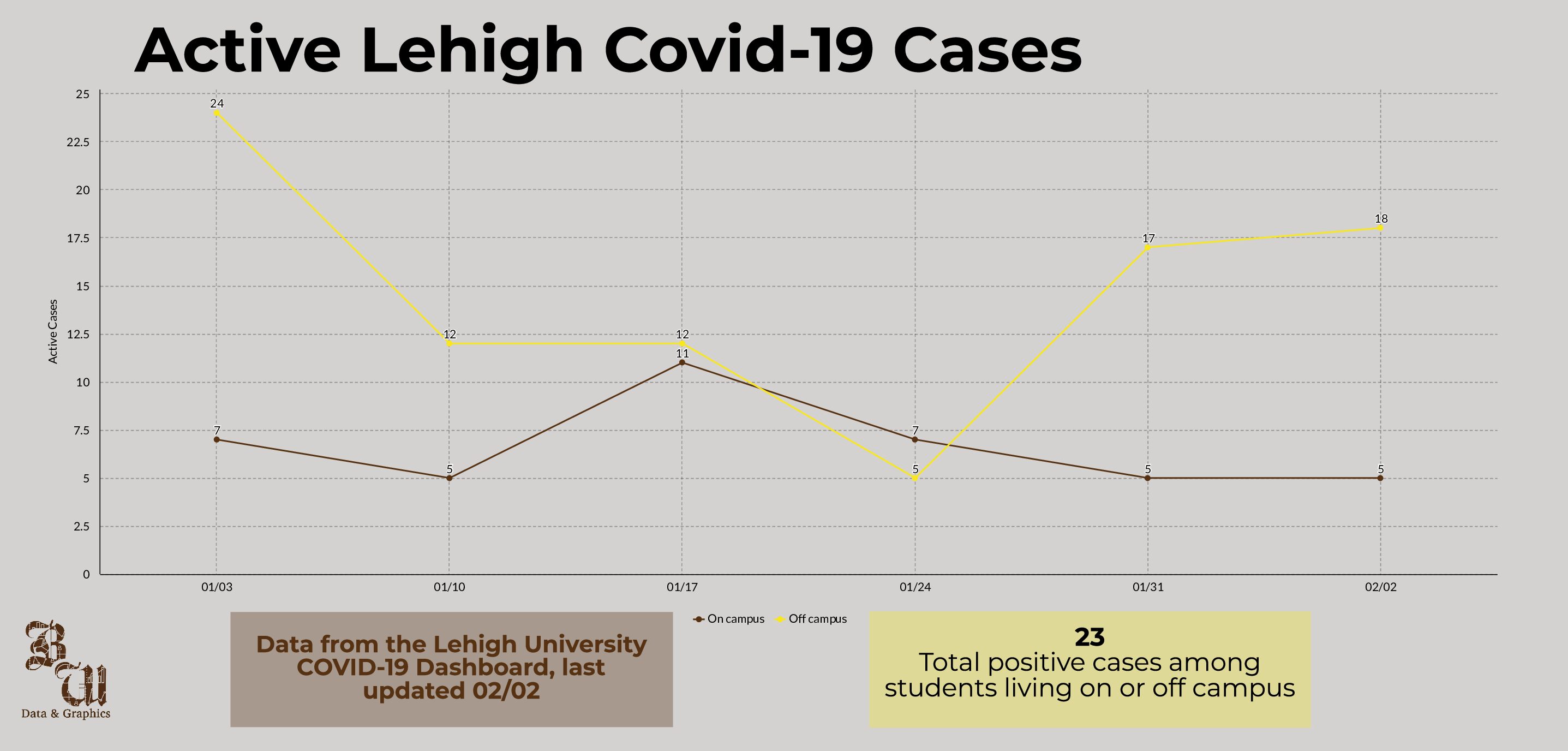
The reported COVID-19 case counts were low following the first week of classes.
“The school is just kind of trusting us to not want to endanger others,” Guarino said. “I would hope that everyone understood the risks of transmitting (COVID-19).”
Urban said he thinks students recognize the importance of preventing the spread of infection, and concerns for the health of others is a compelling reason for students to be taking the tests and reporting positive results.
Bramah said he is not too worried about the possibility of students not taking their tests or reporting their results.
“I think we’ve lived too long in being scared of COVID,” Bramah said. “We’ve done as much as we can. We need to start transitioning to this being an endemic and not a pandemic, which I think a lot of the world is doing right now.”
Prior to the start of the semester, the university announced the first week of classes would be held remotely, and isolation housing would only be offered to students in situations that involve students who are immunocompromised or at high-risk for severe COVID-19 symptoms.
Urban said the university decided to move the first week of classes online because there was an expectation that a significant number of students would test positive soon after arriving on campus.
“We wanted to create a situation where students who had tested positive recently or students who had been exposed recently didn’t feel like they needed to be on campus for the first week,” Urban said. “So remote instruction seemed like the best approach there.”
Despite the temporary switch to remote learning, Urban said 20 to 25 classes were still held in person during the first week.
Guarino is currently enrolled in a lab that met in person for the first week of classes. She said the material would have been difficult to understand had the class been remote.
Guarino said although COVID-19 concerns were in the back of her mind during her lab, she still felt comfortable being in a classroom.
“I feel as though they spaced us (out) pretty well,” Guarino said. “They also supplied us with N-95s. And especially since we were working at lab hoods, there’s a lot of airflow.”
Urban said that while there is no new COVID-19 protocol in place for the rest of the semester yet, the university is expecting to adjust as case counts increase or decrease.
1 Comment
How about moving on and treating COVID as a part of life like many European countries are starting to do?
We are triple vaxed and in a population at very low risk.
Even those with comorbidities who are triple vaxed are at low risk.
For a university that purports to use data in its research, there seems to be little use for data when doing risk assessments.
Comment Policy
Comments posted to The Brown and White website are reviewed by a moderator before being approved. Incendiary speech or harassing language, including comments targeted at individuals, may be deemed unacceptable and not published. Spam and other soliciting will also be declined.
The Brown and White also reserves the right to refuse the publication of entirely anonymous comments.