



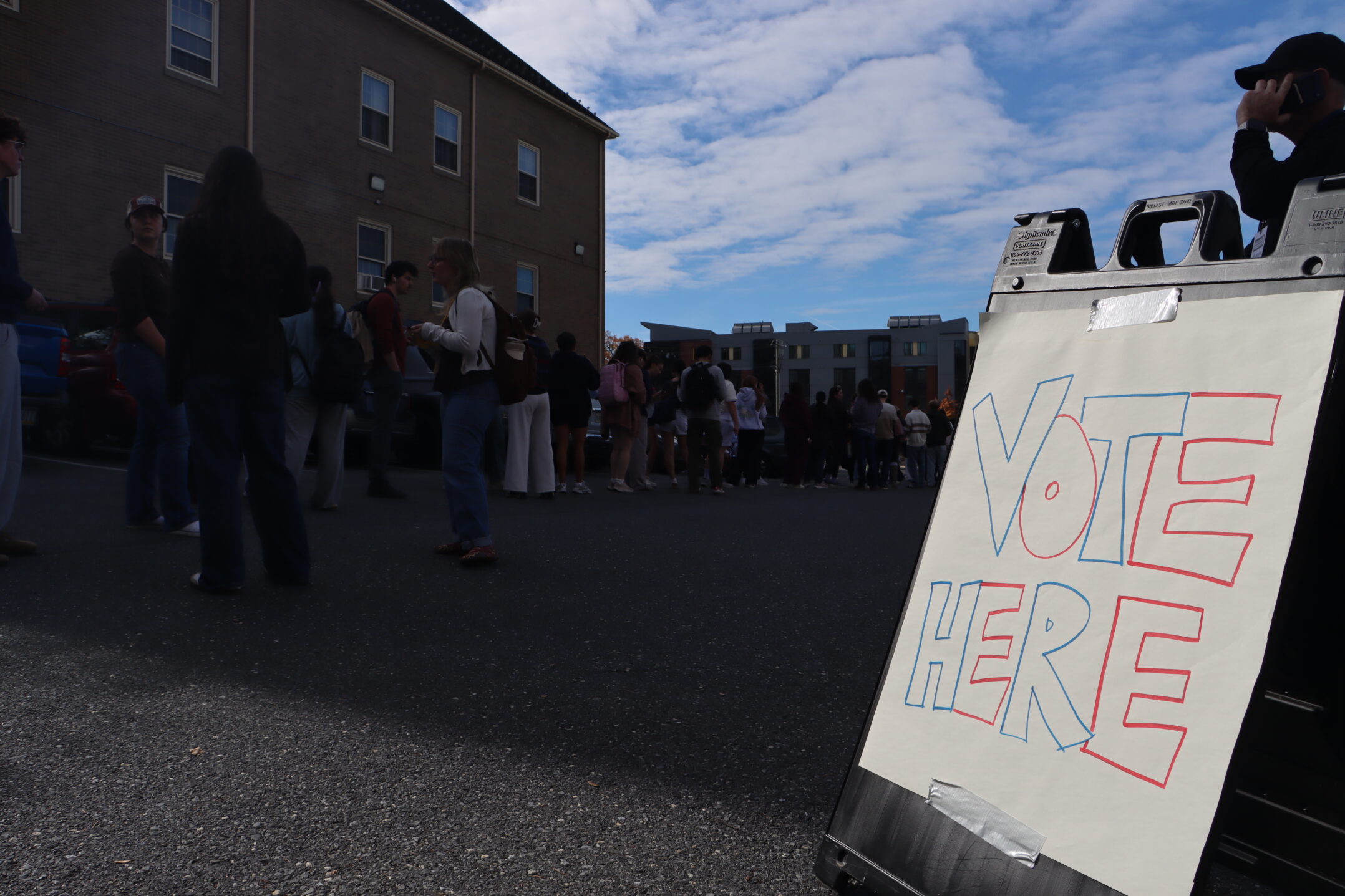
On Nov. 5, 2024, Lehigh University President Joseph Helble joined Lehigh students in line for five hours to vote at the Banana Factory.
Helble’s campus residence puts him in the PA-7 congressional district with many Lehigh voters, so he was in the same line as many young voters.
He said it was the longest time he had ever waited to vote.
In line, he said he noticed the students’ commitment to experiencing democracy.
Votes went red, votes went blue, but Helble said the voting line remained respectful and the students remained curious and committed to voting.
“That to me is exactly what participatory democracy should be, and the line shouldn’t be five hours long,” Helble said.
The university’s pro-voter encouragement could be one step closer to changes in American legislation.
Helble said Lehigh has worked with the city of Bethlehem and Northampton county to set up the church at 472 Vine St. as a polling place because of its convenience and accessibility.
“Given that we have a polling place immediately adjacent to campus, given that we have a day without classes, that the polling place is within walking distance of campus and the campus buses run past it all the time, I’d ask you what else could be done to encourage participation,” Helble said.
He also said young voters have the most to gain, as well as the most to lose.
Helble said participating early builds habits, and young voters are at the beginning of long engagement as an adult citizen in this democracy, and it helps set the tone and direction that young voters think is important, for their community and country.
“I think in many ways, voting in local elections is even more important than voting in national elections and across the country,” Helble said.
As Pennsylvania is in the midst of the 2026 Midterm Election Day, Bethlehem residents sit at the center of one of the nation’s most politically consequential battlegrounds, where the outcome of a handful of races could shift the balance of power in Washington.
Christopher Borick, a political science professor and head of the new Opinion Observatory at Lehigh, said Pennsylvania’s 7th Congressional District places community members in a unique position to influence elections with implications extending far beyond the Lehigh Valley.
With Republicans and Democrats narrowly divided in Congress, Borick said four competitive congressional districts in Eastern Pennsylvania could play a decisive role in determining which party controls the U.S. House of Representatives.
“Voting here compared to almost any place in the country, you get more bang for your buck,” Borick said. “You are impactful in races from the state level to the federal level.”
In 2024, three of the nation’s 10 closest congressional races unfolded in Eastern Pennsylvania, including the 7th Congressional District.
Borick said Pennsylvania races are often won on the margin.
“Even a modest change, let’s say we get some higher turnout levels than usual among younger voters, it can absolutely tip the balance in a race,” he said.
Beyond the ballot box, Borick said Lehigh’s location provides an opportunity for students and researchers to examine political developments firsthand, particularly through public opinion research.
He also emphasized the importance of looking beyond election predictions to understand the issues influencing voters, including the cost of living, artificial intelligence and the growing presence of data centers.
Borick said differences in political enthusiasm between Democrats and Republicans are among the most pronounced he has observed in years, potentially making voter mobilization a defining factor in November’s results.
“We get to do things right in our own backyard that have meaning well beyond our backyard nationally.” Borick said.
For Lehigh students, the political decisions shaping the nation’s future are unfolding not just in Washington, but in the communities surrounding their campus.
For families across Bethlehem, the stakes of Pennsylvania’s upcoming midterm elections extend beyond political parties and campaign promises. They are reflected in grocery bills, rising rents and the increasingly difficult task of affording everyday life.
Winston Alozie, CEO of the Boys & Girls Club of Bethlehem, said the rising cost of living and shortage of affordable housing are among the most pressing challenges facing the families his organization serves.
From climbing food prices to the difficulty of finding affordable housing, Alozie said economic pressures are forcing residents to confront whether they can continue living in the communities they call home.
“Even (with) the most meager of means for people to get by, the price is rising astronomically,” Alozie said.
Yet, Alozie said political campaigns often fail to reflect the complexity of the communities they seek to represent, prioritizing partisan victories over practical solutions.
“Republicans don’t have the answers. Democrats don’t have the answers. People have the answers.” Alozie said.
Beyond economic concerns, Alozie pointed to deteriorating transportation infrastructure, environmental sustainability and the growing presence of artificial intelligence data centers as issues requiring greater attention from elected officials.
He also expressed concern about younger generations becoming increasingly disconnected from politics, describing a shift from young people believing their voices don’t matter to choosing not to participate altogether.
Alozie attributed some of that disengagement to limited access to reliable political information and the increasingly fragmented nature of social media.
For Alozie, bridging divides begins with politicians understanding the people behind the statistics.
He said candidates should meet the single mothers working to support their children, the educators navigating underfunded schools and the longtime residents whose livelihoods have shaped Bethlehem.
As Bethlehem continues to grow and change, Alozie emphasized the importance of education, community engagement and ensuring residents have opportunities to participate in decisions affecting their lives.
“I would like politicians to see their community as a whole — the good, the bad, the ugly,” Alozie said.
Comment Policy
Comments posted to The Brown and White website are reviewed by a moderator before being approved. Incendiary speech or harassing language, including comments targeted at individuals, may be deemed unacceptable and not published. Spam and other soliciting will also be declined.
The Brown and White also reserves the right to refuse the publication of entirely anonymous comments.